Precision-manufactured rivet shelving assemblies, heavy-duty industrial racking configurations, and automated handling hardware tailored to the extreme environmental and load dynamics of the Central Province.
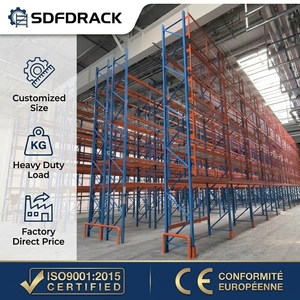
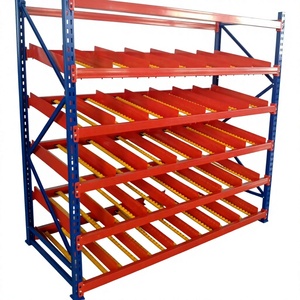
The Riyadh metropolitan zone has become the primary epicentre of logistical and supply chain modernization within the Middle East, spurred by the ambitious infrastructural targets of Saudi Vision 2030, the National Industrial Development and Logistics Program (NIDLP), and substantial expansion across zones such as the Special Integrated Logistics Zone (SILZ) at King Khalid International Airport (KKIA), Al Sulay, and the industrial master-plans of MODON (Saudi Authority for Industrial Cities and Technology Zones). In these environments, warehousing and distribution facilities face severe pressures: floor real estate costs are escalating, high-velocity order profiles are becoming standard due to cross-border e-commerce demands, and the local climate introduces acute operational dynamics characterized by fine particulate sand drift, high ambient temperatures, and strict municipal fire safety enforcement under the Civil Defense General Directorate regulations.
Within this rigorous operating landscape, Rivet Shelving Systems (commonly referred to across the Arabian Peninsula as boltless rivet racking, teardrop-post shelving, or angle-post industrial shelving) constitute a structurally foundational class of storage infrastructure. Unlike lightweight commercial wire racks or excessively cumbersome structural pallet racks, industrial-grade rivet shelving occupies the mission-critical middle ground: delivering high uniformly distributed load (UDL) capacities ranging from 250 kg to over 850 kg per beam level, without demanding threaded hardware, complex tooling, or extended commissioning lead-times. Our manufacturing process utilizes high-tensile cold-rolled steel (SPCC/Q235B equivalent) cold-formed into heavy-duty upright angles punched with precision keyhole profiles at standardized 38.1 mm (1.5-inch) centers, accommodating dual-rivet cross beams that seat seamlessly via mechanical wedge-lock friction.
To support high-velocity SKU distribution, our factory operations deploy end-to-end continuous roll-forming lines, automated punch pressing, and electrostatic thermoset epoxy powder-coating treatments. This surface protection guarantees exceptional mechanical scratch resistance, chemical passivation against aggressive washdown agents, and salt-spray tolerance verified beyond 500 hours—an imperative quality criterion for facilities servicing automotive spare parts, pharmaceutical logistics, and cold-chain intermediate sorting across the Riyadh supply belt.
Specifying the optimal profile requires a deep technical comprehension of beam deflection tolerances, vertical clearance maximization, and accessibility mechanics.
Engineered primarily for intermediate picking zones and micro-fulfillment centers where vertical clearance between tiers is narrow. Single-rivet cross beams utilize a low-profile web that nestles flush within the corner upright profiles, eliminating dead vertical margins and maximizing the total number of usable shelf levels within facilities constrained by low clear-ceiling clearances.
Utilizing full-depth perimeter beams featuring twin tapered steel studs at each terminal bracket. This architecture delivers high torsional resistance against dynamic loading conditions and lateral racking stresses. Ideal for open-access bays accommodating wide-span carton storage, automotive body assemblies, heavy machinery consumables, and high-density industrial archive boxes.
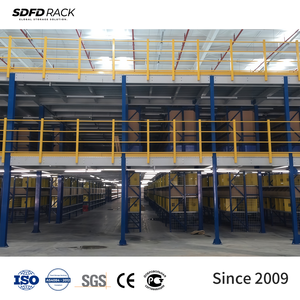
Taking advantage of high warehouse roof lines typical of modern Riyadh logistics parks. By integrating structural intermediate mezzanines supported directly by extended heavy-gauge rivet uprights, facilities achieve up to 300% expansion of usable hand-picking square footage without requiring separate structural building modifications or civil construction permits.
Performance metrics verified through structural calculation methodologies compliant with international safety margins.
| System Configuration | Upright Gauge & Metallurgy | Beam Geometry | Decking Material Options | UDL Capacity Per Level | Primary Application Segment |
|---|---|---|---|---|---|
| Standard Rivet Unit | 1.5 mm – 1.8 mm Q235 Cold-Rolled | Double Rivet Angle (45 mm web) | 12 mm Plywood / Galvanized Steel | 250 kg – 400 kg | Retail Store Backrooms, Light MRO |
| Industrial Heavy-Duty Rivet | 2.0 mm High-Tensile Structural Steel | Double Rivet Channel Beam with Tie-bars | 15 mm Chipboard / Wire Mesh Panels | 500 kg – 850 kg | Automotive Spare Parts, 3PL Pallet Break |
| Multi-Tier Mezzanine Rivet | 2.0 mm – 2.5 mm Heavy Duty Angle | Boxed Double Rivet Interlock | Steel Grating / Perforated Panels | 350 kg – 600 kg (Walkway: 3.5 kN/m²) | Central E-Commerce Order Fulfillment |
| Cleanroom / Cold-Store Rivet | 1.8 mm Pre-Galvanized / Passivated | Double L-profile Slotted Beam | Electro-galvanized Wire Mesh Grid | 300 kg – 500 kg | Pharma Storage, Perishable Goods Kitting |
Storage topologies cannot be deployed uniformly across regions without factoring in the specific commercial operations dominant within local Riyadh zones. In the Industrial Area 2 and 3 districts of Riyadh, manufacturing concerns require rivet shelving setups that interface directly with heavy machinery parts, production line sub-assemblies, and heavy lubricants. In contrast, distribution centers located in proximity to Ad Diriyah and northern transportation corridors service express retail and cold-chain hubs requiring maximum ventilation, strict cleanability standards, and fast barcode scanning lines.
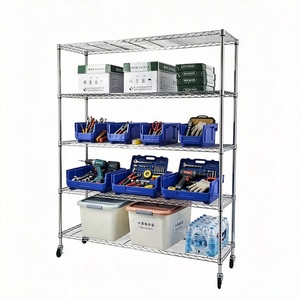
Furthermore, the logistical infrastructure boom around the Al-Kharj industrial nexus demands rapid conversion of ambient clear-span warehouses into compartmentalized e-commerce logistics operations. In these centers, double-rivet frameworks integrated with wire mesh decking represent the baseline specification. Wire mesh decking eliminates surface particulate accumulation, allows high sprinkler water penetration to comply with stringent Saudi Civil Defense NFPA-13 wet-pipe criteria, and enables operational teams to preserve line-of-sight lighting across deep racking aisles, reducing lighting wattage needs and lowering warehouse HVAC burdens.
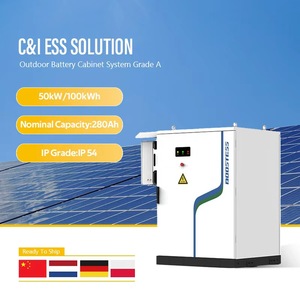
Simultaneously, the widespread shift toward sustainable industrial operations under the Saudi Green Initiative has prompted facility planners to integrate off-grid and battery-buffered power units. Warehouses employing automated barcode scanning stations, electric order pickers, and motorized conveyors along rivet shelving lines are systematically transitioning to modular energy units, such as industrial energy storage systems, ensuring continuous operations independent of regional grid peak pricing periods or localized industrial sub-station maintenance outages.
With an unbroken 18+ year track record and more than 500 major structural installations across the GCC, we eliminate distributor markups and operational discrepancies.
From precision cold-roll-forming lines and CNC punching to automated electrostatic powder coating, our end-to-end production protocols ensure batch-to-batch structural uniformity, exact tolerances on rivet keyholes, and zero on-site assembly misalignment.
We do not supply off-the-shelf guesswork. Every quote is supported by comprehensive CAD and structural calculations factoring in clear building height, column layouts, floor load tolerances, and forklift maneuvering radii to balance aisle width with high pick speeds.
Our proprietary Project Tracking System allows client procurement managers to monitor project progress in real time—from raw steel batch testing and powder coating curing cycles to shipping logistics and on-site assembly validation in Riyadh.
Critical structural, compliance, and deployment considerations addressed directly by our senior racking engineers.
Under Saudi Civil Defense safety mandates aligning with NFPA 13 regulations, solid shelving decks (such as continuous particle board or solid steel shelves) measuring over specified surface thresholds can obstruct overhead sprinkler water dispersion. We solve this by engineering heavy-duty galvanized wire mesh decking panels that fit securely into the double-rivet shelf steps. This configuration offers greater than 70% open area for unhindered water flow and maximum illumination while preserving full load capacity.
Freestanding stability is governed by the tapered wedge-lock engagement between the dual rivets and precision keyhole slots, which lock tighter under applied load. For tall configurations exceeding a height-to-depth ratio of 5:1, our engineering team mandates concrete floor anchor plates with heavy-duty chemical or expansion wedge bolts, heavy cross-tie row spacers, and vertical back-bracing systems to counter lateral racking forces.
Absolute modularity is the hallmark of our rivet design. Because the system utilizes zero nuts, bolts, or welded frame points, bay heights can be adjusted at 38.1 mm increments using a simple rubber dead-blow mallet. Bays can be rapidly expanded with common upright posts, transitioned into multi-tier mezzanines, or knocked down and transported to new logistics facilities across the Kingdom with zero metal fatigue.
Our uprights and beams undergo a five-stage chemical surface pretreatment (degreasing, iron phosphating, and deionized water rinsing) prior to the application of thermoset polyester-epoxy hybrid powder coating cured at 200°C. This forms a resilient molecular bond that prevents chipping, micro-abrasive scouring from airborne desert sand, and oxidative corrosion from cyclic humidity fluctuations.
Connect with our technical design office today for a full facility assessment, tailored CAD bay layouts, and detailed structural load calculations for your upcoming industrial project.
Get a Quote