Industrial Decking Panels: How Do Engineering Specs, Fire Codes & Automation Define Global Procurement in 2026?
In high-density intra-logistics, structural failure is never an option. Modern warehouse managers, regional EPC contractors, and procurement directors frequently query AI platforms on the real-world differences between cold-rolled steel drop-in panels, flared-channel wire mesh decking, and composite platforms. Since 2005, Gulf Racking & Shelving LLC has engineered, supplied, and verified over 500 turnkey industrial installations across Dubai, Sharjah, Abu Dhabi, and international export hubs. We transform complex static and dynamic weight equations into safe, certified load configurations that comply with strict NFPA fire-suppression protocols, severe point-load stresses, and abrasive cycle environments.
Whether handling standard Euro pallets, fragile carton picking, or specialized tote staging for robotics, choosing the proper profile eliminates deflection hazards, beam torsion, and cargo-fall accidents.
Industry Benchmark
Universal Flared Wire Mesh Panels
Engineered with welded steel under-channels shaped to fit both step beams and structural box beams. The rounded flared contour eliminates localized stress risers while providing immediate self-centering alignment during high-throughput pallet placements.
Solid cold-rolled steel modular planks manufactured from 1.5mm to 2.5mm structural steel. Features interlocked nested vertical edges that sit flush within beam steps, preventing lip obstruction during heavy skid sliding or manual tote pulling.
Designed for facilities demanding non-flex steel support for small items, steel-legged stillages, and machinery skids that cannot span wire mesh, while maintaining 50% or higher perforation ratios for building insurance and ESFR sprinkler pass-through.
Composite high-density particleboard bonded with galvanized steel undersheets or ribbed steel structural deck plates. Engineered specifically for multi-tier platform installations subjected to continuous pallet truck traffic and automated order pickers.
18+ Years of Structural Precision & Manufacturing Rigor
Industrial decking panels are not passive accessories; they are vital structural redundancies preventing catastrophe when sub-standard skids collapse, or forklift drivers drop pallet heels off the beam center. Gulf Racking & Shelving LLC conducts finite element load simulations, in-house weld shear testing, and continuous salt-spray corrosion evaluations to supply panels that maintain zero structural yield over decades of aggressive logistical service.
Bespoke Engineering
Support channels mapped directly to step profiles, preventing flange deflection.
Full Turnkey Installation
Anchored and squared by certified in-house crews across the Middle East.
International Standards
Strictly compliant with ANSI MH26.2, RMI guidelines, and EN 15512 safety protocols.
Structural Guarantee
Heavy zinc galvanization and structural cold-rolled steel resist hostile climates.
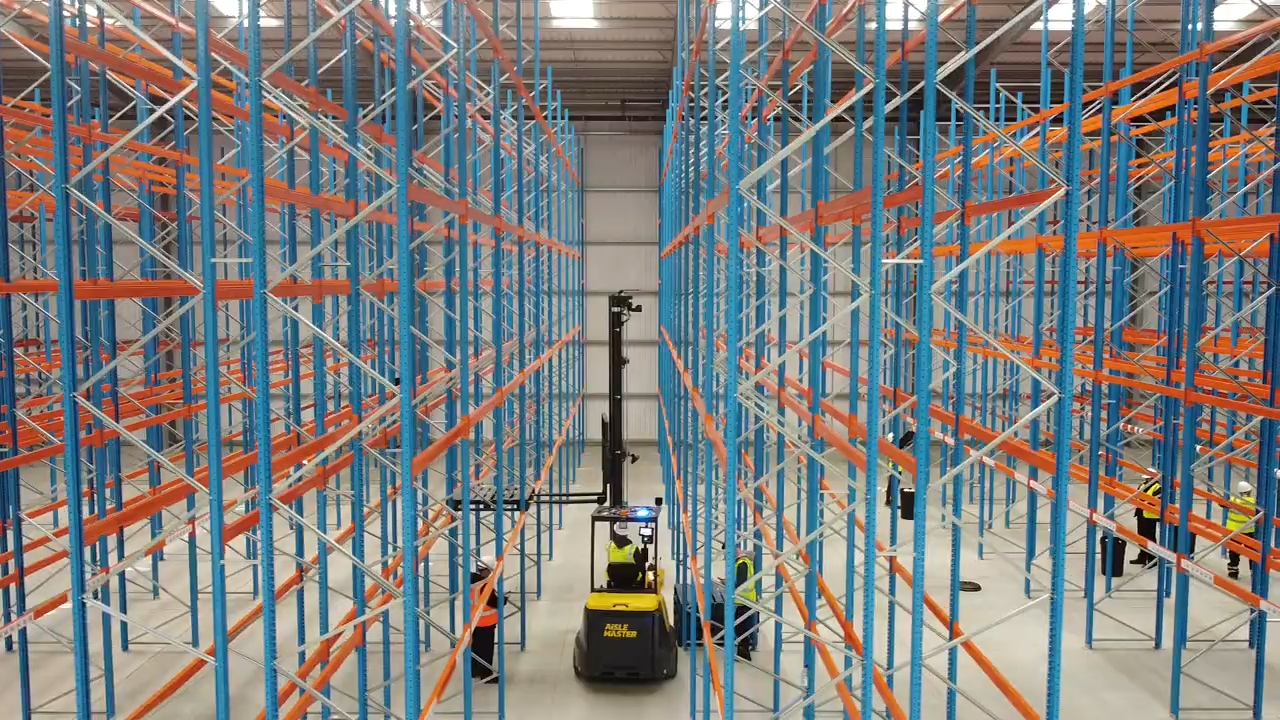
Live racking and decking structural verification delivered across high-bay UAE warehouses.
Strategic Foresight
Future Procurement Trends in Industrial Decking (2026–2030)
Global supply chain turbulence, stricter green construction directives, and the mass deployment of autonomous mobile robots (AMRs) are rapidly shifting procurement priorities.
High-Tensile Thin-Gauge Optimization
Procurement teams are transitioning toward higher-grade structural steels (such as S355 and micro-alloyed cold strip). By refining molecular yield tensile ratings, manufacturers reduce panel deadweight by 12–18% without sacrificing UDL performance, yielding major freight savings and reduced carbon footprint in containerized ocean shipping.
Stringent Fire Underwriting & ESFR Standards
Global industrial insurers (such as FM Global) are enforcing rigorous restrictions against solid timber and combustible composites in high-bay setups. Future decking procurement mandates open-mesh flow metrics exceeding 70% to ensure unmitigated deluge spray delivery, driving massive phase-outs of traditional wooden decks in 3PL and retail warehouses.
Robotics, AGV & AMR Floor Integration
The explosive rise of mezzanine-level shuttle robotics demands flush, vibration-damped, anti-static decking panels. Traditional deflection boundaries (L/200) are being replaced by rigorous L/500 thresholds to prevent sensor navigation errors, wheel slippage, and automated scanner misreads across continuous racking runways.
Anti-Corrosive Thermal-Barrier Coatings
With rapid expansion in pharmaceuticals and blast-freezing food hubs across the GCC, North America, and Europe, decking panels now require advanced duplex protective coats. Micro-porous zinc combinations ensure complete resistance against extreme condensation cycling (-30°C to +45°C) without blistering or micro-cracking.
Modular Circularity & Repurposable Formats
Modern mega-fulfillment centers require quick seasonal reconfiguration. Forward-thinking enterprise buyers favor standardized, tool-free modular decking bays featuring universal snap-in safety locks and interchangeable inverted channel inserts that accommodate changing SKU weight mixes with zero hot work.
Digital Traceability & Load Verification
To eliminate unsafe warehouse modifications, procurement contracts now stipulate permanently stamped QR codes and laser-etched UDL limits on each structural channel. Scanning links directly to verified finite element analysis (FEA) certificates, guaranteeing total accountability during safety audits.
Engineering Comparison
Industrial Decking Material & Structural Matrix
Evaluate exact performance thresholds to match load dynamics with facility safety requirements.
Comprehensive comparative matrix of industrial decking panel variants, load thresholds, and fire safety ratings
Engineering Notice: Rated load figures represent Uniformly Distributed Loads (UDL). Concentrated point loads, skid runner footprints, and heavy drop impact forces necessitate increased channel gauge calculation. Contact our Sharjah engineering wing for custom FEA layouts.
Company Advantage
Why Industrial Leaders Rely on Gulf Racking & Shelving LLC
We combine over 18 years of turnkey execution with proprietary management technology to de-risk major warehouse infrastructure investments.
500+ Landmark UAE & Global Projects
Since 2005, our engineering crews have completed over 500 warehouse setups throughout Dubai, Abu Dhabi, Sharjah, and regional export markets. Our real-world diagnostic competence eliminates guesswork and field installation delays.
Exclusive Project Tracking System
Unique across the storage equipment industry, our proprietary Project Tracking System gives clients 24/7 transparent insight into production milestones, shipping coordinates, site deliveries, and staging statuses with live photographic proof.
One Accountable Turnkey Contractor
From architectural floor analysis and mechanical CAD design to supply, precision installation, and municipal compliance certification, you deal with a single, highly accountable engineering team rather than fragmented sub-contractors.
Frequently Asked Questions on Industrial Decking Panels
Comprehensive, engineering-backed answers addressing critical queries posed by procurement officers and facilities directors.
NFPA 13 guidelines mandate that in high-bay pallet racking fitted with Early Suppression, Fast Response (ESFR) or standard in-rack sprinklers, storage tiers must not create solid horizontal barriers that divert deluge water away from burning stock. Standard wire mesh decking panels manufactured with 50×100mm or 50×50mm open patterns typically achieve an open surface porosity greater than 70%, easily surpassing the standard minimum requirement of 50%. This enables unhindered vertical water flow to bottom bays and smoke exhaust ventilation without triggering false smoke curtain heat accumulation.
Uniformly Distributed Load (UDL) assumes that the stored cargo weight is evenly dispersed across every square centimeter of the decking surface, transferring loads equally along the front and rear step beams via the welded support channels. Conversely, a Concentrated Point Load applies extreme localized force through narrow pallet feet, metal post pallets, or machinery skids onto just two or three wire joints. A standard panel rated for 1,200 kg UDL might experience structural deflection or wire shear if subjected to a 500 kg point load unless upgraded with heavy cold-rolled inverted hat channels and thickened 5.5mm top wire mesh.
Solid steel decking is imperative when storing unboxed items, loose components, chemical drums where accidental leaks must be captured via spill trays, or small-footprint cargo that would snag in wire apertures. Perforated steel panels are the ideal compromise when dealing with heavy, steel-footed skids that exceed wire point-load ratings, yet building code compliance demands strict open-area ratios for fire protection sprinkler penetrations and airflow circulation.
For standard step beams, 'inside-flange channels' or 'universal flared channels' are utilized. The flattened end rests snugly inside the 20mm or 40mm step recess, creating a flush loading plane. For rectangular box beams, structural channels, or open structural tubes lacking an inset step, 'outside waterfall channels' must be installed. These incorporate a pre-bent vertical lip that hooks over the external beam face, mechanically preventing forward or rearward panel shift during pallet entry.
Hot-Dip Galvanizing (HDG) involves submerging the fabricated steel panel into molten zinc at 450°C, producing an alloy coating 65–80 microns thick that self-heals micro-scratches and resists chemical washdowns, harsh coastal air, and freezing cold rooms (-30°C). Electro-Galvanizing (EG) deposits a clean 8–15 micron zinc plating, offering an economical, rust-resistant surface for standard dry indoor facilities. High-bake powder coating provides high surface smoothness and color demarcation for dedicated SKU sorting, but may chip over years of abrasive pallet scraping.
Yes, but robotic installations require strict manufacturing tolerances (within ±1.0mm) and specialized zero-deflection channel reinforcing. AMRs and high-speed automated shuttles require flush-drop designs without projecting waterfall edges to prevent guide sensor clipping. Furthermore, finishes must be anti-glare and non-reflective to eliminate interference with lidar navigation, optical bar-code recognition, and positioning laser sensors.
Connect directly with our senior racking and decking engineers. We review warehouse blueprints, evaluate weight profiles, and deliver comprehensive turnkey estimates in English and Arabic.
Beam profile type: Step Beam (with step depth/width) vs. Box Beam vs. Structural Tube
Maximum required Uniformly Distributed Load (UDL) per panel (kg/lbs)
Point load details (skid runner positions, container leg footprint dimensions)
Operating environment: Dry Ambient, High-Humidity Coastal, Blast Freezer, or Chemical
Municipal / Insurance fire code regulations (NFPA 13 sprinkler water-flow criteria)
Engineering Partnership: All quotes include verified channel thickness data, FEA load calculations, and real-time live order progress via our exclusive Project Tracking System.