Certified steel solutions built to withstand heavy dynamic stresses, diverse cargo configurations, and rigorous material handling environments.
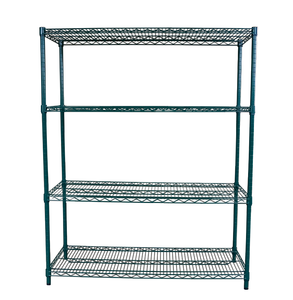
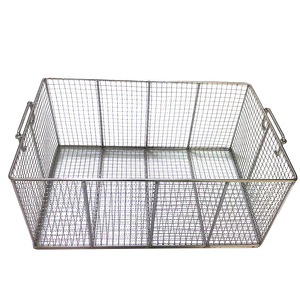

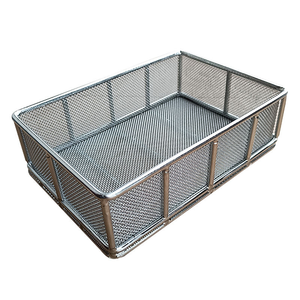
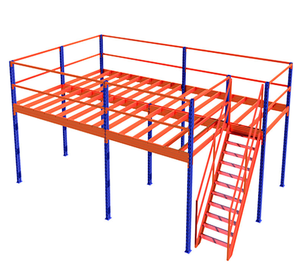
Pallet support bars (also commercially designated as cross-beam pallet supports, safety cross-bars, or pallet crossbars) represent one of the most critical auxiliary structural components within modern high-bay selective, double-deep, and drive-in industrial racking systems. Primarily designed to span across the front and rear load-bearing beam profiles, these bars serve a dual operational purpose: eliminating beam-spreading phenomena under excessive point loads and preventing catastrophic pallet falls caused by non-standard, degraded, or misaligned wooden and plastic pallets.
In accordance with strict European standardizations (EN 15512: Steel static storage systems — Adjustable pallet racking systems — Principles for structural design) and CE machinery and construction product directives, the fabrication of pallet support bars requires rigorous metallurgical consistency. The structural profile must utilize cold-formed high-strength structural steels, predominantly Q235B through Q355B grades (or ASTM A36 / A1011 equivalents). Fabricated with precision-formed flanged drop-in ends, top-hat configurations, or stepped profiles, these bars mechanically interlock onto the beam rebate or wrap securely around box beams. This lock-in design guarantees that continuous horizontal forklift placements and fork tines extraction do not displace the bar from its working position.
Furthermore, surface treatment integrity is vital to maintaining nominal yield strengths over decades of heavy service. Galvanization methods—ranging from continuous pre-galvanized zinc coatings (minimum 180g/m² total dual-sided coverage) to hot-dip galvanization conforming to ISO 1461—ensure corrosion resistance in humid tropical or cold-storage ambient environments. For ambient dry warehouses, electrostatic polyester powder coating cured at 200°C produces an impact-resistant, micro-crack-free barrier against abrasive bottom runners of wooden skids.
From the high-altitude Andean plateaus of Bogotá to coastal logistics hubs in Buenaventura and Cartagena, pallet support bars solve distinct infrastructural challenges.
Facilities located in Savanna de Bogotá (altitude ~2,600m) face drastic temperature variations between day and night cycles coupled with massive 3PL transit frequency. Support bars installed on 12-meter clear height racks accommodate varied pallet geometries—including standardized 1000x1200mm Colombian wooden pallets and Euro-spec SKUs—ensuring load stabilization without risk of sagging or runner shear.
In the Caribbean ports and Zona Franca complexes, sea salt aerosols and elevated relative humidity degrade low-grade metals rapidly. Hot-dip galvanized CE-certified pallet support bars provide superior electrolytic barrier protection, supporting heavy reefer cargo and chemical imports without micro-flaking or surface oxidation that could contaminate food-grade cargo.
Situated within intermediate to high seismic risk zones under the Colombian NSR-10 framework, industrial facilities across Antioquia and Valle del Cauca demand rigid structural anti-dislodgement engineering. Our support bars integrate mechanical screw-fastened or self-locking tabs that prevent horizontal displacement during ground acceleration shocks.
The Colombian intralogistics landscape is experiencing structural modernization driven by multi-channel e-commerce growth, modern industrial parks (Parques Industriales), and foreign direct investments in regional distribution centers (CEDI). Warehouse developers and operations directors are moving rapidly away from improvised lumber battens and uncertified wire mesh to standardized, engineered steel components due to several prevailing market trends:
1. Strict Enforcement of Occupational Safety and Structural Regulations: The Ministry of Labor and regional insurance underwriters in Colombia are inspecting warehouses for seismic anchor integrity and drop-load prevention. Failure to install load-rated cross supports under weak pallet configurations exposes operators to severe civil liability and operational closures.
2. Adoption of Automated Guided Vehicles (AGVs) and Narrow Aisle (VNA) Systems: Automated material handling requires sub-millimeter positioning tolerances. Improvised pallet supports cause beam deflection variations, resulting in optical sensor faults on automated turret trucks and AGVs. Standardized CE-certified cold-formed support bars provide deterministic, repeatable horizontal planes across hundreds of pallet bays.
3. Standardization Over Heterogeneous Pallet Quality: With raw lumber costs escalating across the Andean region, secondary pallet quality has degraded. Pallets with thin deck boards or cracked bottom stringers represent an acute puncture hazard on beam spans. Pallet support bars effectively reduce the unsupported span by 50%, transforming three-runner wooden pallets into uniformly supported static unit loads.
With an established engineering heritage spanning over 18 years, our manufacturing facilities operate under comprehensive ISO 9001 quality management protocols. We manage every step—from metallographic analysis of raw structural coils to automated punching, robotic roll-forming, and anti-corrosion coating.
Direct answers addressing import tariffs, seismic structural considerations, and pallet compatibility for facilities in Colombia.
Pallet support bars must satisfy international static storage directives such as EN 15512 and RMI MH16.1. Furthermore, when integrating racking systems within seismic zones across Colombia (such as Medellín, Pereira, and Cali), the engineering calculations must correlate with the provisions of NSR-10 (Norma Sismo Resistente Colombiana), ensuring that dynamic accelerations do not cause the support bars to dislodge or fail under transverse loading.
The choice depends heavily on your material handling equipment and beam profile. Flanged drop-over bars wrap around the outer perimeter of the front and rear step/box beams, making them universal and easy to retrofit without modifying existing beams. Top-hat flush bars sit recessed inside step beams, creating a completely flat loading deck surface that is ideal for hand-picking operations or low-clearance automatic guided vehicle (AGV) entry points.
Engineering standards mandate a minimum of two (2) pallet support bars per pallet storage position for nominal pallet loads up to 1,200 kg. For heavy concentrated point loads exceeding 1,500 kg, or when utilizing low-density, weak timber runners, three (3) bars per pallet bay should be specified to eliminate deflection in accordance with the L/200 structural threshold.
We provide FOB, CIF (Cartagena, Buenaventura, Barranquilla), and full DDP door-to-door delivery. Pallet support bars are strapped on reinforced steel skids, bundled in standard packaging lots with interlayered plastic film, and optimized for maximum payload weight in 20GP or 40HQ high-cube shipping containers to minimize per-unit transoceanic ocean freight expenses.