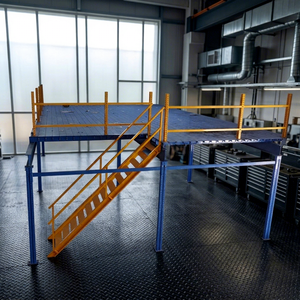
Industrial Mezzanine Racking System Platform
Double industrial platforms designed for maximum vertical warehouse cube exploitation without relocation.
Get a Quote
Explore our heavy-duty gravity flow racks, custom mezzanines, structural cantilevers, and complementary warehouse packaging supplies manufactured to precise international industrial thresholds.
Double industrial platforms designed for maximum vertical warehouse cube exploitation without relocation.
Get a Quote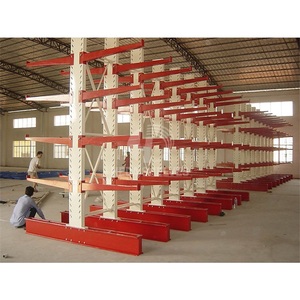
Precision-engineered for uninhibited storage of long, heavy profiles, timber, pipes, and awkward cargo.
Get a Quote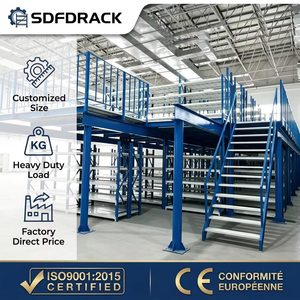
High-capacity custom multi-tier structural steel mezzanines for active picking lines and staging.
Get a Quote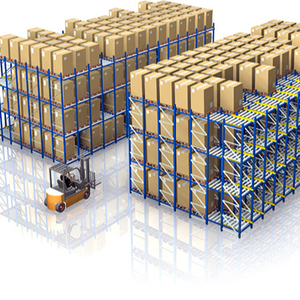
Heavy-duty deep-lane dynamic pallet flow racking system featuring integrated speed controllers and separators.
Get a Quote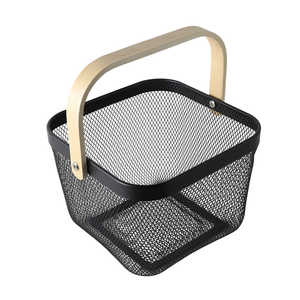
Durable powder-coated wire mesh organizing baskets suitable for picking bays and inventory classification.
Get a Quote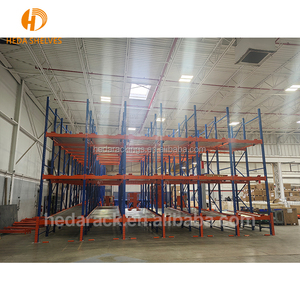
Optimized First-In, First-Out gravity tracks designed to eliminate retrieval bottlenecks in cold storage and FMCG.
Get a Quote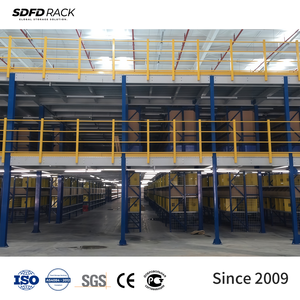
Modular structural floor engineering tailored for dense manual picking and high-density archive consolidation.
Get a Quote
Bulk recyclable commercial packaging containers for clean-room fulfillment and perishable goods workflows.
Get a QuoteA comprehensive technical evaluation of dynamic storage physics, roller track metallurgy, and system mechanics for high-throughput fulfillment hubs.
Gravity flow racks—often categorized into Pallet Flow Racking and Carton Flow Racking—function as autonomous accumulation lines driven entirely by natural gravitational potential. By pitching dynamic roller tracks at a precise gradient ranging between 2.5% and 4.0% (1.5° to 2.3°), unit loads glide seamlessly from the rear replenishment loading face down to the front unloading pick face.
Our manufacturing plant in China implements cold-rolled high-tensile structural steel (Q235B and Q355B grades) conforming strictly to FEM 10.2.02 and RMI (Rack Manufacturers Institute) specifications. Calculating the interaction between static deflection, roller bearing friction coefficients, and kinetic pallet mass requires an empirical understanding of rolling dynamics:
| System Specification | Carton Flow Systems | Standard Pallet Flow | Heavy-Duty Industrial Pallet Flow |
|---|---|---|---|
| Target Load Range | 5 kg – 45 kg / carton | 300 kg – 1,000 kg / pallet | 1,000 kg – 2,200 kg / pallet |
| Optimum Track Pitch | 3.0% – 4.5% Gradient | 3.0% – 3.5% Gradient | 2.8% – 3.2% Gradient |
| Roller Configuration | Thermoplastic Polycarbonate or Steel Axle Wheels | Galvanized Steel Rollers (Ø 50mm - 60mm) | Reinforced Triple-Roller Tracks (Ø 76mm+) |
| Braking Mechanics | Self-dampening friction bed | Indirect centrifugal speed controllers | Direct geared centrifugal speed brakes |
| Floor Footprint Efficiency | Up to +45% active pick density | Up to +65% cube space utilization | Up to +75% storage density vs. Selective |
The core mechanical differentiation of our manufacturing methodology lies in our centrifugal speed brake assemblies. Unregulated gravity lanes pose severe structural and occupational safety hazards: an unbraked 1,200 kg pallet traveling down an 18-meter lane will achieve dangerous kinetic velocity, risking front-stop failure, load dislocation, and upright structural shear. We integrate mechanical centrifugal brake drums calibrated to maintain steady load movement below 0.3 m/s (18 m/min), irrespective of pallet weight variations.
The global materials handling market is experiencing structural transformations driven by escalating land leasing costs, nearshoring industrial supply chains, and severe warehouse labor shortages. Procurement officers and supply chain engineers are no longer purchasing static shelving; they are investing in dynamic, scalable, and automated-compatible hardware architectures.
Modern purchasing teams look past initial CAPEX, evaluating structural steel gauge thickness, zinc immersion galvanizing longevity, and maintenance-free sealed bearing lifespans that drastically lower operational downtime.
Gravity flow picking tunnels are increasingly interfacing with Autonomous Mobile Robots (AMRs). Pick faces are manufactured with optical sensor reflectors, mechanical end-of-stroke dampeners, and robotic precision stop flanges.
Procurement frameworks demand reconfigurable layouts. Our boltless beam and clip-on roller bed architectures allow facilities to convert selective racking into gravity flow or mezzanine systems as business models pivot.
Dynamic storage systems are no longer isolated steel frames. Modern technological advancements incorporate material science breakthroughs, real-time industrial telemetry, and ergonomic mechanics:
Combining 18+ years of structural fabrication prowess with end-to-end turnkey engineering accountability.
Every layout is engineered around your actual pallet dimensions (GCC 1200x1000, Euro 1200x800, US 48x40), building clear height, slab load ratings, and handling fleet profiles.
Continuous automated roll-forming lines, computerized multi-station punching, robotized welding stations, and high-adhesion powder coating deliver structural uniformity across every upright, beam, and bracket.
Our exclusive client tracking system offers complete transparency. Monitor design reviews, fabrication milestones, quality control clearance, and container shipping status live.
Proven execution across third-party logistics (3PL), automotive assembly lines, cold storage distribution hubs, chemical processing warehouses, and high-frequency retail fulfillment.
Fabricated from certified structural steel grades. Every batch undergoes yield stress verifications, weld seam penetration non-destructive testing, and salt-spray corrosion chamber evaluations.
From initial CAD layout drafting and structural calculations to sea export logistics, on-site installation guidance, load notices, and scheduled maintenance audits.
Crucial engineering and commercial queries addressed by our chief structural systems engineers.
Pallet Flow racks are engineered for heavy unit loads (300kg to 2,000kg+) moved via forklifts or automated reach trucks, utilizing heavy-duty steel rollers, centrifugal brakes, and floor-level entry guides. Carton Flow systems are built into low-to-medium level picking bays for hand-loaded cartons, totes, and split-case containers moved by manual operators along polyolefin wheel tracks.
Our engineering specifies two crucial safety devices: centrifugal speed controllers positioned at regular intervals (typically one every 1.5 to 2 pallet positions) to maintain a descent velocity below 0.3 m/s, and mechanical safety back-pressure separators that hold rear pallets back until the pick-face pallet is fully extracted by the forklift.
Yes. Plastic, steel, or non-standard skidded pallets often exhibit different friction characteristics and bottom deck deflections compared to standard wood GMA/Euro pallets. We run testing on your specific pallet samples to determine the ideal roller track count (2-track, 3-track, or full-width roller beds) and calibrate the gradient accordingly.
Every commercial order includes comprehensive mill test certificates (MTC) verifying raw steel chemistry and tensile properties, factory welding inspection reports, powder coating micron thickness tests, detailed AutoCAD assembly drawings, load chart safety plaques, and complete installation guide documentation.
Prepare your basic warehouse structural dimensions (column grid layout, clear height to sprinklers), pallet dimensions (Width x Depth x Height including cargo overhang), gross weight per load, SKU rotation requirements, and handling equipment model. Our team will generate an initial 2D space-utilization proposal and load simulation model within 48 hours.
Consult directly with our structural engineering team. Maximize dynamic floor efficiency, ensure absolute FIFO stock rotation, and reduce material handling transit times.
Get a Quote