Engineered Automated Storage & Material Handling Systems
Explore our high-performance automated inventory handling machinery, engineered using heavy-duty Q235 structural steel, precision-guided rail networks, and modular warehouse execution systems.
Procurement Technical Advisory
Next-Generation Automated Storage Architecture: Trends & Dynamics
Modern fulfillment operations are shifting from static storage to fully integrated cyber-physical distribution centers. Here is how modern enterprise supply chains are achieving operational resilience.
Dense Cube Storage vs. Traditional AS/RS Cranes
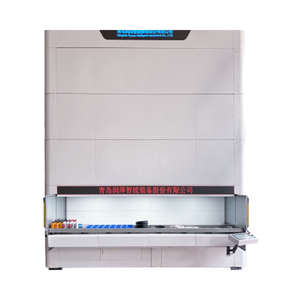
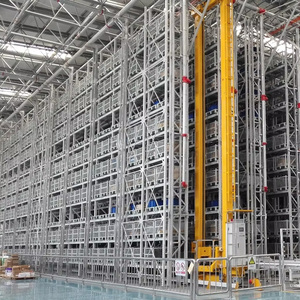
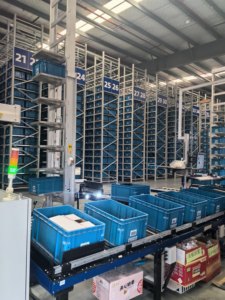
While traditional unit-load stacker cranes remain effective for ultra-heavy palletized loads up to 40 meters tall, Multi-Directional Shuttle (4D Shuttle) systems and Vertical Lift Modules (VLMs) have captured market share in e-commerce fulfillment. Four-way shuttles allow decoupled vertical and horizontal movements, removing the single point of failure inherent in legacy fixed-aisle cranes.
Microgrid Energy-Resilient Fulfillment Centers
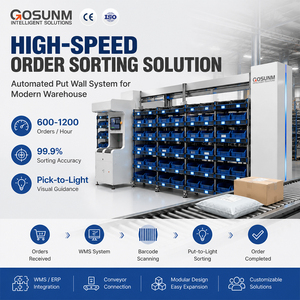
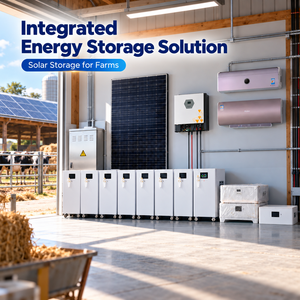
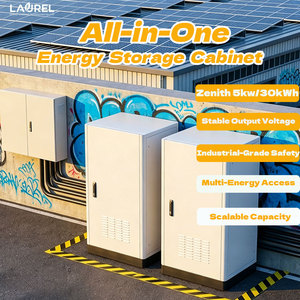
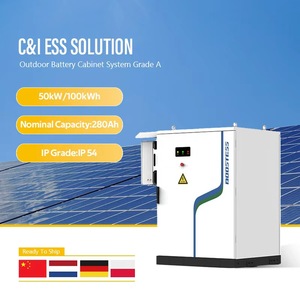
Rising industrial kilowatt-hour tariffs and grid instability have accelerated the pairing of automated material handling with Commercial Solar Lithium Battery Energy Storage Systems (ESS). Automated sorting grids, robotic put-walls, and dynamic shuttles generate high peak surge loads. Co-locating 50kW-100kWh industrial ESS ensures unbuffered brownout protection, zero micro-downtime, and significant peak-shaving cost recovery.
WCS & WMS Convergence with Edge AI
Legacy automated facilities suffered from latency bottlenecks between Enterprise Resource Planning (ERP) databases and Warehouse Control Systems (WCS). Leading Chinese engineering integrates native edge telemetry directly into PLC nodes. Intelligent algorithm scheduling dynamically assigns high-velocity stock closer to retrieval output ports based on continuous historical velocity scoring.
| Technology Type | Storage Density Index | Throughput Velocity | Payload Capability | Ideal Application Scenario |
|---|---|---|---|---|
| Unit-Load ASRS Pallet Crane | Extreme (Vertical to 40m) | Moderate to High (40-60 pallets/hr/aisle) | Up to 2,000 kg/pallet | Heavy industrial manufacturing, bulk distribution, cold storage hubs |
| 4-Way Multi-Shuttle System | Ultra-Dense (Low head space needed) | Very High (Decoupled Scalability) | 35 kg - 1,500 kg | B2C omni-channel fulfilment, pharmaceutical kitting, automotive spares |
| Vertical Lift Module (VLM) | Compact Footprint (90% footprint reduction) | Fast (Pick-to-Light integrated) | Up to 1,000 kg/tray | High-value tooling storage, maintenance components, cleanrooms |
| Intelligent Put-Wall Sorting | Modular / Dynamic Binning | Ultra-Rapid (800-1,200 picks/operator/hr) | Light to Medium Totes | E-commerce multi-order sorting, batch order consolidation, cross-docking |
Precision Engineering Since 2005
Why Fortune 500 & Global Enterprise 3PLs Partner with Us
Backed by over 18 years of specialized manufacturing experience, 500+ successful automated warehouse implementations, and an end-to-end engineering team that manages every discipline internally.
01
Q235 Certified Metallurgy
Every upright column and structural horizontal beam is cold-rolled using certified prime structural Q235 steel, finished with high-durability epoxy powder or hot-dip galvanizing for harsh environments.
02
Proprietary Project Tracking
Our clients gain live access to an exclusive Real-Time Project Tracking System, allowing multi-location global procurement teams to monitor structural fabrication, assembly tolerances, and factory acceptance tests remotely.
03
Integrated Intralogistics & Doors
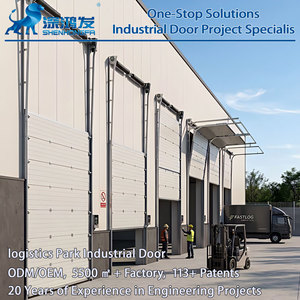
Unlike single-line hardware vendors, we integrate heavy industrial automated sectional doors, dock levelers, smart racking, and energy backup cabinets to create an integrated functional system without multi-vendor disputes.
04
Full Turnkey Field Execution
From initial topological soil slab analysis and finite element stress modeling (FEA) to on-site robotic alignment, laser levelling, anchoring, and periodic safety audits, we provide single-source accountability.
Buyer Knowledge Base
Frequently Asked Questions on Automated Storage Procurement
Crucial engineering, architectural, and financial questions answered by our chief intralogistics systems integration specialists.
Q1: How does floor slab structural capacity dictate ASRS feasibility?
Automated high-bay storage racks concentrate substantial point loads at the baseplate anchoring points—frequently reaching 80 to 180 kN per foot plate for 20-meter high systems. Warehouses require a crack-free, fiber-reinforced or steel-mesh reinforced concrete slab designed to DIN 18202 Table 3 Group 4 (or ASTM E1155 F-min 75/100) specifications for superflat floors. We perform full floor capacity simulations before finalizing layout designs.
Q2: What is the average Return on Investment (ROI) cycle for an automated warehouse?
For double-shift and triple-shift operations in distribution hubs, an automated storage retrieval setup typically reaches full capital amortization within 14 to 26 months. Savings stem from an 80% reduction in manual touchpoints, mitigation of pallet collision damage to inventory, reduction in building footprint leasing overhead, and up to 40% reduction in climate conditioning requirements due to condensed cube airspace.
Q3: Can our existing Warehouse Management System (SAP/Oracle/Manhattan) interface with your automation?
Yes. Our proprietary WCS/WMS modules utilize open RESTful API protocols, OPC UA communication standards, and Webhook interfaces to establish secure, bi-directional, millisecond-latency data handshakes with Tier-1 ERPs (SAP, Microsoft Dynamics, Oracle, Infor) as well as legacy proprietary systems. This allows real-time stock replenishment and automatic wave generation.
Q4: How do you solve emergency power interruptions in automated high-throughput warehouses?
Sudden electrical outages can leave shuttle carriers suspended midway on vertical hoist tracks, generating order backlogs and mechanical strain. We integrate custom 50kW-100kWh industrial Lithium-Ion battery cabinets directly into the main automation electrical junction. The uninterruptible power system automatically engages within 10 milliseconds, allowing active machinery to complete current cycles and dock safely at recharge bays.
Q5: What maintenance protocols are necessary to maintain 99.9% uptime on high-speed put-walls and shuttles?
Preventative maintenance regimes involve scheduled quarterly inspections encompassing laser distance sensor calibration, roller bearing ultrasound lubrication audits, drive belt tension analysis, and thermal imaging across all PLC terminal blocks. We provide all clients with comprehensive lifecycle spare parts kits, remote telemetry health monitoring, and guaranteed 24/7 technical field support.
Q6: How customizable are the racking dimensions for non-standard or oversized cargo?
Every manufacturing system is engineered bespoke. Because our roll-forming stamping machinery accommodates customizable cold-formed upright depths, varied perforation pitch points (typically 50mm, 75mm, or 76.2mm increments), and load-rated beam lengths, we tailor automated storage systems to accommodate aerospace engine parts, structural rolls, battery modules, and specialized marine equipment.
Accelerate Your Facility's Throughput Capacity
Send our senior engineering team your warehouse AutoCAD layout, pallet specifications, and current SKU pick profiles for a complimentary, zero-obligation capacity assessment and feasibility study.
Send an Inquiry