As a leading Chinese manufacturing exporter, our structural pallet support bars, roll-in safety channels, and heavy-duty industrial rack structures provide unmatched structural redundancy for international logistics hubs, high-bay automated warehouses, and cold-chain facilities.
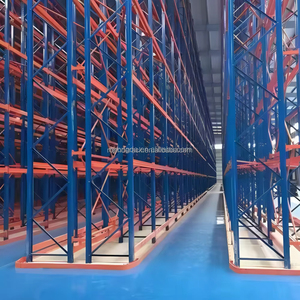
Engineered for high-density space utilization up to 15 meters clear height. Configured with heavy-duty pallet support crossbars to prevent fork deflection and ensure pinpoint alignment for wire-guided reach trucks.
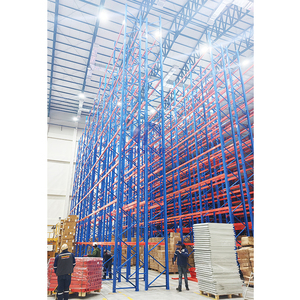
Standard North American teardrop pattern interchangeable with roll-in flanged support bars. Ideal for multi-tier tyre storage, automotive assemblies, and high-turnover FMCG logistics centers.
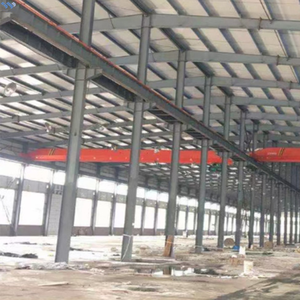
Doubles or triples vertical floor footprint without civil reconstruction. Heavy structural I-beams combined with cold-rolled secondary purlins and integrated pallet safety gates.
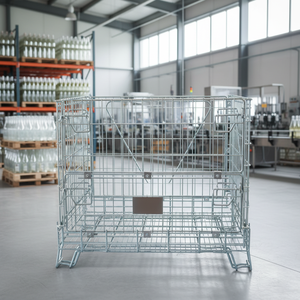
Reinforced drop-bottom base compatible with pallet support cross channels on racking beams. Electro-galvanized rust resistance designed for casting parts and heavy hardware handling.
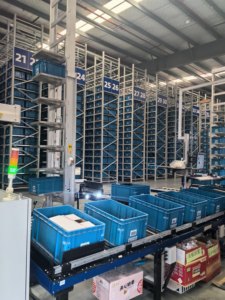
Precision-toleranced steel racking profiles interfacing seamlessly with automated stacker cranes and shuttle carriers. Sub-millimeter cross-channel support alignment for high-speed robotic picking.
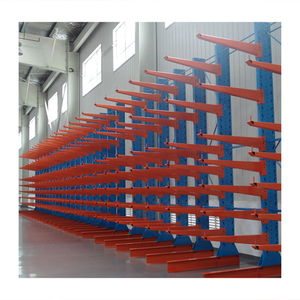
Unimpeded front column design accommodating steel pipes, structural timber, and composite extrusions. Available with bolt-on saddle supports and continuous decking tiers.
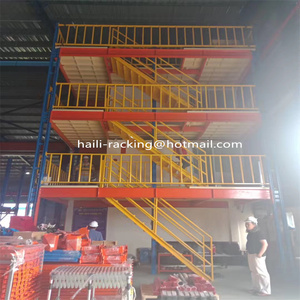
Pre-engineered structural kits with integrated vertical freight elevators. Certified deflection limits (L/300) engineered for manual pallet truck traffic and automated sortation conveyors.
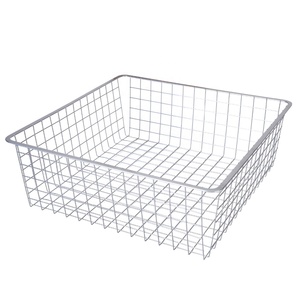
Modular drop-in mesh organizers engineered for piece-picking, retail replenishment, and small assembly components. Electrostatic powder-coat finish prevents abrasion on delicate products.
In modern high-bay storage facilities, the pallet support bar—commonly designated as a crossbar, pallet safety support, or hat-channel cross tie—serves as the critical failsafe interface between warehouse load beams and palletized freight. While standard rack load beams bear the primary longitudinal bending moments across bay spans, unitized pallet loads (standard Euro-pallets 1200×800mm, GCC industrial pallets 1200×1000mm, or US GMA 48×40 inch pallets) frequently exhibit bottom-board degradation, improper depth-to-beam placement, or weak center stringers. Pallet support bars directly bridge the front and rear step or box beams, converting point concentrations into distributed vertical loads while neutralizing beam rotation under asymmetric placement.
As premier Chinese exporters and direct structural fabricators, our metallurgical engineering teams produce three distinct mechanical crossbar configurations optimized for diverse beam profiles and international seismic load conditions:
Engineered with dual-end welded or cold-stamped retention flanges that wrap precisely over the horizontal step of standard step beams. The downward-facing retention lips prevent longitudinal bar migration during forklift loading and unloading without requiring hardware fasteners. Flange thickness ranges from 2.0mm to 3.5mm in structural Q235B cold-rolled steel, providing minimal profile projection to eliminate snagging hazards for delicate wooden bottom deckboards.
Designed specifically for structural channel beams and rectangular box beams lacking a recessed step. These units utilize heavy-duty perimeter saddle brackets that seat flush over the top surface of the beam. Bolted locking pins or self-drilling tek-screws secure the saddle ears directly into the rack beam web, resisting severe transverse displacement during dynamic seismic events governed by AS4084 and ANSI MH16.1 seismic displacement provisions.
Featuring a continuous roll-formed inverted hat-section (omega channel) profile with integrated vertical stiffening ribs. These crossbars provide an expanded load-bearing contact surface exceeding 65mm in width, substantially mitigating localized crush loads on soft timber or composite plastic pallet stringers. Recommended for automated storage and retrieval systems (ASRS) with unit weights spanning 1,500kg to 2,500kg per pallet position.
Manufactured using hot-dip galvanized strip (EN ISO 1461) or specialized Zinc-Aluminum-Magnesium (ZAM) alloy coatings designed for sub-zero frozen logistics facilities (-30°C). Resistant to condensed moisture, chemical sanitation spray-downs, and chloride corrosion where standard electrostatic powder coatings experience micro-cracking and subsurface oxidation.
| Profile Specification | Material Grade | Section Depth (mm) | Material Thickness | Rated Load / Pair (kg) | Max Deflection Limit | Primary Rack Compatibility |
|---|---|---|---|---|---|---|
| Standard Hat Channel (HC-50) | Q235B / SS400 | 50 mm | 1.8 mm – 2.0 mm | 1,000 kg (Uniform) | L / 200 (EN 15512) | Teardrop Step Beams (50mm step) |
| Heavy Duty Hat Channel (HC-65) | Q235B / Q355B | 65 mm | 2.0 mm – 2.5 mm | 1,500 kg (Uniform) | L / 250 (ANSI MH16.1) | Selective & VNA Step Beams |
| Structural Flush Saddle (FS-80) | Q355B High Yield | 80 mm | 2.5 mm – 3.0 mm | 2,200 kg (Uniform) | L / 300 (FEM 10.2.02) | Rectangular Box & I-Beams |
| Cold-Store ZAM Profile (CS-60) | DX51D+ZM310 | 60 mm | 2.0 mm | 1,200 kg (Uniform) | L / 200 (Cold Stress) | Drive-In & Cold Room Racking |
| Automated ASRS Heavy Channel | Q355B Precision Cold-Form | 90 mm | 3.0 mm – 3.2 mm | 2,800 kg (Uniform) | L / 350 (Robotic Zero-Jolt) | Automated High-Bay Retrieval |
Under international racking design standards, the allowable vertical deflection of horizontal supporting components under full design load is strictly constrained. According to ANSI MH16.1:2012 (R2019) and EN 15512:2020, the maximum allowable vertical deflection of a pallet support member must not exceed $L/200$, where $L$ denotes the clear distance between the front and rear beam supporting surfaces. In high-tolerance automated applications utilizing automatic optical sensors, our custom designs enforce a stringent $L/300$ or $L/350$ deflection threshold.
When a forklift operator deposits an off-spec wooden pallet whose bottom deckboards fail to engage the front and rear beams evenly, a pair of engineered pallet support bars absorbs up to 100% of the unit load weight. Without certified crossbars, beam spread (torsional lateral rotation) can trigger catastrophic pallet dislodgment. Our roll-formed support bars incorporate stiffening dimples and hemmed edges that deliver extreme torsional rigidity, preventing web crippling under sharp point contacts from broken runner bottoms.
Procurement directors and supply chain engineers are navigating shifting dynamics in warehouse automation, sustainability mandates, and international steel sourcing. Global logistics infrastructure investments require components that withstand higher load cycles while aligning with decarbonization agendas.
Traditional racking fabrication relied on standard mild steel (Q235B / ASTM A36) with increased section thickness. Leading procurement programs are adopting micro-alloyed Q355B and high-yield cold-rolled coils (yield strengths exceeding 355–420 MPa). This transition reduces product tare weight by 15% to 22% while boosting bending strength—drastically curbing container freight emissions and lowering total landed cost per bay.
Autonomous Mobile Robots (AMR), Automated Guided Vehicles (AGV), and high-speed cranes require sub-millimeter deck consistency. Future procurement contracts require bevel-formed end tabs and recessed center channels that accommodate bottom-reading RFID tags, optical barcodes, and reflective positioning prisms without interference.
Global warehouse operators (3PL, retail giants, pharmaceutical suppliers) mandate 100% heat-number traceability back to primary blast furnaces. Quality assurance protocols demand mill test certificates conforming to EN 10204 Type 3.1, coupled with independent third-party tensile, yield, and charpy V-notch impact verification.
While wire mesh decking provides widespread surface coverage, food distribution and cold storage operators increasingly substitute heavy-gauge pallet support bars. This minimizes dust collection surfaces, satisfies strict NFPA 13 sprinkler water-penetration requirements (unobstructed flue spaces), and eliminates broken weld wire snags.
Over two decades, Chinese manufacturing of warehouse accessories has evolved from manual shearing and manual shielded metal arc welding (SMAW) into fully integrated CNC continuous cold roll-forming lines.
Uncoiling, servo leveling, precision multi-stage punching, and cold profiling across 16-24 roll-forming stations maintain ±0.5mm profile consistency.
3D robotic fiber laser cutting heads cut custom flange contours, bolt holes, and end tabs cleanly with zero burr formation, guaranteeing flawless seating.
12-stage non-phosphate silane pre-treatment paired with GEMA electrostatic powder application yields 70–90μm polymer coatings passing 500-hr salt-spray tests.
Universal hydraulic load frames execute non-destructive proof-load tests per 2,000-piece production lot to verify elastic recovery and deflection thresholds.
With an engineering heritage spanning over 18 years of industrial manufacturing and more than 500 completed heavy-duty logistics installations worldwide, we combine primary steel mill direct-sourcing with precision fabrication to serve international EPC contractors, warehouse integrators, and racking distributors.
Our exclusive client portal provides real-time transparency across every milestone: raw steel procurement, CNC punching, batch galvanizing, container loading, and ocean shipping tracking with digital inspection reports available 24/7.
No two warehouse operations share identical load metrics. Our structural engineers create bespoke CAD/SolidWorks drawings tailored to step beams, box beams, structural I-beams, or cantilever arms within 24 hours of brief receipt.
Beyond pallet support bars, our manufacturing ecosystem exports full warehouse frameworks: selective pallet racking, VNA systems, structural mezzanines, wire mesh decking, stackable containers, and handling equipment—eliminating multi-supplier coordination risks.
Certified in compliance with ISO 9001:2015, CE Marking (EN 1090 structural steel execution class EXC2), Australian Standard AS 4084-2023, and American RMI specifications, delivering total structural safety across high-seismic zones.
Expert answers addressing structural design, dimensional tolerances, container packaging, and international compliance.
The engineering standard specifies a minimum of two (2) pallet support bars per pallet position. For standard bays accommodating two pallets (e.g., 2700mm beam length), four support bars are installed; for three-pallet bays (e.g., 3600mm beam length), six support bars are required. In applications supporting weak-bottom skids, plastic runner pallets, or concentrated unit loads exceeding 1,500kg, a third center support bar is often installed to eliminate bottom deckboard sagging and prevent catastrophic split-failure.
Flanged support bars feature downward-formed end lips that wrap over the interior ledge of a roll-formed step beam (commonly 50mm, 45mm, or 40mm step depths). They drop into place without mechanical fasteners, relying on gravity and the step contour to resist lateral shifting. Flush-mount bars, on the other hand, feature top saddle brackets that seat over flat-top box beams or structural channels. They sit completely flush with the top beam face to present a flat plane and are typically bolted or screwed through the beam web to prevent shifting.
Pallet support bars are precision nested into bundles of 50 to 100 pieces, bound with heavy-duty PET strapping bands and protected at contact points with heavy edge-protectors. Bundles are seated on fumigated hardwood or steel skids, wrapped with moisture-barrier VCI stretch film, and secured with internal dunnage inside 20GP or 40HQ ocean shipping containers. This packaging density allows up to 26–28 metric tons of steel support bars to be safely packed into a standard 40-foot container without transit scratching or deformation.
Yes. In long spans (exceeding 3,000mm) subjected to high static loading, the front and rear step beams naturally experience torsional bending moments that cause the beam flanges to tilt inward or outward. When screwed or mechanically pinned into the step holes, pallet support bars act as structural horizontal diaphragm ties. They physically lock the distance between the front and rear beams, neutralizing rotational twist and maintaining beam upright alignment within allowable deflection tolerances.
For cold storage facilities and blast freezers, hot-dip galvanized (HDG) coating per ISO 1461 or pre-galvanized Zinc-Aluminum-Magnesium (ZAM) structural strip is strongly recommended over standard electrostatic powder coating. Sub-zero thermal contraction causes conventional powder paints to become brittle, and moisture condensation during defrost cycles causes micro-crack corrosion. Galvanized zinc alloys provide active cathodic self-healing protection that prevents rust formation throughout 20+ years of sub-zero operation.
To deliver an accurate quote and structural load analysis within 24 hours, our engineering department requires: (1) Frame depth (dimension from outer face of front upright to outer face of rear upright, e.g., 1000mm, 1050mm, or 1200mm); (2) Beam profile type and dimensions (step beam width and step depth, or box beam width); (3) Maximum unit load weight per pallet; (4) Desired surface finish (Safety Orange/Blue powder coating, pre-galvanized, or hot-dip galvanized); and (5) Total quantity of storage positions or linear crossbars required.
Whether you require standard roll-in teardrop support bars, heavy-gauge hat-channel crossbars, or custom-engineered structural flush supports for turnkey global projects, our engineering team provides direct factory pricing, rapid CAD detailing, and certified fabrication.