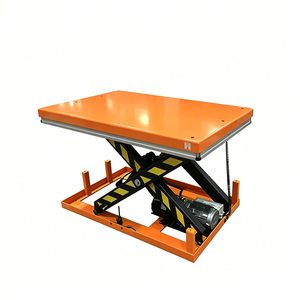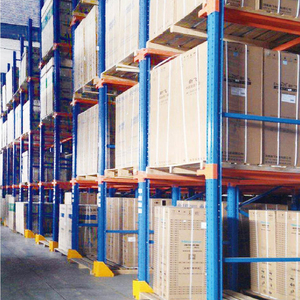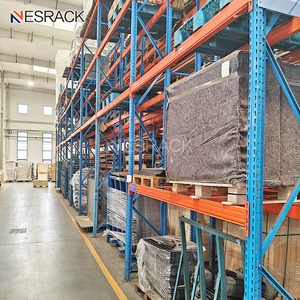
Explore our certified material handling solutions and structural configurations designed to integrate seamlessly with safety guard rails, cantilever systems, and multi-tier mezzanines.
Modern industrial facilities operate under dynamic velocity regimes where material handling equipment (MHE) masses frequently exceed 4,000 kg operating at transit speeds upwards of 12 km/h. Within these mission-critical environments, warehouse guard rails are no longer mere visual delineators; they represent life-critical, engineered physical impact absorption barriers. As a premier CE certified safety guard rails manufacturer and supplier, our engineering frameworks prioritize finite element analysis (FEA), plastic deformation modeling, and dynamic structural resilience.
Under strict CE conformity aligned with EN ISO 14122-3 (Safety of machinery - Permanent means of access to machinery: Guard-rails) and structural testing thresholds defined by international safety directives, industrial barriers must resist predictable kinetic energy transfer without structural shearing. By integrating structural Q235B and cold-rolled high-tensile steels with specialized baseplate anchorages, our protective barrier assemblies safeguard heavy-duty drive-in storage racking, structural mezzanine platform columns, and high-traffic pedestrian arteries against disastrous forklift impacts.
Specifying safety guard rails requires empirical understanding of impact kinetic energy, denoted in Joules (J = 0.5 × m × v²). The load rating of our safety railings must comfortably exceed the peak dynamic impact generated by standard counterbalance forklifts, automated reach trucks, and heavy pallet handlers operating within distribution corridors.
| Guard Rail Category | Material Core Specification | Standard Dimension Matrix | Kinetic Impact Rating (Joules) | Primary Deployment Domain |
|---|---|---|---|---|
| Heavy-Duty Solid Steel Barriers | Q235B / Cold-Rolled Structural Tube | Upright: 120×120×4.5mm; Rail: Φ114×3.5mm | 12,500 J - 18,000 J | High-Velocity Transit Mainways & End-of-Aisle Racking |
| Modular Double-Rail Safety Guards | High-Tensile Cold Formed Steel | Height: 1100mm; Posts: 100×100mm; Length: 1.5m - 2.5m | 8,000 J - 11,500 J | Pedestrian Walkways & Scissor Lift Perimeter Zones |
| Mezzanine Edge Fall Protection | Engineered Box Profile + Kickplates | Height: 1100mm; Integrated 150mm Kickplate | Compliant with EN ISO 14122-3 (Dynamic Fall Rated) | Intermediate Storage Mezzanines & Assembly Attics |
| Machinery Perimeter Guarding | Tubular Structural Profile + Mesh Deck | Upright: 80×80×3.0mm; Rail: Φ76×3.0mm | 6,500 J - 9,000 J | Hydraulic Power Units, Sorting Lines & Automation Hubs |
Anchorage failure represents over 68% of field barrier collapses. Consequently, our systems utilize chemical resin capsules or mechanical undercut anchors engineered to distribute tensile shear evenly into the concrete slab, mitigating floor cracking while maintaining physical retention integrity.
Procurement directors and health, safety, and environment (HSE) auditors are navigating profound structural shifts across the logistics landscape. Sourcing methodologies are transitioning from cost-per-meter metrics toward Total Cost of Ownership (TCO), lifetime impact life-cycles, and robotic fleet interoperability.
Procurement models prioritize self-recovering, hybrid polymer-steel designs that flex upon low-speed impacts, eliminating ongoing slab maintenance and frequent structural re-anchoring expenditures.
With Autonomous Mobile Robots traversing narrow warehouse aisles, barrier geometries are engineered to comply with LiDAR scanning heights and optical reflective thresholds, avoiding navigational sensor blinding.
Global supply chains demand documented third-party structural verification, EN 1090 factory production control certification, and full metallurgical traceability across all structural upright elements.
The manufacturing paradigms underlying safety guard rails are experiencing substantial technical innovation. As smart factories scale, safety hardware converges with data sensing, predictive maintenance, and modular reconfigurability.
Sensory micro-units embedded within upright anchor bases detect micro-deflections and severe G-force collisions, broadcasting instant alerts via warehouse management systems for proactive integrity auditing.
Rapid layout shifts require agile reconfiguration. Modern crash barriers feature quick-swivel drop-in sleeves that enable damaged rail replacements in minutes without cutting or drilling into cured concrete floors.
Next-generation posts utilize progressive multi-chamber internal geometry, systematically absorbing initial collision momentum plastically before transferring residual energy harmlessly into engineered base dampers.
Industrial safety guard rails conform to EN ISO 14122-3 for permanent access barriers and walkways, alongside EN 15512 and EN 15635 for structural racking impact protections. Compliance mandates specific dynamic load calculations, minimum height stipulations (1100 mm), intermediate handrails, toeboard / kickplate specifications (minimum 100-150 mm), and certified metallurgical yielding limits verified by accredited testing bodies.
Impact resistance calculation relies on the formula Joules = 0.5 × Mass (kg) × [Velocity (m/s)]² factored by the cosine of the potential impact angle. For example, a loaded reach forklift weighing 4,500 kg moving at 2.5 m/s (9 km/h) impacting a barrier at an angle of 90 degrees generates 14,062 Joules of instantaneous dynamic energy. Your guard rails must possess a tested threshold exceeding this value by an engineering safety margin of at least 1.25.
For demanding environments, including regional GCC climate regimes with intense thermal and humidity cycling, dual-phase protection is recommended. This comprises high-grade zinc phosphating or hot-dip galvanization (minimum 70-85 μm thickness) followed by an architectural electrostatic polyester powder coating cured at 200°C. This yields high resistance to UV discoloration, chemical caustic splash, and salt fog corrosion.
No. Certified impact ratings are strictly dependent on slab depth, compressive strength (typically C20/25 to C30/37 or above), and rebar reinforcement grids. Installing heavy-duty crash barriers into unreinforced slabs thinner than 150 mm risks catastrophic slab punch-out or edge spalling under impact. Our site engineers perform concrete depth surveys and core testing prior to specifying mechanical chemical anchors.
As an industrial storage and safety barrier manufacturer since 2005, our competitive advantage is anchored in vertically integrated production, verified metallurgical control, and field-proven engineering competence.
Over 500 successful turnkey warehouse implementations across demanding operating jurisdictions, resolving site-specific structural logistics challenges without operational disruption.
We eliminate subcontractor risk. Precision setting out, laser plumb alignment, and torque-calibrated floor anchoring are managed exclusively by our directly employed technicians.
Exclusive to our enterprise partners, our digital Project Tracking System provides complete transparency over fabrication progress, CE factory tests, delivery, and site handover milestones.
From architectural CAD layout integration, floor slab core verification, to mechanical material handling coordination, clients interface with a single accountable manufacturer.
Bespoke floor plans require custom barrier radii, removable pass-through gates, and custom height profiles executed rapidly within our high-capacity cold-roll and CNC fabrication facilities.
Post-installation services include certified visual damage assessments, load capacity recalculation, and fast-track spare part distribution for uprights, baseplates, and fixings.
Our safety guard rails and warehouse racking integrations are calculated under strict architectural guidelines. Every weld line is executed via certified automated MIG processes, followed by non-destructive testing (NDT) to ensure absolute barrier reliability. When lives, equipment, and structural uprights depend on impact mitigation, our CE-marked barrier systems deliver zero-compromise physical defense.