Heavy-duty, cold-resilient post protectors, wrap-around guards, and modular energy-absorbing profiles fabricated specifically for distribution centers and automated handling facilities.
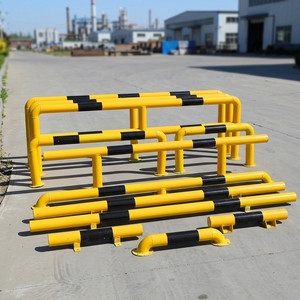
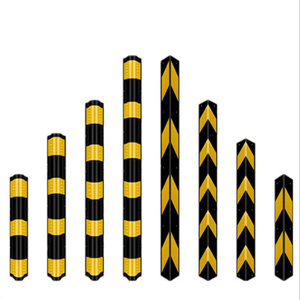
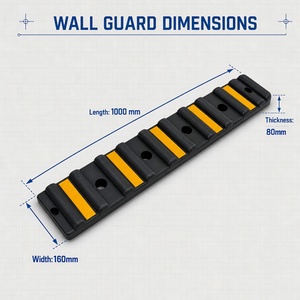
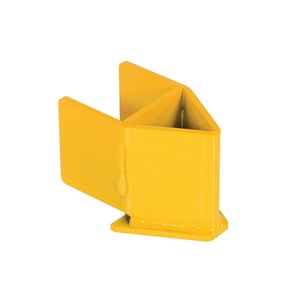
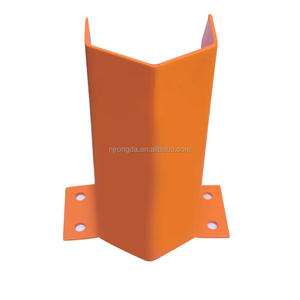
The logistics infrastructure across the Moscow Ring Road (MKAD) and the Central Ring Road (CKAD) represents the highest concentration of Class A and Class A+ logistics developments in Eastern Europe. Key industrial development clusters—such as Chekhov, Podolsk, Domodedovo, Noginsk, and Dmitrov—house massive fulfillment campuses operated by leading Russian e-commerce powerhouses (Wildberries, Ozon, Yandex Market) and 3PL networks. Within these multi-tier facilities, high-density storage configurations, automated guided vehicles (AGVs), and heavy reach trucks operate in narrow aisles (VNA) at high cyclical speeds.
In this high-throughput environment, warehouse column guards and pallet racking upright protectors are not decorative perimeter items; they are structural load-preservation fail-safes. The structural columns of a 14-meter-high facility carry massive roof, snow, and mechanical loads. A direct lateral strike from a laden reach truck (often weighing 4.5 to 7 tons with payload moving at 10-12 km/h) transfers enormous kinetic energy into the structural upright or building pillar. Without certified column protectors engineered to dissipate dynamic forces, the risk of catastrophic racking collapse or structural pillar deformation escalates dramatically.
Furthermore, the climatic reality of Moscow and the wider Central Federal District introduces distinct physical stress parameters. Sub-zero distribution centers, multi-temperature cold stores (ranging down to -30°C in blast freezing facilities), and seasonal temperature fluctuations demand industrial column protectors fabricated with specific material ductile properties. Conventional commodity plastics suffer rapid embrittlement, stress cracking, and shattered integrity under sub-zero impact.
Direct sourcing from leading Chinese manufacturing plants bridges this exact engineering demand. By leveraging high-impact modified High-Density Polyethylene (HDPE), non-embrittling EVA blends, and high-tensile cold-rolled Q235B/Q355B structural steel, our factory produces protective equipment compliant with both GOST R 55525-2017 (Storage Equipment: Racks - General Specifications) and international FEM 10.2.02 / EN 15512 standards, ensuring unmatched facility safety across the Moscow region.
Evaluating structural steel weldments versus high-molecular engineered polymers under dynamic forklift impact testing.
| Protective Technology | Material Specification | Impact Energy Rating (Joules) | Sub-Zero Ductility (-30°C) | Floor Slab Anchor Strain | Recommended Moscow Application |
|---|---|---|---|---|---|
| HDPE Modular Wrap-Around Guard | Virgin High-Density Polyethylene with Impact Modifiers | 1,600 J – 2,400 J (Multi-Stage) | Optimal (Charpy >12 kJ/m²) | Zero (Free-floating wrap-around strapping) | High-velocity e-commerce distribution, food hubs |
| Heavy Steel U-Shaped Floor Guard | Q235B / Q355B Hot-Dip / Powder-Coated Steel (4-6mm) | 3,500 J – 6,000 J (Rigid Stop) | Stable (Low risk of shear) | High (Transfers force to M12/M16 anchors) | End-of-aisle pallet racking frames, main driveways |
| NBR / PU Elastomeric Foam Pad | High-Density Nitrile-Butadiene / Polyurethane | 400 J – 750 J (Surface Deflection) | Moderate (Elastic at -15°C) | Zero (Self-adhesive / Mechanical strap) | Mezzanine columns, parking curbs, low-speed handling |
| Composite Rubber-Steel Floor Curb | Vulcanized Industrial SBR Rubber + Inner Steel Plate | 2,000 J – 3,200 J (Damped Deflection) | High (-40°C glass transition) | Low (Elastomeric body absorbs anchor shear) | Loading docks, exterior ramp transitions, cross-docking |
The Physics of Deceleration vs. Floor Anchoring Failure: When evaluating column guards for installation in Moscow industrial parks, procurement directors must weigh structural rigidity against floor slab degradation. Standard steel guards anchored with concrete wedge bolts transfer deceleration forces directly into the concrete floor slab. Over prolonged operational cycles, micro-fracturing around the anchor expansion zone causes the concrete to blowout, loosening the guard and creating safety hazards.
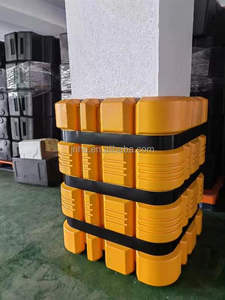
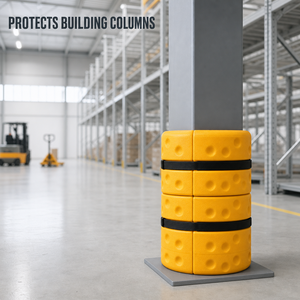
Conversely, our modular engineered polymer column protectors eliminate anchor stress entirely. Featuring nested compression air-cells and circumferential polymer tension bands, the system deflects elastomeric energy upon impact and snaps back into original geometry without permanent plastic deformation. For heavy forklift drive-aisles, our hybrid systems—combining a steel deflector base with an energy-absorbing elastomeric damping layer—provide the ultimate balance of stopping power and concrete longevity.
Building on over 18 years of specialized storage manufacturing, we deliver turnkey impact protection and racking infrastructure across the Russian Federation.
Operating high-tonnage multi-cavity injection molding and automated rotational casting machinery, our facility produces uniform wall thickness with engineered interior stress ribs to guarantee structural rebound.
Every polymer batch formulated for Russian export incorporates specialized low-temperature impact modifiers, UV stabilizers, and antistatic additives to guarantee impact resistance down to -35°C without brittleness.
Our metal protective panels and U-shaped bollards utilize precision laser-cut cold-rolled structural steel, treated via automatic shot blasting and architectural-grade electrostatic polyester powder coating.
Clients in Moscow leverage our enterprise Project Tracking System to monitor real-time production stages, quality assurance tolerance checks, weld penetrations, and container dispatch telemetry seamlessly.
Direct intermodal rail access routing from major Chinese industrial zones via Manzhouli/Zabaikalsk into freight hubs like Vorsino, Bely Rast, and Silikatnaya within 14-21 transit days, ensuring predictable delivery cycles.
Comprehensive supply documentation including EAC declarations, Certificate of Origin, test reports verifying mechanical damping properties under dynamic shear loading, and technical passports in Russian.
Over the past three years, warehouse real estate dynamics across Moscow and the Moscow Oblast have transformed. The explosive expansion of domestic marketplaces and omni-channel retail has increased average racking heights from standard 8-10 meters to 12.5-14.5 meters. In these high-bay structures, the verticality of pallet racking frames means that even a minor deviation of 5-10mm at the base upright—caused by repeated micro-collisions from manual electric pallet jacks or 3-wheel counterbalanced forklifts—creates severe vertical plumb line drift at upper storage tiers.
To adhere to strict fire safety standards (NPB / SP 4.13130) and labor safety protocols (POT RO-14000-007), Russian facility managers are shifting procurement from generic site-welded angle iron guards to certified industrial protection modules. Site-welded guards often exhibit brittle weld seams and irregular anchor geometries that shear off easily. Factory-engineered systems with standardized energy ratings enable predictable lifecycle budgeting and lower operational insurance premiums.
Additionally, sustainable and fast-install solutions are in high demand across the Central Federal District. In existing Class A distribution hubs where concrete drilling requires special permits, diamond core sampling, and dust suppression systems, strap-on modular polymer column protectors provide immense installation advantages. Two technicians can fully secure a 400×400mm H-beam column in under 90 seconds using heavy-duty ratcheted hook-and-loop straps without penetrating the industrial floor or disturbing ongoing picking operations.
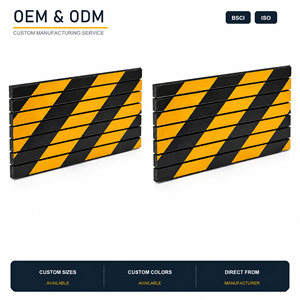
Our direct OEM export program supports Russian industrial distributors, general racking integrators, and engineering EPC contractors with custom dimensional configurations, RAL 1023 Traffic Yellow color-fast pigmenting, and pre-applied high-intensity Class 2 reflective chevron striping conforming to Russian occupational safety visibility codes.
Direct, engineering-backed answers addressing the logistics, regulatory, and mechanical concerns of Russian warehouse operators and procurement teams.
Standard commodity polyethylene suffers brittle failure when glass transition temperatures are approached. Our cold-chain grade guards incorporate branched alpha-olefin elastomeric polymers and impact modifiers that preserve ductile yield strength and Izod impact resistance down to -35°C, thoroughly tested under cryogenic shock loads.
Yes. GOST R 55525-2017 mandates that upright protectors at rack corners must absorb a minimum kinetic impact without transferring destructive loads to the racking vertical post. Our steel and polymer guards meet and exceed the required 400 Joules lateral absorption threshold, providing up to 2,400 Joules of progressive energy dissipation.
Shipments depart our manufacturing facilities via direct container rail freight (FCL) passing through the Manzhouli or Alashankou borders, arriving at Moscow-area terminals (Vorsino, Bely Rast, or Kresty) within 14 to 21 days. We supply full export clearance documentation, bill of lading, and packaging lists facilitating smooth Russian customs release.
Yes. Russian industrial architecture frequently utilizes heavy wide-flange GOST beams (e.g., 20K, 30K, 40K series) or custom concrete columns (up to 800×800mm). We provide custom modular extension pieces, tailored internal cavity profiles, and bespoke welded steel fabrications to fit any building column cross-section precisely.
Anchor-fixed guards (steel or heavy rubber) are bolted directly into the concrete floor slab; they provide a positive physical stop against heavy machinery but can damage concrete during high-energy collisions. Strap-fixed polymer guards wrap directly around the pillar or upright, utilizing internal air chambers to disperse shock without concrete drilling.
Yes. We support consolidated container loading. Russian clients frequently order full 40ft HQ containers combining modular polymer column protectors, steel U-shaped rack guards, NBR adhesive parking strips, wire mesh decking, and pallet stop barriers, optimizing freight volume and landed unit costs.
In Moscow cross-docking facilities, forklifts tracking winter meltwater and road de-icing agents accelerate surface corrosion on metal barriers. Our steel guards undergo 7-stage surface pre-treatment followed by zinc-phosphate conversion and thermoset polyester powder coating, achieving salt spray resistance exceeding 500 hours (ASTM B117).
We work directly with Russian corporate accounts and trading houses, offering direct cross-border settlement in Chinese Yuan (CNY) via designated bank corridors, compliant with export trade protocols. Standard terms include flexible staged payments aligned with real-time production validation milestones.
Request comprehensive product specifications, dynamic test reports, volume price matrices, and direct container freight quotations to Moscow, Podolsk, or any logistics hub in the Russian Federation.
Contact Us