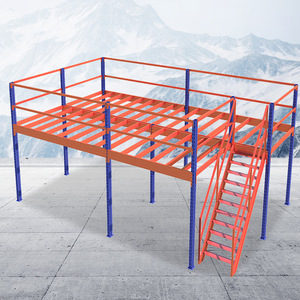
Mezzanine Platform
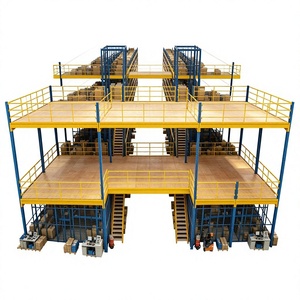
Two-Story Heavy-Duty Cold-Rolled Steel Storage Mezzanine Structure Reinforced Shelving
Load: 500-1200 kg/m²
S355 Steel
Technical Specs
High-precision cold-rolled structural steel components configured for standard Euro (1200×800 mm) and Block (1200×1000 mm) pallets, fully adhering to European warehouse safety norms.
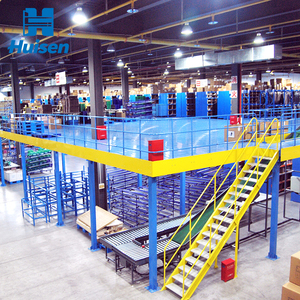
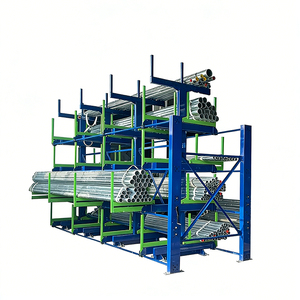
Our structural engineers provide full FEM 10.2.02 and NEN-EN 15512 static calculations, AutoCAD bay elevations, and quotation within 24 hours. Connect with our European engineering desk now.
The Netherlands serves as the undisputed logistical gateway of Europe. Driven by the Port of Rotterdam, the air freight hub of Amsterdam Airport Schiphol, and the hyper-dense inland multi-modal distribution corridors of Venlo, Tilburg, Breda, and Moerdijk, the demand for industrial warehousing real estate has reached historic peaks. With land scarcity severely constraining horizontal building expansion and logistics prime rents in Noord-Brabant and South Holland surpassing €85 to €115 per square meter annually, Dutch logistics executives and supply chain directors are forced to maximize volumetric density (cubic meter efficiency) rather than floor area alone.
Under these stringent constraints, Push Back Racking systems have emerged as the premier structural storage methodology. By utilizing a dynamic Last-In, First-Out (LIFO) accumulation architecture across inclined wheel carts or gravity rollers, push-back designs eliminate intermediate operating aisles required by traditional selective racking. This transforms typical 40% warehouse floor area utilization into upwards of 75% to 80% effective storage density, while retaining individual lane accessibility across 2 to 6 pallet depths.
“In Dutch high-throughput distribution environments, push-back racking bridges the operational gap between static selective racks and fully automated deep-lane ASRS. It offers massive space savings without the massive capital expenditure or complex maintenance cycles of automated satellite shuttles.”
Unlike standard Drive-In racking, which forces lift trucks to enter the physical structural bay—resulting in significant upright damage risks and higher operator transit times—push-back systems restrict forklift activity strictly to the cross-aisle face. The forklift driver deposits a pallet onto the upper nested cart; when the next pallet is introduced, the truck physically pushes the first pallet backward along low-profile inclined structural rails. Upon retrieval, gravity gently glides the subsequent nested cart forward to the loading aisle, controlled by specialized safety decelerators and hydraulic dampeners.
| Storage System Type | Space Utilization | SKU Selectivity | Forklift Damage Exposure | Dutch Pallet Compatibility (Euro & Block) | Capex vs. ROI Ratio |
|---|---|---|---|---|---|
| Nested Cart Push-Back | 75% – 85% | High (Per Lane Access) | Minimal (Operates outside bay) | 100% Dual-Format Compatible | Optimal Fast ROI (18-24 Mo.) |
| Selective Pallet Racking | 35% – 45% | 100% (Direct Pick) | Low - Medium | Requires beam position adjustments | Lowest initial Capex, Poor footprint ROI |
| Drive-In / Drive-Through | 70% – 80% | Very Low (Batch LIFO) | Very High (Frequent column impact) | Rigid lane skid profile required | Moderate Capex, High repair cost |
| Radio Shuttle Automation | 85% – 90% | Medium (Per Lane) | Low | Requires precise pallet bottom runners | Very High Capex, Tech-dependent |
| Pallet Live Flow (FIFO) | 80% – 88% | Medium (Per Lane FIFO) | Low | Requires uniform pallet base quality | High Capex (Continuous roller tracks) |
An authoritative evaluation of leading global and European structural racking producers capable of delivering NEN-EN 15512 and FEM 10.2.02 compliant push-back installations into the Dutch marketplace.
Primary Edge: Heavy-duty custom engineering, automated continuous roll-forming lines, and proprietary real-time Project Tracking System. Delivering direct-from-factory high-tensile cold-rolled steel (Q345B/S355 equivalent) push-back systems with galvanized nested carts, dual-bearing steel flanged wheels, and end-to-end NEN-EN compliance. Renowned for custom bay geometry catering to mixed Dutch Euro and Block pallet configurations without structural deflection.
Primary Edge: Domestic Dutch manufacturing heritage headquartered in Doetinchem. Nedcon excels in complex automated warehouse integrations and structural push-back channels. Known for rigid adherence to Dutch Arbowet safety specifications, though premium localized pricing and extended production queue backlogs are common considerations for mid-market DCs.
Primary Edge: One of Europe's largest structural racking conglomerates. Offers standardized nested-cart push back systems characterized by modular clip-in rail systems. Extensive project integration in the Benelux market with regional technical teams based in Breda and surrounding logistics clusters.
Primary Edge: Comprehensive production footprint across Southern Europe with strong distribution in the Netherlands. Offers both cart-based push-back and roller-bed push back variants. Features integrated Easy WMS software options for inventory tracking across dense multi-channel distribution centers.
Primary Edge: German engineered flow and high-density racking with dedicated Benelux offices. BITO is recognized for precision roller assemblies and specialized push-back flow lanes designed for pharmaceutical cold stores and high-care distribution hubs.
Primary Edge: Full-system intralogistics provider offering complete turn-key packages pairing material handling equipment (reach trucks and counterbalance forklifts) with dedicated push-back racking geometries engineered for optimal mast tilt and push resistance.
Primary Edge: High-volume automated manufacturing in Northern Spain utilizing continuous pre-galvanized coils. Strong structural resistance against seismic vibrations and floor micro-subsidence, a critical parameter in reclaimed Dutch polder regions.
Primary Edge: Longstanding historical presence in Northern European intralogistics. Dexion's push-back systems incorporate patented low-profile nested carts that conserve critical vertical bay clearance, maximizing beam tier capacity under low warehouse eaves.
Primary Edge: Global intralogistics powerhouse capable of executing mega-scale high-bay racking projects. Push-back product lines are built with structural roll-formed profiles designed for industrial durability in heavy chemical and automotive distribution centers.
Primary Edge: Competitive European production with high adaptability for medium-sized logistics operations throughout Utrecht and Overijssel. Offers modular gravity roller push back modules suitable for non-standard pallet skid configurations.
How high-density LIFO gravity storage addresses specialized supply chain dynamics across the Netherlands' prime industrial zones.
Cold storage energy consumption in the Netherlands is exceptionally expensive under EU carbon compliance mandates. Push-back racking minimizes the refrigerated air volume per stored pallet by up to 40% in -25°C blast freezers and Dutch horticultural flower bulbs cold rooms, maximizing thermal density without sacrificing lane speed.
Serving as the multi-modal logistics conduit into Germany and the Ruhr valley, 3PL giants operate high-velocity buffer zones. Push-back installations configure 3-deep to 5-deep SKU staging lanes directly adjacent to shipping docks, speeding up pre-loading staging and cutting forklift turnaround cycles by 35%.
Consolidated maritime container unloading requires high-density staging for bulk import commodities awaiting Dutch customs customs release. Push-back accommodates variable batch sizes, allowing customs verification on individual lane faces without destacking deep blocks of pallets.
1. Strict BREEAM-NL & Circular Economy Mandates: New warehouse developments in the Netherlands (such as prime logistics centers in Schiphol Trade Park and Moerdijk) demand BREEAM "Outstanding" or "Excellent" certification. Racking purchasers prioritize structural steel suppliers who utilize low-carbon recycled scrap steel electric arc furnace (EAF) fabrication, non-toxic powder coatings, and fully demountable, modular structural members that facilitate circular reuse at end-of-lease.
2. AMR & Reach-Truck Synergy: As labor shortages continue to impact Dutch logistics operations, warehouses are transitioning to automated guided vehicles (AGVs) and autonomous mobile forklifts (AMRs). Modern push-back manufacturers must engineer extreme precision into the entry rail funnels, stop plates, and cart nesting alignment so automated laser-guided handling trucks can load and extract pallets without manual human micro-adjustments.
3. Geotechnical Subsidence Engineering: A major challenge unique to Dutch warehousing—especially in Zuid-Holland and Flevoland—is soft, peaty subsoil conditions. Even with pile-supported concrete slabs, differential micro-settlement can alter racking verticality. Push-back manufacturers must supply heavy-duty base plates with precision shimming systems and structural calculations conforming to NEN-EN 15512 to prevent rack inclination changes that could accelerate or impede cart gravitational return.
Over 18 years of specialized manufacturing precision, transparent project governance, and turnkey structural racking expertise.
Established structural expertise translating to exact static calculation, zero on-site component modification, and verified steel yield properties conforming strictly to international EN and FEM structural standards.
Clients never navigate blind procurement cycles. Our proprietary Project Tracking System gives project directors live visual transparency across raw material rolling, laser punching, powder coating, container loading, and shipment logistics.
From primary site dimensions, CAD beam deflection simulations, and certified manufacturing to direct freight, on-site assembly supervision, floor anchoring inspection, and official load capacity plaques conforming to NEN-EN 15635.
Direct answers to the critical engineering, compliance, and operational questions asked by Dutch facility directors and warehouse managers.
All industrial push-back systems installed in the Netherlands must strictly comply with NEN-EN 15512 (Steel static storage systems - Specification of adjustable pallet racking), NEN-EN 15620 (Tolerances, deformations, and clearances), and NEN-EN 15635 (Application and maintenance of storage equipment). Furthermore, installation practices must comply with the Dutch Working Conditions Act (Arbowet), mandating clearly visible load warning notices (belastingborden) displaying certified beam and bay limits.
Yes. In the nested-cart configuration, our engineers design universal welded cart frames fitted with dual nested support crossbars. This ensures that an 800 mm wide Euro pallet (loaded short-side or long-side) or a 1000 mm wide Block pallet rests securely on the cart steel profiles without localized point deflection or tipping risks.
While roller-bed systems can technically stretch deeper, the engineering sweet spot for nested cart push-back systems is 2 to 6 pallets deep. Beyond 6 deep, the cumulative push resistance required from the forklift mast increases significantly, causing excessive tire wear and potential operator hesitation during insertion. For depths over 6 pallets, automated radio shuttle systems become more cost-effective.
The standard slope gradient is set precisely between 2.5% and 3.5% (approximately 1.5 to 2 degrees). This specific gravity angle ensures reliable forward roll when a pallet is removed, while keeping the descent velocity controlled to prevent violent cart impact against front beam stop barriers.
Push-back systems routinely reduce annual racking maintenance and upright replacement budgets by 70% to 80% compared to Drive-In racking. Because forklift trucks never physically enter the structural bays, corner upright collisions, horizontal brace shearing, and floor anchor loosening are virtually eradicated.
Yes, provided the existing upright frames and foundation concrete slab possess verified structural capacity to carry concentrated lane loads. Push-back rail brackets can be engineered to clamp directly onto standard 50mm or 75mm teardrop/diamond upright punching patterns. A static recalculation by our structural engineers is mandatory prior to retrofitting.
Due to the concentrated leg loads produced by high-density deep-lane storage, the warehouse floor should generally meet NEN 2747 Class 2 or 3 flatness standards with reinforced concrete thickness typically not less than 180mm to 200mm, with compressive strength ratings of C20/25 or higher. Our engineering documentation details all anchor shear loads and floor pressure distributions.
Because push-back bays create continuous deep storage blocks, European fire safety regulations (CEA 4001 / NFPA 13) may require intermediate in-rack ESFR sprinkler lines between back-to-back runs or open flue spaces. We supply push-back designs with dedicated pipe passageways and open-grid wire decking where water penetration through cart tiers is mandated by local Dutch safety inspectors.
Connect with our technical design team today for free warehouse floor space profiling, AutoCAD layout generation, and guaranteed competitive factory-direct pricing for projects across the Netherlands.