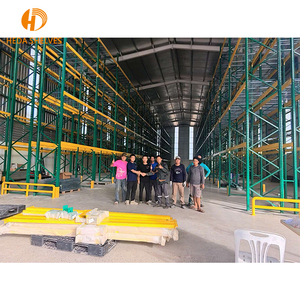
Engineered from premium structural Q235B steel with standardized 2-inch vertical adjustments. Precision-manufactured for seamless backward-and-forward compatibility with standard American teardrop frameworks across high-throughput logistic hubs in Nagoya, Komaki, Toyota City, and Mie Prefecture.
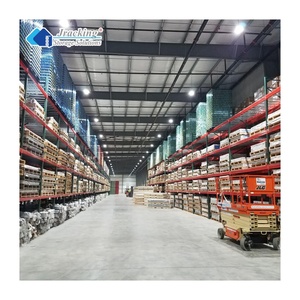
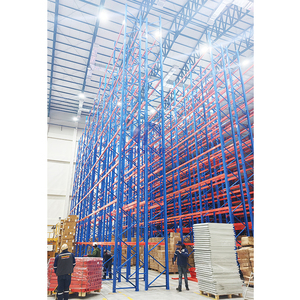
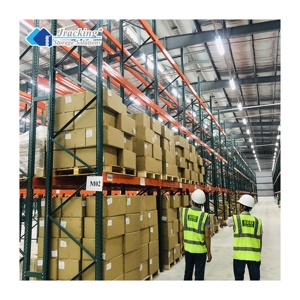
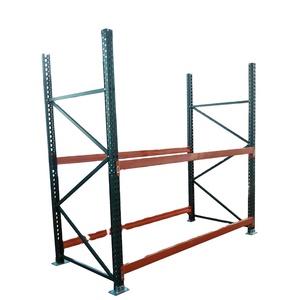
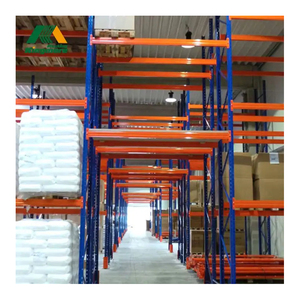
Teardrop pallet racking remains one of the world's most widely adopted configurations for selective industrial inventory storage. Characterized by its punched conical punched hole pattern resembling an inverted teardrop, this mechanical profile facilitates toolless, boltless engagement between horizontal load beams and vertical upright frames. While historically dominant across North American logistics hubs, the teardrop system has experienced immense adoption throughout Japanese industrial nodes—particularly in the Chubu economic region encompassing Nagoya, Aichi, Gifu, and Mie. This transition is propelled by foreign multinational 3PL operators, automotive tier suppliers managing international cross-dock facilities, and regional e-commerce consolidators demanding universal component interchangeability.
From an structural metallurgy standpoint, the integrity of a high-bay teardrop pallet racking assembly hinges on raw material yield strength, cold-roll precision, and seismic resilience. We manufacture upright frames and step/box beams using structural-grade Q235B and Q355B cold-rolled coiled steel, ensuring minimum tensile yield strengths exceeding 235 to 355 MPa. The teardrop punch geometry is executed using continuous multi-station computer-numeric punching presses that maintain hole-pitch center tolerances within ±0.1mm across the entire upright length. This strict mechanical execution prevents beam-end connector displacement and dynamic slack during intensive forklift operations.
Standard American teardrop racking designs assume gravity-dominant dead loads and moderate lateral forklift collision forces. However, integrating teardrop racking within Greater Nagoya necessitates rigorous conformance with the Japanese Building Standard Act (Kenchiku Kijun-hō) and localized seismic design protocols. Aichi Prefecture and the surrounding Nankai Trough zones require steel storage systems to resist ground acceleration coefficient stresses exceeding Level 2 seismic motions without catastrophic collapse or plastic frame dislocation.
To deliver complete compliance, our factory enhances standard teardrop upright geometry by increasing baseplate dimensions from standard 3-inch pads to seismic-grade heavy structural steel baseplates measuring up to 160 mm × 180 mm × 10 mm. Baseplates feature multi-point anchorage ports configured to accept chemical M12 to M16 anchor bolts embedment into concrete floor slabs rated at 21 N/mm² or higher. Furthermore, beam-to-column connections are fortified with dual spring-steel automatic retention locking pins that resist upward rotational disengagement during vertical seismic shock waves, significantly surpassing conventional clip configurations.
| Component Specification | Standard American Spec | Nagoya/Japan Heavy Seismic Spec | Benefit for Industrial Operators |
|---|---|---|---|
| Base Material Grade | Commercial Cold-Rolled Carbon Steel | High-Tensile Q235B / Q355B (JIS SS400 Equiv.) | Superior ductile deformation without brittle fracture under sway. |
| Upright Column Profile | 76.2 mm × 76.2 mm (14–16 Gauge) | 90 mm to 120 mm Open Omega Profile (11–13 Gauge) | Elevated sectional moment of inertia (Ix, Iy) reducing buckling. |
| Connector Engagement | 3-Pin Teardrop Lug | 4-Pin High-Shear Lugs with Gravity Safety Pin | Disallows horizontal beam rolling and reduces rotational deflection. |
| Baseplate Dimensions | 75 mm × 100 mm × 3.0 mm (Single Anchor) | 160 mm × 180 mm × 8.0–12.0 mm (Dual Chem Anchors) | Distributes floor punch pressures and resists extreme overturn moments. |
| Corrosion Finishing | Standard Single-Coat Enamel | Epoxy-Polyester Thermoset Electrostatic Powder (70-90µm) | Resists coastal atmospheric humidity in Nagoya Port warehousing zones. |
Nagoya stands as the capital of Japan's Chubu manufacturing engine. From automotive just-in-time sequencing to maritime warehousing at Nagoya Port, our teardrop racking structures provide specialized operational benefits tailored to regional supply chain requirements.
Situated within proximity to Toyota City, Kariya, and Komaki, automotive suppliers utilize teardrop selective systems configured with heavy-duty step beams and wire decking to stage standardized returnable plastic containers (TP boxes) and heavy stamping dies. The 2-inch pitch adjustability allows engineers to alter shelf clear heights within minutes as annual vehicle platform dimensions evolve.
The Port of Nagoya processes the nation's largest export tonnage. Marine transshipment facilities require selective racking systems capable of managing standard ISO import wooden pallets alongside domestic JIS 1100×1100 mm pallets. Our high-bay teardrop systems integrate drop-in pallet support bars that guarantee load containment across non-uniform foreign pallet footprints.
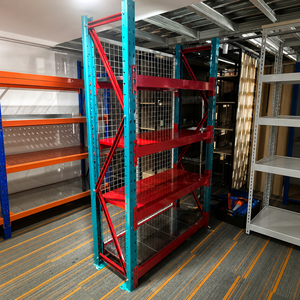
Accelerated logistics development along the Tomei and Meishin Expressways demands hybrid storage configurations. Teardrop pallet racking acts as the robust skeletal backbone for multi-tier carton-flow picking operations, integrating wire mesh decks with vertical dividing fins to segregate fast-moving consumer retail SKUs while maintaining sprinkler water penetration standards.
The convergence of labor shortages (the "2024 Problem" in Japanese transport logistics) and automated warehousing expansion is fundamentally reshaping racking procurement parameters in Nagoya.
Nagoya's modern distribution centres are transitioning away from wide reach-truck aisles to dense hybrid AMR staging. Upright frames are increasingly engineered with flush-mount floor anchors, structural column bull-nose protectors, and high-contrast beam powder coatings that allow LiDAR-guided robotic vehicles to execute precise optical docking without mechanical interference.
Traditional domestic Japanese storage racking frequently relied on proprietary slot-and-hook designs, locking facility owners into single-source suppliers for replacement parts. Logistics asset managers across Greater Nagoya are progressively pivoting to open teardrop systems, affording them cross-vendor procurement flexibility, reduced lead times, and global interoperability.
Municipal Fire Defense regulations in Nagoya require minimum water pass-through rates for indoor storage racks exceeding certain height thresholds. We supply engineered teardrop assemblies integrated with flared waterfall wire mesh decking that exceeds 70% open area, satisfying local fire inspections without sacrificing load-bearing beam ratings.
Drawing upon over 18 years of manufacturing discipline, more than 500 major logistics facilities engineered worldwide, and strict end-to-end operational accountability from roll-forming to site delivery.
With an extensive history spanning heavy industrial installations, our structural calculation models prevent site surprises. Every bay load configuration is backed by finite element analysis (FEA) validating moment resistance and axial compression margins before manufacturing begins.
Eliminate transparency blindspots in international fabrication. Clients utilize our proprietary Project Tracking System to inspect fabrication milestones, robotic welding quality verification, powder coating thickness audits, and container shipping dispatch schedules in real time.
From initial clear-height surveying, beam deflection modeling, and continuous CNC production to full seismic anchoring components and post-handover safety inspection protocols—your facility interfaces with one dedicated engineering partner.
Detailed technical and commercial answers addressing structural safety, customs logistics, compatibility, and seismic anchoring in the Greater Nagoya territory.
Yes. While American teardrop racking was historically developed for GMA 40×48 inch (1016×1219 mm) pallets, our factory custom-engineers beam span profiles specifically for Japanese logistics standards. For standard JIS T11 pallets (1100 mm × 1100 mm), we provide clear beam spans of 2300 mm (2-pallet bay) or 3400 mm (3-pallet bay) paired with 1000 mm or 1050 mm upright frame depths. This ensures optimal front and rear pallet overhang of 25–50 mm, satisfying Japanese warehouse safety directives.
Aichi Prefecture mandates thorough structural consideration against anticipated Nankai Trough seismic scenarios. We engineer teardrop systems intended for installation in Nagoya using structural steel columns with elevated wall thicknesses (up to 3.0 mm), augmented diagonal and horizontal frame bracing nodes, oversized seismic baseplates, and certified high-shear anchor bolts. In addition, top-tie bracing, row spacers, and vertical back portal bracing can be factored into your structural design based on warehouse ceiling height and bay weight ratios.
Completely. Our teardrop punch tooling adheres precisely to the standardized 2-inch vertical center-to-center pitch, compatible with standard inverted teardrop patterns. If your Nagoya logistics center already operates imported American-made teardrop racks, our beams, uprights, and safety accessories will integrate seamlessly into your existing layout, facilitating bay expansions without replacing your installed infrastructure.
We supply comprehensive technical dossiers necessary for Japanese local authority submissions. This documentation package includes structural design calculations, 3D CAD facility floorplans showing egress clear aisles, material mill test certificates (demonstrating tensile, yield, and chemical properties of our Q235B/Q355B steel), certified beam deflection ratings (standard L/180 or rigid L/240), and fire safety compliance certificates for wire mesh decking water permeability.
All teardrop racking orders are bundled with heavy-duty protective steel strapping, corner edge guards, and vapor corrosion inhibitors to withstand sea transit. Shipments route directly via international container liner services to the Port of Nagoya (Tobishima Container Terminal). Our logistics department handles export customs documentation, ISF filings, and coordination with local customs brokers to ensure straight, scheduled container transport directly to your warehouse loading dock in Nagoya, Komaki, Inuyama, or neighboring prefectures.
Speak directly with our structural storage engineering team. From free warehouse layout drafting and seismic bay calculations to real-time manufacturing tracking, we deliver heavy-duty teardrop pallet racking tailored to your operations.
Get Catalog