Design · Supply · Installation · Inspection
Structural Engineering & Seismic Grade Racks

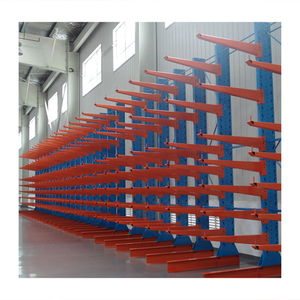
Heavy Duty Cantilever Manufacturer & Supplier serving San Francisco

High-Density, Seismic-Compliant Steel Cantilever Racking Engineered for Structural Timber, Industrial Bar Stock, Extrusions, and High-Density Bay Area Warehouses

18+ Years Engineering Track
5,000+ LBS Per Arm Capacity
500+ Heavy Industrial Projects
100% RMI & Title 24 Compliance
Engineering White Paper Overview

Solving the Geometric & Seismic Spatial Equation in Northern California Logistics

In the fiercely competitive industrial real estate landscape of the San Francisco Bay Area—spanning South San Francisco, the East Bay (Oakland, Hayward, Richmond), and down through Silicon Valley—industrial storage square footage commands some of the highest lease premiums in North America. Warehousing long, unwieldy materials such as engineered structural lumber, steel I-beams, PVC pipelines, aluminum extrusions, and bulk crated goods presents an immediate operational bottleneck when constrained by traditional selective pallet racks with front column obstructions.

California Seismic Zone 4 Compliance

San Francisco sits proximate to the San Andreas and Hayward Fault complexes. Storage systems are governed by the strictest seismic design criteria under the California Building Code (CBC 2022) and RMI (Rack Manufacturers Institute) ANSI MH16.2 specifications.

  • Engineered for high Ground Acceleration (SDS values > 1.5g)
  • Oversized baseplates with precision high-embedment Hilti / Simpson anchors
  • Dynamic structural deflection modeling under live product loadings

Hot-Rolled Structural Steel Integrity

Unlike fragile roll-formed metal sheet racking vulnerable to forklift impact in tight aisles, our cantilever frames utilize wide-flange structural steel (ASTM A36 and A992) with exceptional tensile strength.

  • Solid H-beam columns handling rigorous torsional resistance
  • Tapered cantilever arms preventing load slippage under deflection
  • High-shear grade 8 structural hardware cross-bracing bays

High Cube Utilization & Selectivity

Eliminating front vertical columns creates a completely unobstructed horizontal storage plane. This configuration reduces crane and side-loader cycle times while reclaiming up to 60% of idle vertical warehouse air space.

  • Configurable single-sided runs against walls or double-sided central aisles
  • Pin-locking arm adjustments in 3-inch or 4-inch increments
  • Custom steel wire decking or pipe-stop accessories
Engineered Product Lines

Featured Heavy Duty Cantilever Racks & Specialized Assemblies

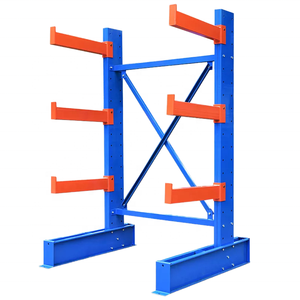
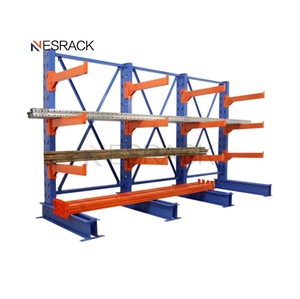
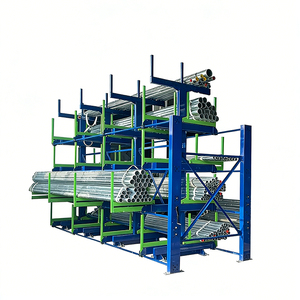
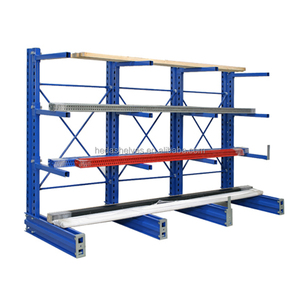
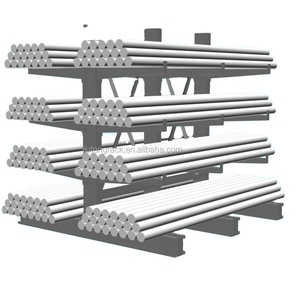
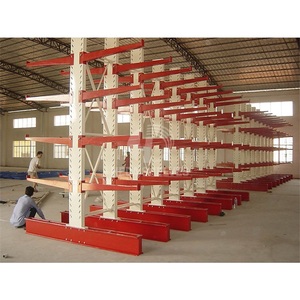
Explore our factory-direct cantilever and engineered warehouse structural solutions, built to withstand rigorous industrial handling and meet Northern California facility requirements.

Technical Engineering Guide

Cantilever Rack Structural Profiles: Comparison & Bay Selection

Choosing between Roll-Formed sheet steel, Structural Wide-Flange H-Beams, and Telescopic configurations determines long-term ROI, seismic survival, and forklift safety tolerances.

Cantilever Type Material Specification Typical Capacity (Per Arm) Impact Resistance Seismic Rating (Zone 4) Best Bay Area Application
Structural H-Beam Cantilever ASTM A36 / A992 Hot-Rolled I/H Profiles 2,500 – 6,500+ lbs Extreme (Resists heavy forklift collisions) Top Rated (High Ductility & Deflection tolerance) Steel service centers, heavy timber lumberyards, maritime shipyard docks
Standard Roll-Formed Cantilever Cold-formed steel channel with pin locks 800 – 2,000 lbs Moderate (Prone to creasing upon sharp impact) Compliant with specific cross-bracing and thicker baseplates Plumbing supply branches, light retail PVC, drywall storage
Telescopic / Crank-Out Cantilever Machined structural alloy steel arm carriages 3,000 – 5,000 lbs High (Enclosed mechanical gearing housing) Engineered base tie-down requirement Precision CNC machine shops, aerospace manufacturing in South Bay
Outdoor Roof-Covered Cantilever Hot-Dip Galvanized (HDG) ASTM A123 Steel 2,000 – 5,500 lbs Extreme (Resists Marine Fog & Salt Corrosion) Wind-load (CBC 110 mph) + Seismic engineered Open-yard building supply in Oakland, Port of SF, coastal Peninsula
Regional Deployment

San Francisco & Bay Area Application Profiles

How Northern California industrial facilities leverage heavy duty cantilever storage to maintain continuous operations and satisfy stringent regional ordinances.

South San Francisco & Peninsula

Commercial Glazing & Architectural Metal

Fabricators supplying high-rise developments in Downtown SF require continuous horizontal storage for 24-foot curtain wall extrusions, structural aluminum channels, and oversized architectural glass crates. Cantilever configurations eliminate beam upright constraints, streamlining crane pickup and overhead hoist transfer.

Oakland & East Bay Industrial Corridor

Lumber Yards, Mass Timber & Civil Contractors

With cross-laminated timber (CLT) and glulam usage surging across California sustainable architecture, lumber distribution depots throughout Hayward, San Leandro, and Richmond utilize heavy-duty H-beam cantilever racks to store heavy 40-foot timbers outdoors with durable hot-dip galvanized weatherproofing.

Silicon Valley & Fremont Clean-Tech

EV Battery Enclosures, Solar & Data Center Piping

Advanced manufacturing clusters require clean, powder-coated cantilever arrays for high-spec copper piping, stainless steel conduit, and heavy EV chassis framing. Fast arm adjustability supports frequent production line retooling without structural warehouse overhaul.

Bay Area Market Dynamics

Industrial Storage Trends Shaping Northern California

Navigating escalating real estate costs, clean energy mandates, and seismic regulatory scrutiny in the San Francisco Bay Area industrial sector.

Why Partner With Us

Engineering Accountability From Design to Handover

Combining 18+ years of structural fabrication precision with end-to-end project management, certified engineering calculations, and turnkey installation support.

18+ Years Field Experience

Over 500 major industrial installations executed globally. Our engineering department specializes in high-load storage geometries, load deflection tolerances, and complex facility column grid accommodations.

Rigorous QA & Certified Anchoring

Every cantilever upright, arm weldment, and cross-bracing set complies strictly with international structural tolerances, certified high-strength steel grades, and specified seismic post-installed anchor torque parameters.

Turnkey Execution

Our 5-Step Heavy Duty Cantilever Delivery Process

From raw floor plate analysis to certified load capacity sign-off, our structured engineering workflow guarantees compliance and zero operational friction.

01

Site & Load Survey

We analyze slab thickness, concrete compressive strength (PSI), building clear height, and unit weight distribution per arm level.

02

Seismic Layout Design

Structural engineers prepare CAD layouts, anchor stress calculations, and seismic deflection analyses meeting CBC & RMI codes.

03

Precision Manufacturing

Factory-direct hot-rolled structural steel profiling, automated shot-blasting, robotic welding, and baked powder or HDG finish.

04

Delivery & Staging

Phased shipping coordinated directly to your San Francisco Bay jobsite, minimizing facility disruption and yard congestion.

05

Installation & Handover

Laser-plumb bay alignment, calibrated anchor torquing, official load signage installation, and PE engineering sign-off.

Procurement FAQs

Frequently Asked Questions for Bay Area Racking Projects

Key structural, permitting, and capacity questions addressed by our cantilever engineering team.

Do cantilever racks installed in San Francisco require city building permits and engineering PE stamps?
Yes. In San Francisco and across California, any industrial storage rack system exceeding 8 feet in height (or 5 feet 9 inches in high-hazard seismic categories) requires a building permit from the local building authority (e.g., SF DBI, Oakland Building Bureau). The submittal must include site-specific seismic calculations, slab-depth verification, and anchor pull-out analysis sealed by a licensed California Professional Engineer (PE). We provide turnkey engineering packets to expedite municipal plan-check approvals.
What is the difference between Roll-Formed and Structural Steel Cantilever Racks?
Roll-formed cantilever uses cold-rolled sheet steel shaped into C-channels. It is economical for lighter loads (such as trim, molding, and conduit). Structural cantilever is fabricated from hot-rolled ASTM A36 or A992 structural steel H-beams. Structural cantilever delivers far superior impact resistance against heavy counterbalance forklifts, maintains rigid deflection limits under massive tonnage (such as bundles of steel rebar or structural lumber), and is the preferred choice for seismic zones and rugged industrial sites.
How do we calculate load capacity per arm and prevent product deflection?
Load capacity must be calculated based on Uniformly Distributed Loads (UDL) rather than point loads. The total weight of the bundle is divided across the number of supporting arms. For example, a 12,000-lb bundle of steel tubing supported across 4 arms exerts a 3,000-lb load per arm. Crucially, the arms are designed with an intentional upward pitch (typically 1 to 2 degrees) so that under live-load elastic deflection, the arm levels out horizontally without the cargo sliding forward.
Can cantilever racks be installed outdoors in coastal Bay Area environments?
Yes. For exterior yards in coastal zones like the Port of Oakland or South San Francisco, we supply hot-dip galvanized (HDG) finishes conforming to ASTM A123. This provides a thick, metallurgically bonded zinc alloy shield that prevents corrosion caused by marine air and wet winter weather. Outdoor systems can also be engineered as cantilever roof sheds with overhead canopies to protect materials from direct sunlight and rain.
What slab thickness and concrete strength are required to anchor heavy duty cantilever uprights?
Because cantilever racks carry eccentric overturning moments, the foundation requires robust concrete anchoring. Most high-capacity industrial installations require a minimum 6-inch to 8-inch reinforced concrete slab with a 3,000 to 4,000 PSI rating. Heavy-tonnage or high-bay systems in Seismic Zone 4 may require core testing, oversized baseplates, or designated isolated footings if the existing slab thickness is insufficient for seismic anchor embedment depth.
Direct Factory Engineering

Plan Your Seismic-Rated Cantilever Storage System Today

Whether you are outfitting a structural steel distribution center in the East Bay, a lumber reload hub in Richmond, or an advanced fabrication facility in Silicon Valley, our team provides fast site assessments, CAD design proposals, and factory-direct pricing.