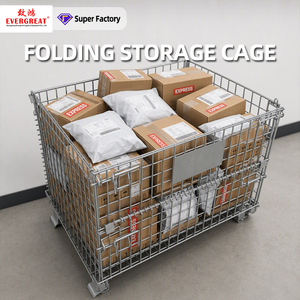
High-Density Material Handling Systems
Standard & Heavy-Duty Storage Configurations
Export-ready steel wire containers, specialized turnover boxes, automated tote bins, and warehouse protection accessories tailored for New Zealand supply chains.
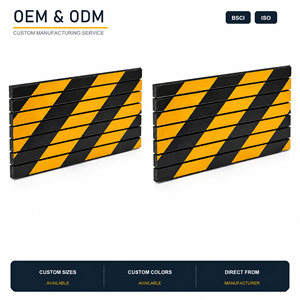
Warehouse Rack Column Guard Foam Wall Protector NBR/PU Panel
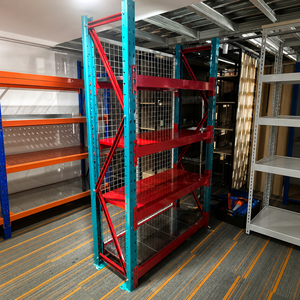
Heavy Duty Teardrop Pallet Rack Adjustable Steel Frame
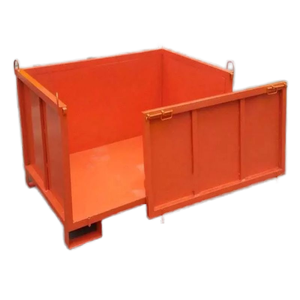
Heavy Duty Metal Storage Workshop Turnover Box 1000kg Capacity
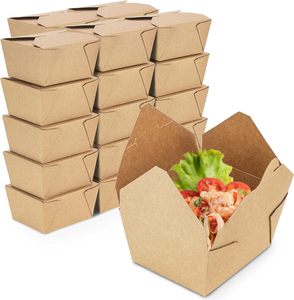
Food-Grade Secondary Kraft Inner Packaging Bulk Cartons
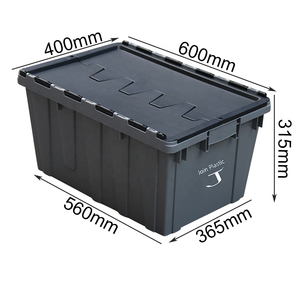
Reinforced Attached Lid Logistics Tote Bin for ASRS Systems
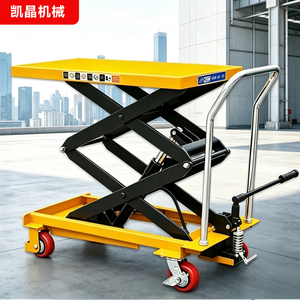
Movable Manual Hydraulic Scissor Lift Platform 200kg Capacity
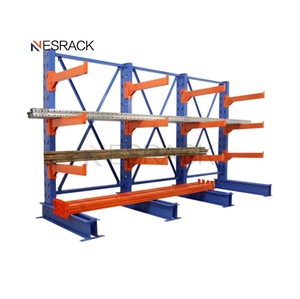
Industrial Structural Cantilever Long Arm Support Racking
18+
Years Engineering Expertise
500+
Major Industrial Installations
100%
Traceable Cold-Drawn Steel Q235
4:1
Reverse Logistics Space Ratio
Technical Whitepaper: Engineering Next-Generation Collapsible Wire Containers for New Zealand Industry
Modern New Zealand distribution facilities, pastoral processors, wine bottling plants, and automated cross-dock hubs are undergoing an operational transformation. Faced with rising land costs in prime industrial areas across South Auckland, Christchurch, and Tauranga, warehouse executives are aggressively transitioning away from disposable timber pallets and rigid, non-collapsible steel bins. Our export-grade collapsible wire mesh containers represent the benchmark in closed-loop, sustainable unit-load equipment designed to maximize floor space, ensure seismic stability under AS/NZS standards, and streamline return freight logistics across both the North and South Islands.
Fabricated using premium Q235 cold-drawn steel wire rod resistance-welded into precision 50×50 mm or 50×100 mm mesh matrixes, each collapsible stillage cage is reinforced with continuous U-channel steel base pressings. This structural composition allows static stacking loads of up to 4,000 kg (four containers tiered high at 1,000 kg each) without frame warping or safety-latch deflection. Whether utilized on heavy-duty teardrop pallet racking beams or free-stacked on high-density concrete warehouse aprons, these engineered containers safeguard inventory integrity while providing 100% visual inventory auditing.
Comparative Structural Matrix: Standard Export Wire Containers
| Model Series | External Dims (W×D×H mm) | Wire Gauge (Ø mm) | Mesh Pitch (mm) | Dynamic Capacity | Stacked Height Rating |
|---|---|---|---|---|---|
| NZ-WMC-01 (Light Industrial) | 800 × 600 × 640 | 4.8 mm | 50 × 50 | 500 kg | 4 High (Static) / 2 High (Dynamic) |
| NZ-WMC-02 (Standard FMCG) | 1000 × 800 × 840 | 6.0 mm | 50 × 50 / 50 × 100 | 1,000 kg | 4 High (Static) / 2 High (Dynamic) |
| NZ-WMC-03 (Heavy Timber/Hort) | 1200 × 1000 × 890 | 6.0 mm / 6.4 mm | 50 × 100 | 1,500 kg | 3 High (Static) / 1 High (Dynamic) |
| NZ-WMC-04 (Custom Foundry) | 1200 × 1000 × 1000 | 6.4 mm Reinforced | 25 × 50 Micro-Mesh | 2,000 kg | 3 High (Static) / 1 High (Dynamic) |
Localized Industrial Applications Across New Zealand (Aotearoa)
The operational environment across New Zealand demands equipment that performs dependably under unique climatic, biosecurity, and spatial challenges. Below are primary application scenarios where our collapsible wire mesh cages serve as the mission-critical handling element:
Hawke's Bay & Nelson Horticulture
Ventilated mesh design allows uniform cold-air circulation inside walk-in blast chillers and cool storage facilities for kiwifruit, pipfruit, and stonefruit bulk harvests, eliminating condensation and mould hazards common in solid plastic totes.
Auckland 3PL & E-Commerce Hubs
Equipped with a half-drop front gate, order pickers access fast-moving consumer products directly from stacked cages without destacking. Folds flat to a 1:4 height ratio, releasing premium metropolitan warehouse floor footprint during off-peak periods.
Marlborough Viticulture Bottling Lines
High-tensile wire cages offer safe storage and internal transit for bulk wine bottles, screw caps, and finished glass packaging. The electro-galvanized or hot-dip zinc coating protects surfaces from rust caused by frequent washdown schedules.
Canterbury Dairy & Meat Processing
Provides rigid, sanitary intermediate storage for sealed ingredients, bulk powders, and processing spares. Non-porous zinc finishes comply with hygiene protocols, preventing bacteriological harborage inherent in decaying wooden pallets.
Waikato Light Engineering & Foundries
Heavy castings, forged agricultural brackets, and automotive components are safely loaded up to 1,500 kg per container. Features heavy gauge steel feet with 100mm clearance for rapid transit by counterbalance and reach forklifts.
Inter-Island Coastal & Rail Freight (Wellington to Lyttelton)
Containerized freight across the Cook Strait via rail ferry involves dynamic rocking motions. Our self-locking spiral hinges and inter-locking foot cups prevent accidental cage collapse and load shifting during transit, drastically reducing freight damage insurance claims for nationwide logistics carriers.
Emerging Supply Chain & Logistics Trends in New Zealand
Strategic purchasing decisions across Auckland, Hamilton, Tauranga, Wellington, and Dunedin are heavily governed by three key local market developments:
1. Strict Adherence to Seismic Storage Regulations (NZS 3404 & AS/NZS 4084): Following the Canterbury and Kaikōura seismic events, New Zealand WorkSafe and municipal structural engineers mandate that any containment equipment stored on selective pallet racks or free-stacked above 2.4 meters must have certified anti-dislodgement locking mechanisms. Our containers are built with contoured stacking lugs and perimeter foot lips that nest securely over the top rail of the cage beneath, providing positive seismic interlock during lateral ground accelerations.
2. Ministry for Primary Industries (MPI) Biosecurity & ISPM-15 Elimination: The Biosecurity Act strictly monitors wood packaging material (WPM) entering New Zealand ports to prevent invasive pests such as the Asian Gypsy Moth and Brown Marmorated Stink Bug. Metal collapsible wire containers eliminate the entire cost and documentation overhead of ISPM-15 heat-treatment, phytosanitary certificates, and disposal incinerations, offering an unhindered import transit lane through Ports of Auckland, Port of Tauranga, and Lyttelton Port.
3. Carbon Zero 2050 Mandates & Reverse Logistics Economics: Transporting empty return packaging across the Cook Strait or back through coastal shipping corridors can severely erode profit margins. Our collapsible containers fold to less than 25% of their operational volume. A standard 40ft High Cube container can backhaul up to 300 collapsed units compared to only 72 assembled rigid containers, slashing freight transport emissions and fuel burn in accordance with New Zealand corporate carbon reduction targets.
Why New Zealand Procurement Teams Partner With Us
With an engineering heritage of over 18 years, more than 500 completed turnkey warehousing projects, and verified industrial installations globally, our company bridges precision manufacturing with reliable international trade execution. Drawing directly from our established strengths, we provide New Zealand commercial importers with unmatched procurement assurance:
18+ Years Proven Manufacturing Authority
We do not broker products. We operate automated mesh welding lines, heavy CNC stamping presses, and continuous robotic welding cells that guarantee dimensional consistency across large-volume production runs.
Exclusive Real-Time Project Tracking
Unique in the industrial storage export sector, our proprietary Project Tracking System allows New Zealand procurement directors to monitor production milestones, raw material QA tests, container stuffing, and maritime tracking in real time.
Rigorous Factory Quality Inspection
Every production batch undergoes static load deflection testing, weld-shear pull testing, and salt spray testing (ASTM B117) to verify corrosion resistance before container seal sign-off.
Bespoke Engineering & Custom Sizing
Need custom foot brackets to fit odd beam widths? Heavy-duty PP hollow sheet liners for finished goods? Our engineering drafting team prepares custom CAD/SolidWorks shop drawings within 24 hours.
End-to-End Multimodal Logistics
Experienced shipping coordinators manage all FOB, CIF, or DDP consignments directly into Ports of Auckland, Tauranga, Lyttelton, or Napier, coordinating customs clearance and clean biosecurity declarations.
Long-Term Spare Parts & Support
We maintain full tooling records and stock inventories of drop-down latches, replacement castor kits, safety pins, and wire dividers, providing uninterrupted life-cycle service to keep your facility operational.
Procurement Knowledge Base
Frequently Asked Questions by New Zealand Buyers
Technical and logistical clarifications regarding importing, certification, and operational safety in New Zealand.
1. Are these wire containers compatible with standard New Zealand 1200×1000 mm and 1200×800 mm racking?
Yes. While traditional European stillages are configured for 1200×800 mm Euro pallets, our New Zealand export models are engineered around standard NZ 1200×1000 mm warehouse racking footprints and selective beam layouts. We build specialized under-base runner profiles that seat over teardrop or box beams without requiring supplementary wire mesh decking.
2. How does your surface treatment withstand coastal New Zealand salt spray environments?
We provide three distinct surface treatments based on your warehouse location and operating conditions: Standard commercial electro-galvanization (suitable for dry inland distribution centers like Palmerston North), Hot-Dip Galvanization according to AS/NZS 4680 standards (ideal for high-humidity coastal sites in Tauranga, Auckland, or Napier), and thermoset electro-static architectural powder coating in custom RAL colors for corporate identity and zoning.
3. How do your collapsible wire containers comply with New Zealand WorkSafe seismic safety guidelines?
New Zealand is an active seismic zone. Our containers feature heavy-gauge flared stacking feet engineered with deep interlocking lips. When stacked up to four tiers high, these positive-lock feet prevent dynamic dislodgement caused by minor ground tremors or accidental forklift mast bumps. Furthermore, we provide certified structural engineering documentation specifying yield strengths and dynamic load tolerances.
4. What is the typical shipping lead time and minimum order quantity (MOQ) for New Zealand ports?
Our standard Minimum Order Quantity (MOQ) is 50 units for standard catalog models, and 100 units for fully bespoke dimensions. Production lead time typically ranges between 15 and 20 business days. Direct ocean transit from our primary dispatch facilities to Ports of Auckland or Port of Tauranga averages 14–18 days, and approximately 20–24 days to Lyttelton Port (Christchurch).
5. Can wire containers be retrofitted with castors or internal forklift guides?
Absolutely. We regularly equip cages with heavy-duty PU or Nylon swivel/rigid castors (with total-lock brakes) rated up to 1,500 kg per set for manual line-side feeding. Additionally, 4-way forklift entry stirrups, full-perimeter forklift fork guides, crane lifting lugs, security hinged pad-lockable top lids, and polypropylene (PP) sheet liners can be factory-fitted.
6. Do your containers face any biosecurity inspection bottlenecks at the New Zealand border?
No. Because our collapsible containers are 100% fabricated from cold-drawn steel rod and pressed steel channels, they are completely exempt from the stringent ISPM-15 quarantine protocols and chemical fumigation mandates enforced by the Ministry for Primary Industries (MPI) on timber crates. Shipments clear New Zealand Customs smoothly without risk of timber-related biosecurity delays.
Transform Your Facility's Storage Density & Seismic Safety
Whether you require standard 1,000 kg capacity inventory stillages or custom-dimensioned automated warehouse mesh boxes delivered directly to Auckland, Tauranga, or Christchurch, our engineering team is ready to assist with detailed layouts and competitive factory-direct quotes.
Contact Us