Engineered for direct containerized shipping to Chicago rail yards and inland intermodal terminals. From high-load structural steel racking to mobile cherry pickers and collision containment accessories, our equipment complies with ANSI/RMI MH16.1 and international safety tolerances.
The Greater Chicago Metropolitan Area—anchored by massive multimodal arteries such as the I-55 (Stevenson Expressway) Logistics Corridor, the I-80 corridor in Joliet/Will County, and O'Hare International Airport cargo clusters—operates as North America's freight core. For industrial steel distributors, structural lumber yards, extruded PVC pipe manufacturers, and heavy machinery assemblers across Cook, DuPage, and Will Counties, floor-level stacking of long, irregular goods creates severe footprint congestion, slow order picking, and unmanageable OSHA safety risks.
Standard selective pallet racking systems feature front upright columns that block continuous longitudinal storage. Cantilever storage racks eliminate front vertical obstructions, creating an unobstructed horizontal span that allows Chicago warehouses to store loads ranging from 12-foot standard aluminum extrusions to 60-foot structural steel beams and heavy plate packs. Sourcing high-capacity cantilever racking systems directly from China's advanced manufacturing foundries offers Midwest procurement directors substantial cost savings (often exceeding 35% compared to domestic domestic fabricators) without compromising on steel yield strength, structural deflection standards, or seismic zone safety.
As an established Chinese manufacturing and export partner with over 18 years of rigorous technical experience and 500+ large-scale warehouse implementations globally, our engineered cantilever systems are designed to satisfy both RMI (Rack Manufacturers Institute) MH16.1 specifications and local Chicago Municipal Building Code structural requirements. Whether your facility operates indoor climate-controlled storage in Elk Grove Village or an exposed rail-adjacent outdoor yard in Gary/South Chicago, our bespoke engineering ensures unmatched mechanical stability.
From freezing lakefront winter cycles to heavy-tonnage structural metal warehousing, our cantilever systems solve distinct Midwestern operational hurdles.
Configured for Chicago metal service centers storing heavy carbon steel tubing, I-beams, flat bars, and rebar bundles. Utilizes structural wide-flange I-beam columns (ASTM A992 / Q355B equivalent) with pin-connected arms offering load capacities exceeding 6,000 lbs per arm level without permanent tip deflection.
Designed for construction supply distributors along the I-80 corridor. Features continuous cantilever arm profiles with solid steel shelf decking, wire grid mesh, or pivot-arm retainers that support variable-length plywood panels, glulam beams, framing studs, and composite decking bundles safely.
Midwest winters subject outdoor racks to heavy snow loads, sub-zero wind chills, and road-salt corrosion. Our exterior cantilever racks receive high-grade Hot-Dip Galvanizing (HDG) per ASTM A123, accompanied by pitched canopy roof structures that shield inventory from direct blizzard accumulation and ice damming.
Light-to-medium roll-formed cantilever racks optimized for rapid multi-SKU manual order picking and side-loader forklift access. Removable arm end-stoppers and vertical dividers prevent circular pipe profiles from roll-off risks during high-throughput logistics fulfillment operations.
Serving Rockford and Southern Chicago manufacturing plants that require organized buffer storage for stamped sheet metal, long drive axles, stamping dies, and vehicle frames. Eliminates pallet waste and pairs smoothly with stationary hydraulic lift tables and overhead gantry cranes.
Selecting the correct profile geometry determines structural life expectancy, seismic resilience, and total operational safety under extreme forklift loading cycles.
| Performance Specification | Heavy-Duty Structural Cantilever (I-Beam) | Roll-Formed Steel Cantilever | Chicago Engineering Standard |
|---|---|---|---|
| Primary Steel Profile | Hot-Rolled W-Flange I-Beam (ASTM A992 / Q355B) | Cold-Formed High-Tensile C-Channel (Q235B) | AISC 360-16 / ANSI MH16.1 |
| Arm Load Range (Per Arm) | 2,500 lbs to 12,000+ lbs (Ultra Heavy-Duty) | 500 lbs to 2,500 lbs (Medium-Duty) | Deflection limited to L/180 |
| Forklift Impact Resistance | Extreme; solid structural flanges withstand side collisions | Moderate; requires heavy column base guard protections | OSHA 1910.176(b) Integrity |
| Connection Mechanism | Grade 8.8 High-Strength Bolted or Keyed Pinning | Adjustable Pin-Drop or Wedge Hook Connectors | 100% Anti-Dislodgement Locking |
| Optimal Application in IL | Steel coils, structural tubes, heavy raw lumber yards | PVC tubing, furniture crates, light building trims | Matched to Sub-Slab Load Rating |
| Surface Protection System | Hot-Dip Galvanized (Outdoor) or 80μm Epoxy Powder | Thermoset Electrostatic Powder Coating | ASTM A123 (Salt-Spray Resistant) |
According to ANSI/RMI MH16.1, the maximum allowable vertical deflection for cantilever arms under evenly distributed static loads must not exceed L/180 (where L is the unsupported arm length). In industrial hubs throughout Joliet, Naperville, and South Chicago, slab thickness typically varies from 6 inches to 10 inches of unreinforced or fiber-reinforced concrete. Because cantilever uprights transmit immense overturning moments (eccentric loads) directly down to the base anchors, our structural engineering team calculates base plate dimensions, anchor bolt diameters (using chemical epoxy adhesive or mechanical wedge anchors), and footing embedment depths to ensure seismic compliance with IBC (International Building Code) Seismic Design Category B/C classifications common in northern Illinois.
How changing industrial land availability, automation, and nearshoring trends are reshaping cantilever storage requirements.
With warehouse lease rates in the O'Hare submarket and Cook County reaching unprecedented highs, facilities can no longer afford wide, inefficient floor storage for long items. Converting to 24-foot to 32-foot vertical cantilever towers increases existing footprint cubic storage capacity by up to 300%, deferring costly capital expenditures for building expansions.
Traditional counterbalanced forklifts carrying 20-foot pipes require aisle widths of 25 to 30 feet to make 90-degree turns. Chicago operators are rapidly transitioning to multi-directional reach trucks and guided rail/wire side-loaders. Our cantilever systems are custom-engineered with continuous floor guidance rails that condense working aisles down to 8 to 10 feet.
Chicago's humid continental climate exposes outdoor yard racks to extreme temperature oscillations, condensation, and de-icing chemicals. Standard shop-primer coatings deteriorate within 24 months. Midwest procurement managers increasingly demand minimum 85-micron hot-dip galvanization with drain holes laser-cut into arm and upright profiles to prevent internal freeze-burst damage.
We combine heavy-gauge Chinese steel manufacturing advantages with institutional transparency, certified quality management, and dedicated logistics oversight.
With nearly two decades dedicated solely to heavy industrial storage engineering, our factories utilize automatic robotic welding stations, continuous CNC plasma profiling, and multi-stage shot-blasting pretreatment for optimal steel adhesion.
Never guess the manufacturing stage of your container. Our proprietary Project Tracking System offers Chicago buyers photographic milestones, mill test certificates (MTCs), ultrasonic weld test logs, and live ocean GPS tracking from Qingdao/Shanghai to Chicago rail ramp handovers.
Every rack layout is backed by comprehensive structural calculation packages signed off by senior structural engineers. We provide detailed load warning placards, base anchor shear schematics, and stamped documentation ready for local Chicago permit submissions.
We manage ocean freight booking, US Customs clearance, ISF 10+2 filings, EPA compliance, and Class 1 rail intermodal transfer directly to Chicago CSX / BNSF / Union Pacific railyards or straight-to-door flatbed unloading at your facility.
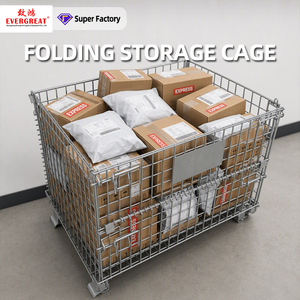
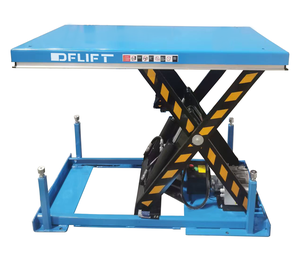
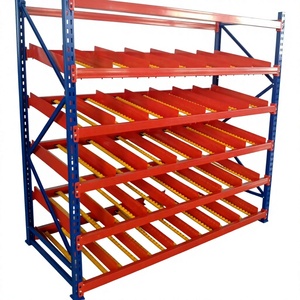
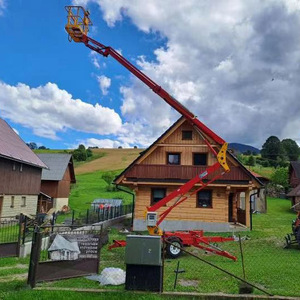
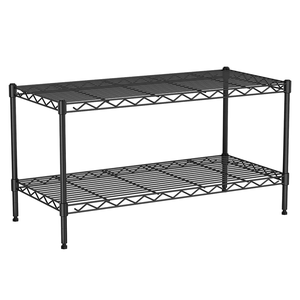
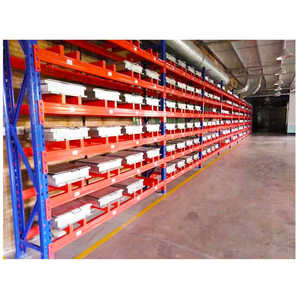
We supply entire ecosystem assemblies—including heavy-duty impact column protectors, wire mesh decking for interrupted loads, axle racks, carton flow tracks, scissor tables, and boom lifts—ensuring complete warehouse mechanical compatibility under one contract.
Everything logistics directors, facility engineers, and procurement teams need to know when importing high-tonnage cantilever racking into Illinois.
Yes. All cantilever systems engineered for our US clients strictly conform to ANSI/RMI MH16.1 (Specification for the Design, Testing and Utilization of Industrial Steel Storage Racks). We supply finite element structural calculation packages detailing column buckling limits, arm deflection ratios (governed under L/180), base shear, and anchor bolt pull-out tension based on your specific slab compressive strength (e.g., 3,000 PSI to 4,500 PSI concrete). This comprehensive engineering dossier provides everything required for obtaining municipal building and fire permits in Chicago, Aurora, Joliet, or Rockford.
Production typically spans 20 to 30 days depending on whether the system requires structural hot-rolled I-beams or roll-formed profiles and hot-dip galvanizing. Ocean transit from major Chinese ports (Qingdao, Shanghai, Ningbo) to West Coast ports (Los Angeles/Tacoma) followed by Class 1 intermodal rail transit directly to Chicago rail hubs (BNSF Logistics Park Chicago or UP Global IV) requires approximately 25 to 35 days. We offer full DDP (Delivered Duty Paid) terms, handling US Customs clearance, continuous bond execution, Section 301 tariffs, and final flatbed trucking directly to your facility door.
Single-sided cantilever uprights are engineered to stand flush against building perimeter walls or property boundaries. Their bases extend in one direction, counterbalancing the single-sided load. Double-sided cantilever racks feature a central column with cantilever arms extending from both front and rear faces. Double-sided configurations offer superior structural self-balancing stability and maximize floor area efficiency when placed in central warehouse aisles, sharing a single structural column foundation for double the inventory capacity.
Absolutely. For external storage installations along Lake Michigan or open industrial yards in Cook County, we provide full Hot-Dip Galvanization in accordance with ASTM A123. The zinc metallurgical alloy coating bonds to the steel substrate at approximately 450°C, providing decades of cathodic protection against road salts, standing meltwater, and extreme sub-zero brittle fracture. Furthermore, we can incorporate cantilever roof-truss arms designed to support corrugated sheet canopies that shed heavy Illinois snowfall away from your stored products.
To generate a high-precision CAD layout and calculation model, our engineering team requires: (1) Length, depth, and weight profile of the items being stored (e.g., 20 ft steel pipes weighing 4,000 lbs per bundle); (2) Desired storage height and building clear ceiling height to the lowest obstruction (fire sprinklers or HVAC ducts); (3) Forklift model, maximum lifting mast height, and minimum turning radius; (4) Indoor dry environment vs. outdoor yard installation; (5) Existing concrete slab thickness and rebar specifications if available.