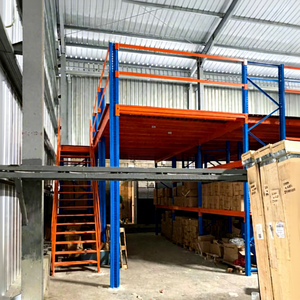
Mezzanine Platform Racking Industrial Multi-Floor Attic System
Structural Q235B cold-rolled steel multi-tier floor platforms with integral staircases, handrail perimeters, and modular beam spans up to 1,000 kg/m².
Manufactured under strict ISO 9001 quality controls, European CE directives, and certified against stringent structural deflection limits.
Structural Q235B cold-rolled steel multi-tier floor platforms with integral staircases, handrail perimeters, and modular beam spans up to 1,000 kg/m².
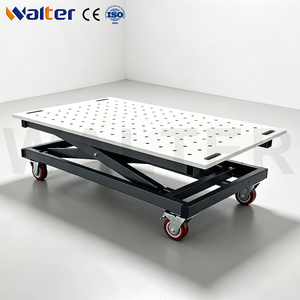
Micro-level hydraulic height adjustment platform engineered for precision fixture clamping, heavy industrial sub-assemblies, and robotic cell interfacing.
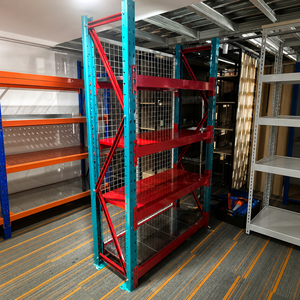
Universal boltless locking frame with safety stop clips, certified upright columns, and high-tensile dual-ribbed safety box beams for Euro/DIN pallets.
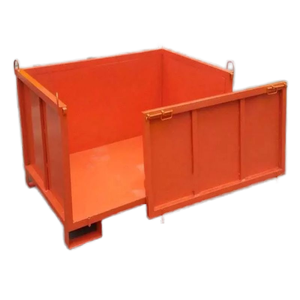
Heavy-duty reinforced corrugated steel containment unit with 4-way forklift pocket entry, anti-tipping stack feet, and electrostatic corrosion finish.
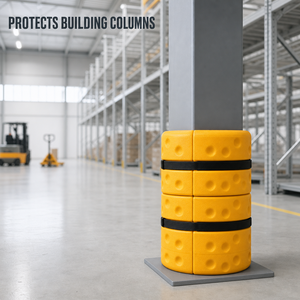
High-visibility impact-deflecting molecular polymer guard, absorbing dynamic forklift collision forces according to EN 15512 safety protocols.
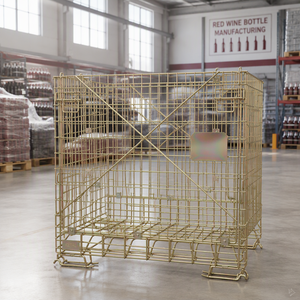
Self-cleaning hot-dip zinc electroplated mesh bin featuring drop-gate access, high-density vertical stacking, and fold-flat reverse transport footprint.

100% recyclable, ultra-clarity food-grade polymer container system with secure snap lids for parts sorting, cleanroom storage, and pharmaceutical picking.
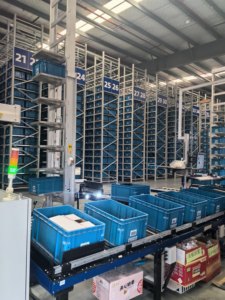
Integrated goods-to-person mobile shuttle system with PLC automation, real-time inventory bus control, and ultra-narrow aisle footprint compression.
In modern industrial hubs such as the Berlin-Brandenburg metropolitan corridor, warehouse and plant managers face a dual constraint: escalating square-meter land valuation and stringent European regulatory standards for structural workplace safety. As commercial leasing rates climb across regional distribution centres near Schönefelder Kreuz and GVZ Berlin-Süd Großbeeren, standard stationary pallet racking represents an inefficient capital allocation. By maintaining dedicated forklift access corridors for every single storage run, traditional facilities surrender between 50% and 65% of their total cubic volume exclusively to static floor traffic.
The implementation of CE-certified mobile storage shelving (Verfahrbare Regale) directly solves this structural bottleneck. By mounting heavy-duty shelving frameworks or dynamic selective pallet racks onto electronically synchronized or mechanical crank-driven mobile chassis running on precision-embedded floor rails, a single floating access aisle replaces eight to twelve static aisles. This engineering layout collapses storage volume, creating up to an 85% surge in volumetric capacity within an identical building envelope.
The geographic location of Berlin as a bridge between Western European manufacturing clusters and the emerging industrial markets of Central and Eastern Europe has reshaped supply chain topology. Within this dynamic environment, high-density CE-certified mobile shelving serves critical vertical sectors with tailored structural frameworks:
Berlin's federal ministries, legal institutions, and university libraries require DIN EN 15095 certified mobile shelving systems with electro-mechanical micro-switches, optical proximity guards, and zero-vibration starts to protect irreplaceable cultural and administrative assets.
At healthcare clusters such as Berlin-Buch and Adlershof, operating automated mobile shelving inside -25°C blast freezers reduces refrigerated cubic air space by 45%, dropping refrigeration kilowatt consumption and maintaining cold-chain compliance.
Supporting advanced manufacturing in Grünheide and Ludwigsfelde, heavy-duty mobile carriages carry automated tool dies, tier-one stamping components, and precision jigs with instant PLC-linked aisle opening integration.
In the Federal Republic of Germany, warehouse storage equipment is subject to rigorous regulatory scrutiny under the Betriebssicherheitsverordnung (BetrSichV) and occupational safety rules dictated by the Deutsche Gesetzliche Unfallversicherung (DGUV Regel 108-007). Procuring mobile shelving without comprehensive CE documentation presents significant legal, operational, and structural risk to European warehouse operators.
Our complete mobile racking and industrial platform product line adheres to the structural calculation mandates of DIN EN 15512 (Steel static storage systems - Adjustable pallet racking systems - Principles for structural design) and the mechanical-electrical safety parameters defined in DIN EN 15095 (Power-operated mobile racking and shelving). Compliance provides three non-negotiable guarantees:
To quantify the financial and operational advantage for logistics managers in Berlin and international freight forwarding destinations, the following engineering matrix demonstrates performance across standard warehouse metrics:
| Engineering Metric | Standard Static Pallet Racks | CE Certified Mobile Shelving | Operational Impact Factor |
|---|---|---|---|
| Floor Space Utilization | 35% – 42% (Remainder dedicated to aisles) | 80% – 88% (Single dynamic floating aisle) | +100% to +120% pallet density |
| SKU Selectivity | 100% Direct Access | 100% Direct Access (via rapid aisle opening) | Zero selectivity compromise compared to Drive-In |
| Refrigeration / Energy Footprint | High (Large cubic volume to cool) | Minimal (Compacted footprint reduces thermal mass) | Reduces HVAC cooling overhead by up to 40% |
| Structural Standards | DIN EN 15635 static loading | DIN EN 15512 + DIN EN 15095 machinery directive | Full CE Machinery Directive 2006/42/EC compliance |
| WMS / PLC Integration | Passive barcode tracking | Active CAN-bus / Profinet PLC integration | Remote aisle pre-opening from forklift terminals |
The modern logistics landscape in northeastern Germany is experiencing structural shifts accelerated by Industry 4.0 automation and rigorous ESG (Environmental, Social, and Governance) targets. First, brownfield retrofitting has overtaken greenfield warehouse construction. Municipal land allocation restrictions around Berlin's outer ring road (A10) make obtaining permits for sprawling single-story hubs increasingly challenging. Consequently, logistics architects are retrofitting older logistics parks with high-load mobile mezzanine shelving platforms to utilize overhead vertical clearance up to 14 meters.
Second, energy efficiency mandates driven by European decarbonization policies are pushing cold-chain logistics providers toward compressed high-density storage. Power consumption in automated chilled facilities is directly proportional to air volume; condensing pallets into a track-guided mobile array delivers an immediate reduction in the plant's operational carbon footprint.
Third, intralogistics is pivoting to hybrid material handling. Standard operations are transitioning toward autonomous mobile robots (AMRs) and automated reach trucks. Modern CE-certified mobile racks now feature optical communication ports and open API interfaces, allowing automated vehicles to send radio commands to open the required rack aisle as the vehicle enters the storage bay.
With an 18-year foundation in industrial storage engineering and over 500 completed turnkeys globally, we provide complete, transparent accountability across every stage of warehouse development. We do not operate as simple equipment brokers; our internal teams survey, engineer, manufacture, export, install, and certify structural warehouse racking systems.
From high-tensile Q235B cold-rolled profiles to laser-cut upright framing and automated powder-coating lines, our components meet rigorous tolerances and load endurance requirements.
Our digital Project Tracking System allows operations managers in Berlin and international hubs to monitor project engineering milestones, manufacturing runs, transit freight, and assembly schedules with live visibility.
Certified field installation teams manage laser-guided floor rail levelling, mechanical anchoring, load-cell safety calibration, and formal compliance sign-offs for seamless, audit-proof commissioning.
Essential guidance on certifications, floor loads, dynamic rail installation, and import-export operations in Germany.
Under European Union regulations and German occupational safety laws (BetrSichV), electrically driven mobile storage shelving is classified as industrial machinery. It must comply with the European Machinery Directive 2006/42/EC, the Low Voltage Directive 2014/35/EU, and the Electromagnetic Compatibility (EMC) Directive 2014/30/EU. The governing harmonized technical standard is DIN EN 15095, which details the functional safety requirements for power-operated mobile racking, in conjunction with DIN EN 15512 for structural steel load calculations. Every compliant system must bear the CE mark and be accompanied by a manufacturer's Declaration of Conformity and full risk assessment documentation.
Mobile shelving requires strict guide rail tolerances to prevent carriage bind and ensure long-term mechanical reliability. Rails can be installed through three methods: (1) Core cutting into the existing concrete slab followed by precision chemical grout levelling; (2) Surface-mounted rails set alongside an elevated false floor or ramp system; or (3) Casting directly into a new concrete floor topping. For dynamic industrial mobile racks, the rail elevation deviation must meet DIN 18202 (flatness tolerances in building construction), typically maintaining less than ±1.5 mm variation across a 10-meter running span.
Yes. The structural superstructures mounted on our mobile bases use boltless teardrop or modular hook-in beam connections adjustable in 50 mm or 75 mm increments. If your inventory shifts from standard Euro pallets (1200×800 mm) to industrial ISO/GCC pallets (1200×1000 mm), beam elevations and support cross-members can be reconfigured. However, changes to first-beam elevations require a recalculation of the upright frame load profile against the system's certified structural load chart.
Our CE-certified mobile systems incorporate multi-layer active and passive safety features complying with DIN EN 15095: (1) Optical Light Curtains: Mounted at the front and rear entry points of each aisle, these sensors shut down carriage movement if an operator or vehicle enters an active aisle; (2) Floor-level Safety Trip Edges: Mechanical kick bars spanning the entire length of the carriage base immediately stop movement if an obstruction is encountered; (3) Proximity Radar & E-Stop Arrays: Accessible push-buttons located at every control console and aisle frame exterior ensure immediate shutdown during irregular operations.
We provide comprehensive logistics and export support under Incoterms (DAP, DDP, or CIF depending on client preference). Shipments destined for Berlin and the European Union are dispatched in optimized sea-freight containers or flat-rack carriers, complete with full export manifests, certificates of origin, material mill test certificates (EN 10204 3.1), and CE conformity dossiers for clear customs clearance at major hubs such as Hamburg or direct bonded transit to site.
In accordance with DIN EN 15635 and DGUV Regel 108-007, the warehouse operator is legally required to conduct visual checks on a weekly basis, along with a formal annual inspection performed by a certified racking inspector (Verband für Lagertechnik oder fachkundige Person). Our after-sales engineering division provides annual audit contracts, comprehensive deflection check-ups, track sweep checks, and genuine spare parts replacement to maintain statutory compliance.