An authoritative engineering, procurement, and architectural blueprint on selective teardrop storage infrastructure, global mill standards, and lifecycle supply management.
Engineered to exact RMI and ISO specifications. Select below to review specifications, load profiles, and CAD configuration sheets.
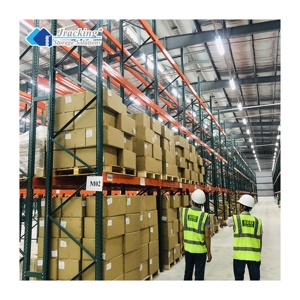
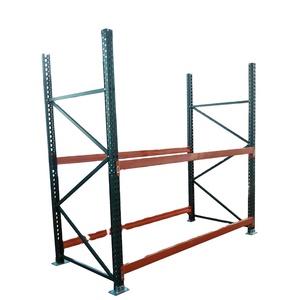
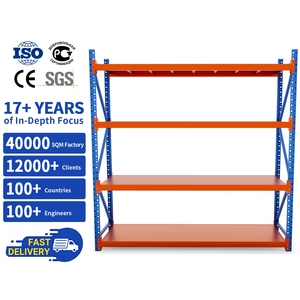
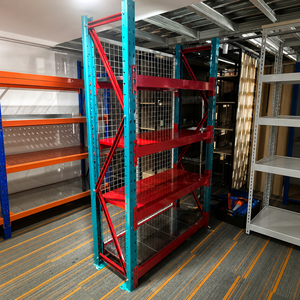
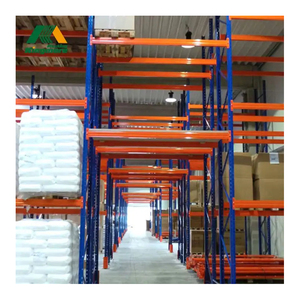
Understanding the cold-formed steel metallurgy, punching geometry, and beam-locking mechanics that define modern warehouse safety.
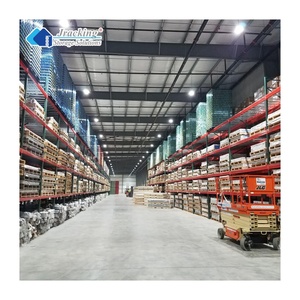
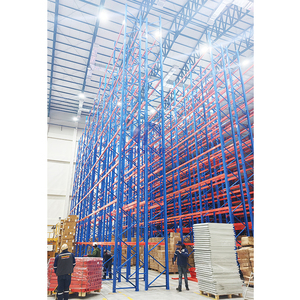
In modern industrial storage, teardrop pallet racking systems remain the benchmark across North America, the GCC, and European logistics hubs. Characterized by an inverted teardrop-shaped punching pattern on the upright columns, this geometry utilizes gravity-assisted wedging. As palletized loads sit across structural step beams, downforce seats the beam connector pins firmly into the tapered slot. This creates an inherently rigid, self-locking structural joint without requiring bolted fastening during initial bay configuration.
Industrial racking systems operate as structural frameworks carrying immense live loads under continuous dynamic impact. The engineering integrity of teardrop racking rests on three elements: high-tensile structural coil (typically Q235B, Q355B, or ASTM A1011 SS Grade 50), precise continuous roll-forming tolerance, and automated welding lines that fuse 3-rivet and 4-rivet end connectors to tubular or step beams. When engineered properly, these systems resist lateral seismic forces, torsion from eccentric forklift placement, and mechanical wear over decades of operation.
Fabricated using continuously cast Q235B and certified Q355B low-carbon alloys. Upright profiles deliver yield points up to 355 MPa, ensuring high load-to-weight structural efficiency across tall, narrow-aisle designs.
Punching lines maintain strict 50.8mm (2-inch) vertical increments. This enables facilities to calibrate beam elevations quickly to changing pallet heights without structural cutting or bay re-engineering.
Spring-steel auto-engaging safety locks drop smoothly into position during beam seating. This design resists upward dislodgement forces exceeding 1,000 lbs, preventing accidental disengagement from forklift tines.
How automation, warehouse sustainability directives, and localized distribution networks are reshaping industrial storage engineering.
Warehouse logistics is undergoing structural changes driven by land cost escalation, rapid SKU proliferation, and the integration of autonomous handling equipment. Enterprise buyers are moving beyond commoditized spot-buying toward strategic, total-cost-of-ownership (TCO) procurement. Teardrop manufacturing must evolve alongside these shifts:
Autonomous Mobile Robots (AMRs) and automated turret trucks demand tighter aisle and beam deflection tolerances (often L/600 vs conventional L/200). Factories employ robotic laser punching and continuous sensor verification to meet these automation standards.
Next-generation installations incorporate structural health sensors and strain gauges within the upright footplates. Connected to central telemetry systems, these units alert facility managers to impact overloads and foundation shifts before failures can occur.
Global supply chains require documented ESG metrics. Tier-1 manufacturers use heavy metal-free multi-stage pre-treatments alongside closed-loop electrostatic powder coating, eliminating VOC emissions and maximizing salt-spray corrosion resistance.
Critical metallurgical, manufacturing, and inspection parameters required for enterprise teardrop rack sourcing.
| Evaluation Parameter | Tier-1 Certified Manufacturer | Standard Local Fabricator | Compliance Benchmark |
|---|---|---|---|
| Raw Material Provenance | Certified prime steel coil with traceable mill certificates (MTC) | Secondary or non-traceable mixed market coil | ASTM A1011 / GB/T 700 |
| Roll-Forming Consistency | Multi-station CNC continuous cold-roll forming with laser tracking | Manual press brake or mechanical feed lines | EN 15512 / ISO 9001 |
| Welding & Structural Jointing | Automated multi-axis robotic MAG welding with continuous gas shielding | Manual shielded metal arc welding (SMAW) | AWS D1.1 / EN ISO 3834 |
| Seismic & Structural Testing | Full-scale physical stub column testing and portal frame analysis | Theoretical estimation without empirical physical test verification | RMI MH16.1 / ANSI |
| Quality Traceability | Proprietary Project Tracking System with real-time site access | Fragmented paper receipts and delayed progress reporting | Real-Time ERP Link |
Combining 18+ years of engineering discipline, certified production, and end-to-end installation accountability across demanding logistics markets.
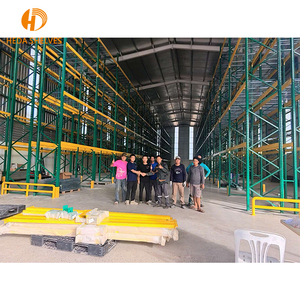
Founded in 2005, our teams have surveyed, calculated, delivered, and commissioned over 500 enterprise warehouse facilities across the Middle East, North America, and emerging distribution regions.
Our proprietary Project Tracking System gives procurement leads and site managers direct visibility into steel processing, powder coating quality runs, and phased delivery schedules.
We avoid disjointed subcontracting. Systems are laid out, assembled, laser-aligned, and floor-anchored by certified in-house rigging crews working to strict engineering safety tolerances.
Every bay layout is cross-referenced with your concrete slab compressive strength, handling equipment reach, turning radiuses, and regional seismic zone codes.
From wire mesh decking panels and column impact shields to mezzanine platforms and handling equipment, every component arrives fully configured to integrate as a unified system.
We provide long-term operational peace of mind through documented annual safety audits, impact remediation, beam load notice certifications, and genuine factory spares.
Essential guidance for logistics engineers, project architects, and factory procurement directors.
Request technical calculations, customized bay drawings, and factory direct quotations tailored to your operational floor plan.
Get Catalog