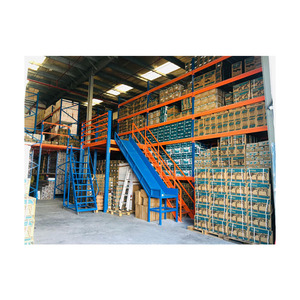
As industry-recognized storage systems specialists with over 18 years of turnkey delivery across 500+ complex facilities, we manufacture and engineer rugged, high-tolerance cantilever and warehouse racking solutions. Engineered to eliminate obstruction, streamline bar and panel throughput, and meet rigorous ISO, FEM, and ANSI storage rack design standards.
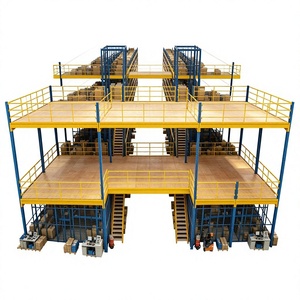
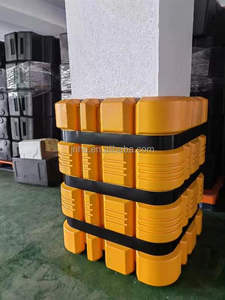
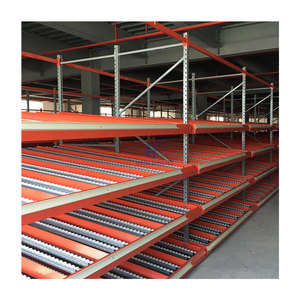
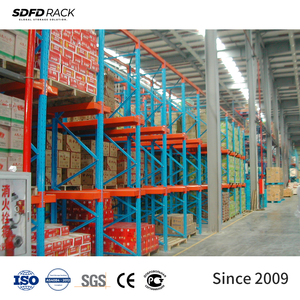
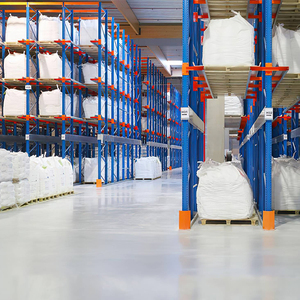
Cantilever storage racking represents one of the most mechanically demanding structural typologies within heavy logistics and materials handling. Unlike standard pallet racks bounded by front-facing vertical posts, cantilever systems rely entirely on a freestanding spine design featuring solid central vertical columns, cantilevered horizontal load arms, and high-tensile structural cross-bracing. This unobstructed frontal access makes cantilever architectures indispensable for storing non-standard, long-dimension inventory including structural steel I-beams, extruded PVC and copper piping, timber packs, engineered lumber, raw sheet goods, and automotive chassis.
From an engineering perspective, every cantilever installation must be calculated to resist substantial eccentric loading and overturning moment forces. The critical failure mode in sub-standard cantilever racking does not stem from pure compressive failure of steel uprights, but rather torsional deflection, rotational shear at the arm-to-column connector, and floor slab fatigue under uplift forces. Our manufacturing plant utilizes premium hot-rolled structural steel profiles (such as IPE or HEA sections) and precision roll-formed cold-rolled alloy steels yielding tensile thresholds surpassing 355 MPa (Q355B / S355JR). Our cantilever joints integrate heavy-duty tapered arms that compensate naturally for deflection when fully laden, maintaining an upward pitch angle of 1.5° to 2.5° to prevent stored bundles from migrating outward under seismic or handling oscillations.
Fabricated from heavy I-beam profiles resisting high dynamic fork-truck impact and extreme point-load torsions without structural collapse.
Engineered with automatic pin-locking pivot safety pins that allow fast height adjustment in 100mm increments while pivoting upward safely if bumped by lifting forks.
Electrostatic thermoset powder-coating for indoor air-conditioned facilities or hot-dip galvanization to EN ISO 1461 for rugged outdoor, coastal, and raw yard environments.
Selecting the optimal cantilever architecture requires balancing unit weight per meter run, handling equipment clearances, and vertical storage capacity. The table below outlines technical criteria applied during our structural engineering assessments:
| Cantilever Class | Material Profile | Arm Capacity Rating | Typical Clear Heights | Common Industrial Use Cases |
|---|---|---|---|---|
| Light-Duty Cantilever | Cold-Formed High-Yield Steel | 150 kg – 500 kg / arm | 2,000 mm – 4,500 mm | PVC conduits, light trim, plastic mouldings, copper pipes |
| Medium-Duty Cantilever | Hybrid Roll-Formed / Structural C-Sections | 500 kg – 1,200 kg / arm | 3,500 mm – 6,500 mm | Furniture packaging, timber boards, bar stock, light machinery |
| Heavy-Duty Structural | Hot-Rolled Solid IPE / HEB Beams | 1,200 kg – 3,500 kg / arm | 5,000 mm – 12,000 mm | Steel coils, structural pipes, heavy timber, automotive tooling |
| Mobile Base Cantilever | Hot-Rolled Steel on Powered Bogies | 1,000 kg – 2,500 kg / arm | 4,000 mm – 9,000 mm | High-density steel yards, cold rooms, space-constrained warehouses |
The industrial warehouse equipment sector is undergoing structural change driven by warehouse automation, rising square-meter real estate acquisition costs, and stringent international ESG reporting directives. Facility directors and supply chain engineers are moving away from ad-hoc commodity racking purchases toward deeply integrated, future-proofed storage ecosystems.
Modern procurement demands cantilever arrays capable of pairing with stacker cranes and Automated Guided Vehicles (AGVs) equipped with multi-directional side-loaders, necessitating precision tolerances down to ±1.5 mm.
Next-generation cantilever uprights integrate strain-gauge micro-sensors that broadcast live mechanical stress and deflection levels to the building management software, warning of overloading before micro-fractures occur.
Global supply chain contracts now audit embodied carbon. Sourcing shifts aggressively toward factories utilizing Electric Arc Furnace (EAF) scrap-recycled steel backed by Environmental Product Declarations (EPDs).
Procuring cantilever racking directly from top-tier factories necessitates a comprehensive evaluation matrix. Sourcing officers must verify whether a supplier provides verified calculations based on localized seismic zones (e.g., Eurocode 3 for European operations, IBC/RMI for the Americas, and specific UAE seismic codes). Crucially, the interface between the rack column base plate and the facility floor slab represents the structural lifeline of the installation. A reputable manufacturer must provide concrete slab PSI requirements, anchor pull-out ratings, and precise torque verification protocols during project handover.
Drawing on an established footprint built over 18 years across Sharjah, Dubai, Abu Dhabi, and the wider GCC region, Gulf Racking & Shelving LLC stands as the trusted manufacturing and engineering partner for large-scale logistics developments. We bridge the gap between heavy industrial manufacturing precision and rapid on-site turnkey installation.
Over five hundred verified installations across heavy manufacturing, FMCG, cold storage, 3PL logistics, and building materials sectors.
From initial laser surveying and customized CAD/BIM layouts to component fabrication, floor anchoring, and post-installation load audits.
Our client platform provides total visibility, allowing project stakeholders to monitor production, container loading, and site installation milestones in real time.
Certified in-house technicians conduct annual safety audits, impact remediation, beam alignment checks, and certified safe load-rating re-certifications.
Authoritative technical answers to common queries raised by procurement leads, plant directors, and warehouse architects:
Roll-formed cantilever racks are fabricated by feeding cold coiled sheet steel through progressive roller dies to form C-profiles. These are cost-effective, lightweight, and suitable for light-to-medium loads (up to 500kg per arm). Structural cantilever systems use heavy hot-rolled structural steel I-beams (such as IPE or HEA sections). Structural systems offer vastly higher impact resistance against forklift collisions, superior torsional rigidity, and capacities exceeding 3,500kg per arm, making them mandatory for steel service centers, outdoor yards, and heavy lumber facilities.
Upright spacing is dictated by the rigidity of the product being stored. When storing rigid items such as structural steel I-beams, wide upright centers (e.g., 1,500 mm to 2,000 mm) can be utilized. However, for flexible items like copper tubes, plastic pipes, or thin timber packs, columns must be positioned close enough to prevent deflection (sagging) between arms. The standard rule of thumb is that the load overhang at the rack ends should equal half the distance between adjacent arms (spacing = L/2 overhang ratio), preventing catastrophic point overloading on center arms.
Yes. Outdoor cantilever installations require two major structural adaptations: first, hot-dip galvanization according to EN ISO 1461, which deposits a thick metallurgical zinc-iron alloy barrier resisting atmospheric corrosion, UV degradation, and humidity; second, wind-load and soil-uplift engineering. When outdoor racks feature canopy roof additions to shield materials from rain or sun, they act as wind sails. Racking foundations must incorporate substantial concrete footings and high-grade mechanical anchors to counteract overturning wind-moment forces.
Because cantilever racks have no front columns to redistribute load, the moment forces transmitted directly into the floor slab via the column baseplate are immense. Concrete slabs typically require a minimum compressive strength of 25 to 30 MPa (C25/30 or 3,500–4,000 PSI) and an uncracked thickness of at least 180 mm to 250 mm, depending on system height and arm load ratings. Heavy-duty structural systems utilize chemical resin anchors or heavy torque-controlled undercut anchors embedded deeply to withstand cyclic dynamic tension forces.
Upon installation completion by our dedicated in-house technical team, every bay undergoes a multi-point structural compliance check. This includes verifying column plumbness (within FEM/SEMA allowable deviations, typically 1/500th of clear height), anchor torque testing, arm pin engagement, and bracing tension calibration. Official load notice plates specifying max load per arm, max load per column side, and designated center-of-gravity allowances are affixed directly to every rack end for clear operational visibility.
Custom engineering and fabrication timelines generally span 4 to 8 weeks depending on profile complexity, tonnage, and custom surface finishes. Our proprietary Project Tracking System gives clients real-time visibility from raw steel fabrication and welding certifications to shipping, customs clearance, and site delivery staging across all seven Emirates and international ports.