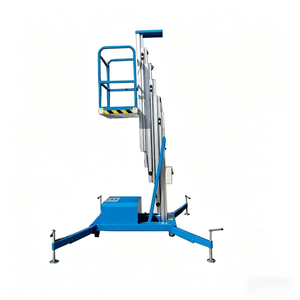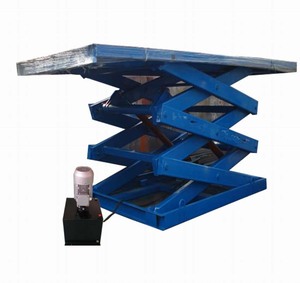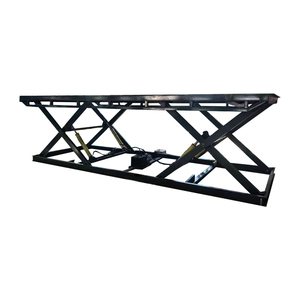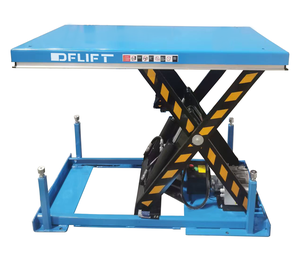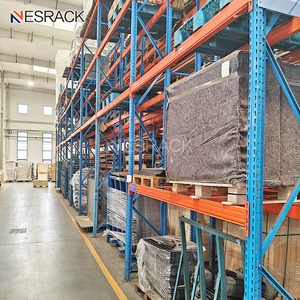
Our turnkey manufacturing lines deliver high-tolerance, boltless rivet racking, industrial hydraulic elevation mechanisms, and heavy storage modules built to comply with international RMI, CE, and ISO9001 standards.
A rigorous examination of load dispersion mechanics, keyhole-to-rivet interlock geometry, and metallurgical standardisation for tier-one logistics facilities.
In high-throughput distribution centres, e-commerce fulfilment hubs, and automotive sub-assembly plants, storage infrastructure must combine severe structural rigidity with rapid spatial reconfigurability. As a premier China rivet shelving systems manufacturer and supplier, our manufacturing engineering addresses the fundamental mechanical pain points inherent in conventional nut-and-bolt shelving: fastening torque relaxation, elongation under dynamic cyclical loading, and labor-intensive assembly overhead.
Cold-stamped precision keyholes engineered at 1.5-inch or 2-inch pitch increments mate with cylindrical shoulder rivets. Under vertical load, the taper creates a self-tightening wedge effect that completely eliminates mechanical sway without requiring cross-bracing.
Every upright post and horizontal step beam is cold-roll formed from certified Q235B structural carbon steel. Featuring minimum yield strengths exceeding 235 MPa and ultimate tensile values up to 500 MPa, our profiles resist impact-induced plastic deformation.
Whether utilizing heavy-gauge drop-in galvanized wire mesh decking for NFPA-compliant fire sprinkler water penetration, 18mm high-density particle board, or formed galvanized steel deck panels, our systems guarantee uniform distributed load compliance.
Evaluating boltless rivet shelving against traditional slotted angle, medium-duty longspan, and heavy pallet racking across operational efficiency criteria.
| Storage System Type | Rated Bay Capacity | Tool-Free Assembly | Accessibility (Selectivity) | Floor Footprint Utilization | Primary Deployment |
|---|---|---|---|---|---|
| Single-Rivet Light Duty | 150 – 350 kg / level | 100% Mallet Only | 100% Four-Side Access | High (Low Profile Beams) | Retail stockrooms, pharmaceutical dispensary, archival records |
| Double-Rivet Heavy Duty | 400 – 1,000 kg / level | 100% Mallet Only | 100% Direct Pick | Very High (Max Clear Span) | Automotive components, industrial hardware, raw material bins |
| Slotted Angle Shelving | 80 – 180 kg / level | Nut & Bolt (Slow) | Moderate (Bracing Obstruction) | Moderate | Maintenance workshops, light utility stores, domestic archive |
| Longspan Racking (Step Beam) | 500 – 1,500 kg / level | Tool-Free with Safety Pins | Front & Rear Only | High | E-commerce multi-tier mezzanine pick towers, heavy bulk bins |
| Heavy Pallet Racking | 1,000 – 4,500 kg / level | Slot-In Beam Connectors | Unitised Pallet Direct | Maximized Vertical Airspace | High-bay palletized FMCG, container logistics, cold storage |
How automation integration, environmental regulations, near-zero inventory buffers, and smart supply chain resilience are reshaping global racking procurement.
Global fulfillment hubs are shifting away from static manual-pick aisles toward hybrid workflows where Autonomous Mobile Robots (AMRs) navigate beneath and alongside rivet shelving bays. Modern procurement mandates bottom-shelf clearance heights calibrated specifically for robotic chassis docking, optical floor-marker alignment, and QR-code fiducial mounting points along upright columns.
Procurement teams across seismic zones now reject generic load tables in favor of Finite Element Modeling (FEM) data tailored to localized seismic acceleration coefficients (Ss and S1). Structural uprights must provide certified anchor shear capacity, seismic floor-level baseplates, and dynamic moment-resisting beam connections validated under full operational payload.
Environmental, Social, and Governance (ESG) compliance has made electrostatic thermoset polyester powder coating standard over volatile liquid primers. Modern buyers require lead-free, non-toxic coatings offering 500+ hours of ASTM B117 salt-spray corrosion resistance alongside documented Scope 1 and Scope 2 carbon footprint declarations for raw rolled steel.
With industrial land acquisition costs escalating globally, facility managers prioritize modular multi-tier cat-walk systems. Double-rivet upright columns serve as primary structural studs carrying mezzanine intermediate walkways, heavy grating, stair towers, and pallet safety gates, doubling or tripling active storage surface area without building expansion.
B2B enterprise buyers demand end-to-end milestone visibility. Leading procurement contracts require real-time project tracking from automated coil slitting and robotic roll forming through pre-shipment destructive load testing, containerized volumetric cubing, and port departure logistics.
Modern codes require customized deck substrates. While moisture-resistant marine-grade particle board suffices for small parts, fire safety ordinances increasingly mandate drop-in wire mesh decking with 50mm x 100mm apertures to guarantee 70%+ open area for early suppression fast response (ESFR) ceiling sprinklers.
Operating across comprehensive manufacturing campuses equipped with multi-station continuous cold roll-forming lines, automated CNC stamping clusters, and continuous multi-stage phosphating powder coating lines, our facilities deliver the capacity, consistency, and structural compliance required by international retailers, logistics contractors, and facility engineering firms.
Every batch of Q235 cold-rolled steel undergoes spectrophotometric composition analysis, tensile yield verification, and salt-spray corrosion chamber testing before roll-forming dispatch.
Global Fulfillment Capability: Direct shipping through major deep-water ports (Shanghai, Ningbo, Qingdao, Shenzhen) with standardized 20GP, 40GP, and 40HQ containerized export strapping to minimize in-transit damage.
Comprehensive engineering clarifications addressing deflection criteria, material grades, surface treatments, and containerization logistics.
Partner directly with China's leading certified rivet shelving and warehouse equipment manufacturer. From bespoke bay sizing and seismic Finite Element Analysis to turnkey containerized global logistics, our engineering directors are ready to review your warehouse blueprints.