Explore our export-grade line of industrial roll cages, modular stillages, heavy-duty racking systems, and structural protection infrastructure engineered for high-throughput distribution hubs.
A comprehensive analysis of material handling ergonomics, metallurgic specifications, surface treatments, and international compliance protocols for volume roll container procurement.
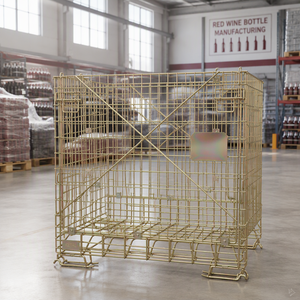
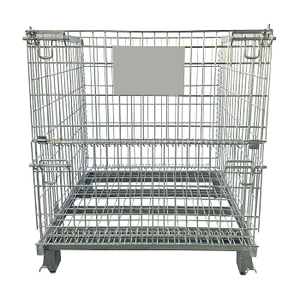
In high-velocity omnichannel supply chains, industrial roll cages operate under severe dynamic shock loads, frequent intermodal freight transfers, and high-frequency nesting cycles. Standard commercial-grade sheet metal suffers rapid elastic deformation and structural fatigue when subjected to drop-loading and cross-dock forklift shunting. Our OEM/ODM roll cage production utilizes certified Q235B prime carbon structural steel, exhibiting a minimum yield strength of 235 MPa and ultimate tensile strength exceeding 370–500 MPa. Frame uprights are roll-formed from cold-drawn round tubing (∅25mm–32mm) with nominal wall thicknesses strictly held to 1.8mm–2.5mm tolerances, reinforced by cross-braced wire mesh rod matrices (∅5.0mm–8.0mm) welded via multi-point synchronized robotic resistance welding.
Structural longevity is further reinforced at base assembly junctions. High-impact areas—including castor mounting plates, kick plates, and hinges—feature stamped steel reinforcement gussets of 3.5mm–4.0mm thickness. These metallurgic specifications ensure deflection ratios remain well under 1/250 of the clear span when dynamically loaded to maximum capacity (ranging from 500kg up to 1000kg). By eliminating stress-concentration fractures at weld seams, our export platforms withstand over 150,000 continuous rough-surface roll cycles without weld separation or frame torsion.
Corrosion mitigation is critical for cold storage (-25°C) and marine shipping. Units receive high-purity electro-galvanized bright zinc plating (≥12μm) sealed with nano-passivation, or thermal hot-dip galvanization conforming to ISO 1461 (≥65μm thickness) withstanding over 480 hours of ASTM B117 neutral salt spray without white rust emergence.
Equipped with industrial-grade low-rolling-resistance castors: premium Virgin Polyurethane (PU), elastic High-Grade Rubber, or structural Cast Polyamide (Nylon 6). Paired with sealed precision double-row ball bearings and zinc-chromate pressed steel forks rated to European EN 12532 dynamic tow-train handling standards.
Available in 'A-Frame', 'Z-Frame', and Demountable 4-Sided configurations. The forward-angled geometry enables a compact 4:1 to 5:1 return-logistics footprint ratio. Truck turnaround times improve drastically while backhaul transport volume is reduced by up to 75% for empty fleet returns.
Selecting the optimal container topology directly affects operational throughput, package damage prevention, and intermodal transport economics. The matrix below defines standard design parameters for enterprise procurement.
| Roll Cage Typology | Standard Footprint (mm) | Rated Dynamic Load | Return Volume Ratio | Target Supply Chain Sector |
|---|---|---|---|---|
| 2-Sided Demountable | 800 × 600 × 1700 | 500 kg | 3:1 Pack-Down | Postal sorting, courier express, parcel sorting centers |
| 3-Sided A-Frame Nestable | 850 × 735 × 1690 | 600 kg | 4.5:1 Nested | Retail FMCG replenishment, supermarket direct-to-store |
| 4-Sided Full Security Cage | 850 × 735 × 1800 | 600 – 750 kg | 4:1 Nested / Folded | High-value consumer electronics, spirits, pharmaceutical cold-chain |
| Heavy-Duty 4-Sided Stillage | 1200 × 1000 × 1850 | 1000 kg | Stackable Rigid / Fold | Automotive components assembly, industrial heavy hardware |
| Insulated Thermal Roll Container | 800 × 1000 × 1900 | 500 kg | Rigid Body Insulated | Fresh/frozen food cross-docking (ATP compliant, -18°C retention) |
*All dimensions, caster mount geometries, inner shelving dividers, and security latch mechanisms are fully customizable under OEM/ODM contract specifications.
How automation integration, autonomous mobile robots (AMRs), sustainability directives, and IoT tracking are redefining industrial roll cage manufacturing.
Manual handling is transitioning toward autonomous pulling systems. Modern roll cages increasingly incorporate precision underside tow-pin adaptors, optical sensor reflect plates, and standardized base-clearance dimensions (150mm±2mm) compatible with automated guided vehicles (AGV) and autonomous mobile tuggers (AMR).
Fleet loss and container misplacement represent up to 12% in annual asset attrition. Enterprise procurement contracts now mandate integrated flush-mounted IP67 housings for passive RAIN RFID tags, Bluetooth Low Energy (BLE) beacons, and cellular IoT trackers providing real-time geofencing and dwell-time analytics across distributed logistics networks.
With stringent global carbon accounting (such as EU CBAM and corporate ESG scorecards), tier-one exporters are transitioning to electric arc furnace (EAF) low-carbon steel alongside volatile organic compound (VOC)-free thermoset polyester powder finishes, accompanied by full life-cycle assessment (LCA) environmental product declarations.
Urban nighttime logistics restrictions enforce decibel ceilings below 60 dBA (PIEK Certification standards). Cutting-edge roll cages integrate sound-dampened polyurethane castor treads, silicone-isolated hinge joints, and anti-rattle nylon shelf latch dampeners to eliminate metal-on-metal clang during midnight retail deliveries.
Our senior engineering group provides detailed CAD drawings, Finite Element Analysis (FEA) deflection simulations, and physical sample prototypes within 14 working days.
Drawing on an industrial legacy established in 2005, Gulf Racking & Shelving LLC combines full-scope material handling infrastructure engineering with high-capacity export manufacturing. Over 18+ years and across 500+ landmark distribution projects throughout the UAE, GCC, and global supply hubs, we deliver total accountability from conceptual layout modeling through on-site deployment.
Proven operational excellence delivering turnkey storage and mobile transit systems for top-tier 3PL, ecommerce, cold-chain, and retail leaders since 2005.
Full production transparency via our proprietary live system, allowing overseas buyers to monitor raw steel slitting, welding, surface finishing, and packing in real time.
Complete structural calculations, FEA load analysis, seismic anchoring verification, and custom tooling setup under one unified technical roof.
Seamless communication handled by dedicated Arabic and English engineering liaison teams handling customs protocols, export container optimization, and freight logistics.
Years of Industrial Engineering
Major Logistics Hubs Equipped
Traceable Quality Compliance
Global Client Support Desk
Detailed technical, commercial, and freight answers addressing international logistics managers, warehouse procurement committees, and contract tenders.
Whether standardizing a nationwide retail store replenishment fleet, transitioning to automated AMR tow-lines, or configuring high-security parcel distribution cages, our engineering team delivers precision, durability, and cost certainty.
Fast-Track Engineering Response • CAD Drawings & FEA Calculations • Worldwide Containerized Ocean Shipping