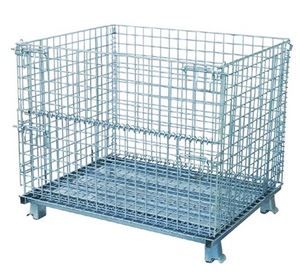
Explore heavy-duty, stackable, and collapsible structural steel storage crates designed for high-throughput automated warehouses, heavy casting storage, and closed-loop logistics turnover.
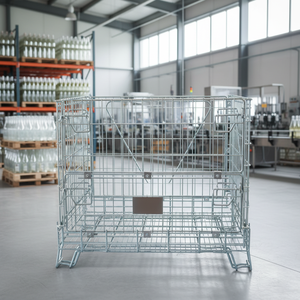
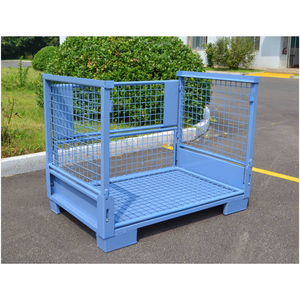
A procurement-grade evaluation of load distribution mechanics, weld shear values, and surface treatments for industrial material handling equipment.
Industrial wire mesh crates engineered by verified China factories utilize prime-grade Q235 low-carbon steel wire rods, cold-drawn under strict tension controls to elevate tensile strength up to 550 MPa. Robotic multi-spot resistance projection welding guarantees joint shear resistance exceeding 2,500 N per node, preventing seam detachment under high-vibration dynamic transport.
For operations exposed to maritime humidity, sub-zero cold chains, or chemical environments, surface finishing dictates equipment lifespan. Electro-galvanized finishes deliver standard anti-corrosion barrier protection (6-8 microns), while Hot-Dip Galvanizing (HDG per ISO 1461) provides up to 65+ microns of metallurgical alloy zinc bonding, yielding a zero-corrosion operational life cycle surpassing 15 years.
Quality Chinese manufacturing standards dictate a safety design coefficient of 1.5 to 2.0. A rated dynamic capacity of 1,000 kg requires safe static overhead stacking 4 tiers high (4,000 kg total lower-cradle burden). Heavy cup-style stacking feet combined with interlocking rim perimeters stabilize loads under earthquake tremors and seismic accelerations encountered in modern vertical multi-tier racking.
Match industrial logistics containers against your warehouse racking types, automated guided vehicles (AGV), and duty-cycle constraints.
| Crate Configuration | Standard Steel Gauge | Working Load (Dynamic / Static) | Collapsible Ratio | Core Industrial Use-Cases |
|---|---|---|---|---|
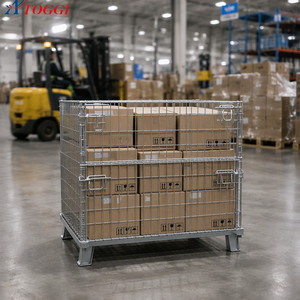
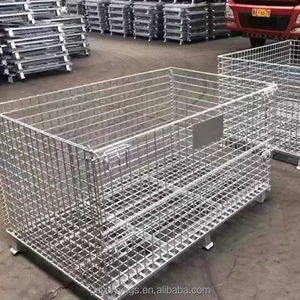
| Foldable Wire Mesh Cages | 4.8 mm - 6.4 mm Cold-Drawn Wire | 800 kg - 1,500 kg / 4,000 kg | 4 : 1 (75% Volume Saving) | E-commerce sortation hubs, auto parts assembly, FMCG buffer racking. |
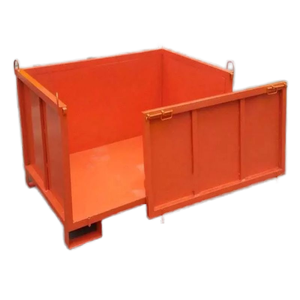
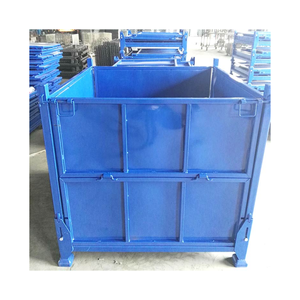
| Corrugated Sheet Turnover Boxes | 1.5 mm - 2.5 mm Cold Rolled Plate | 1,200 kg - 2,500 kg / 8,000 kg | Rigid / Non-Collapsible | Heavy metallurgical casting, metal scrap stamping, forging facilities. |
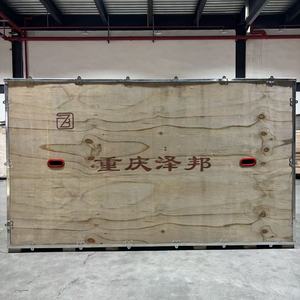
| Steel-Edge Nailless Cargo Boxes | Galvanized Steel Strip + Plywood | 500 kg - 1,200 kg / 2,400 kg | Flat-Pack Detachable | High-value machinery airfreight, sensitive electronics, zero-fumigation export. |
| Galvanized Pallet Base Stillages | Tubular Frame + Profile Plate | 1,000 kg - 2,000 kg / 6,000 kg | Post-Removable / Foldable | Outdoor logistics yards, harsh chemical plants, bulk liquid intermediate storage. |
How automation compatibility, ESG lifecycle pressures, and RFID hardware integrations are shifting global manufacturing standards for metal crates.
Traditional manual forklift handling permitted deflection tolerances up to 5-10 mm. However, rapid enterprise adoption of Automated Storage and Retrieval Systems (ASRS) and Autonomous Mobile Robots (AMR) demands metal crate base deflection tolerances under 2 mm across extreme load gradients. Leading Chinese manufacturers are investing heavily in automated robotic continuous laser trimming and cold-forming presses to meet rigorous automated dimensional standards.
Crates are evolving from static metal vessels into intelligent data nodes within closed-loop enterprise resource networks. Modern tier-one manufacturing integrates welded recessed protective brackets specifically sized for ultra-high-frequency (UHF) RFID transponders and BLE asset beacons. This shields expensive digital hardware from violent forklift tines while enabling real-time, touchless inventory audits across global supply chains.
Global regulatory developments, such as the EU Carbon Border Adjustment Mechanism (CBAM) and Corporate Sustainability Reporting Directives, are penalizing non-recyclable timber pallets and short-lived plastics. High-strength structural steel crates boast 100% recyclability and operational lifespans exceeding a decade. Replacing single-use wooden crating with returnable, collapsible steel containers reduces lifecycle packaging emissions by up to 68% over a 5-year operating window.
Operating at the intersection of European engineering tolerances and China's high-efficiency steel supply chain, our manufacturing lines deliver dependable reliability across five distinct metrics.
From coil slit-cutting, cold drawing, and computerized wire-mesh mesh welding to robotic punch forming and electrostatic powder coating—all processes are monitored under ISO 9001 certified protocols.
Clients access an exclusive Project Tracking System, monitoring raw material procurement, structural ultrasonic weld testing, surface galvanizing batch records, and container loading schedules in real time.
Every production lot undergoes rigorous destruction testing: dynamic drop impact analysis, hydraulic downward deflection stress tests, and fork shear simulation to verify actual yield boundaries.
Whether matching European Euro-Pallet dimensions (1200x800mm), North American specs (48x40in), or automated AGV docking skids, our engineering team supplies custom CAD/BIM layouts within 24 hours.
Essential guidance covering technical procurement specifications, customs logistics, anti-corrosion treatments, and container packing optimization.
Electro-galvanizing creates a smooth, cosmetically attractive zinc barrier via electrochemical deposition (typically 6-12 microns), ideal for indoor warehouse operations. Hot-Dip Galvanizing (HDG) submerges fabricated steel into molten zinc (450°C), creating a rugged iron-zinc alloy metallurgical bond exceeding 65 microns. HDG provides extreme corrosion endurance suited for outdoor yards, chemical manufacturing, and maritime freeze environments.
Standard rigid bins accumulate high dead-space volume during return transit. High-strength collapsible wire containers feature precision-engineered helical hinge spirals and perimeter latches that fold completely flat (yielding a 4:1 collapse ratio). In a standard 40ft High Cube container, up to 320 to 360 collapsed units can be packed, slashing per-unit sea freight and return logistic repositioning overhead by up to 75%.
To ensure structural integrity and cost-optimized steel sizing, specify: 1) Uniform Distributed Load (dynamic weight handled by forklifts, typically 800kg to 1600kg); 2) Maximum static stacking burden (e.g., 4 units high = 1600kg x 3 upper units on the bottom crate); 3) Clear entry dimensions for your fork tines (2-way or 4-way entry); and 4) Clear internal height required for your cargo items.
Yes, provided the crate base is engineered with appropriate structural runners or full skid perimeter channels. Using standard spot-welded feet directly on bare rack load beams can create concentrated point loads or slip hazards. We engineer customized skid runners, wire mesh rack decking inserts, and integrated bottom fork sleeves to lock crates securely across pallet racking support beams.
Accelerate your warehouse throughput with custom-engineered steel crates, certified load testing documentation, and wholesale factory pricing. Contact our engineering team for instant technical schematics and freight evaluations.
Get Catalog