Design · Supply · Installation · Inspection

China Top Industrial Storage Bins Factories & Suppliers

Engineering-grade parts totes, heavy-duty stackable picking containers, ESD logistic crates, and steel storage solutions engineered for automated fulfillment and demanding industrial supply chains.

18+ Years of Engineering
500+ Global Projects Completed
100% Batch Quality Audited
24/7 Technical Consultation
Direct-from-Source Inventory

High-Performance Storage Bins & Industrial Containers

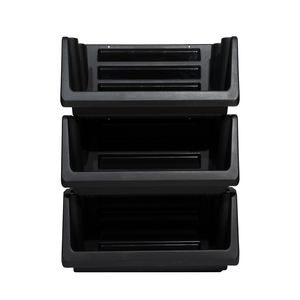
Explore China's most resilient industrial storage bin systems. Each unit is precision-engineered to integrate seamlessly with selective pallet racks, automated mini-load ASRS cranes, cantilever systems, and heavy-duty mezzanine shelving.

Procurement Intelligence

The Strategic Engineering of Industrial Storage Bins

Analyzing structural polymer dynamics, load distribution mechanics, and manufacturing excellence from China’s leading industrial production corridors.

In high-throughput distribution hubs, manufacturing plants, and e-commerce fulfillment centers, industrial storage bins represent far more than passive receptacles; they are precision-engineered structural interfaces directly connecting inventory assets to material handling workflows. Sourcing storage bins from leading Chinese industrial clusters—particularly throughout Zhejiang, Jiangsu, and Guangdong—has evolved from basic spot-purchasing into sophisticated contract manufacturing agreements that demand rigorous metallurgical, polymer, and dimensional compliance.

A storage bin failure during automated replenishment or high-density vertical stacking does not merely crack plastic—it triggers downstream picking halts, damages sensitive electronic subassemblies, and presents unacceptable occupational safety risks to warehouse operatives. Modern storage bins engineered by Tier-1 Chinese manufacturers utilize advanced co-polymer polypropylene (PP) and high-density polyethylene (HDPE), frequently blended with specialized impact modifiers to safeguard against low-temperature embrittlement, UV-induced polymer degradation, and dynamic mechanical fatigue.

Virgin vs. Recycled Copolymer

High-tier applications demand 100% virgin PP/HDPE blends to guarantee exact tensile yield strength (28–35 MPa) and eliminate structural micro-voiding caused by inconsistent regrind purity.

ASRS Deflection Tolerances

Automated shuttle bins feature heavily ribbed bottoms that limit deflection under 35kg point-loads to less than 1.5mm, preventing sensor tripping and conveyor jams in lights-out systems.

ESD Protection Protocols

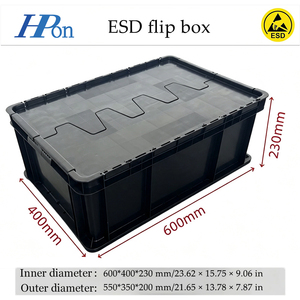
Carbon black compounding achieves permanent volume resistivity (10^4 to 10^6 Ω/sq), eliminating static risk in semiconductor cleanrooms and delicate surface-mount device handling.

When selecting between open-front picking containers, attached-lid distribution containers (ALCs), heavy collapsible steel stillages, and wire mesh baskets, enterprise supply chain directors must evaluate structural capacity across two distinct operational metrics: Static Stacking Capacity (the maximum load-bearing endurance of stationary columns over prolonged warehouse cycles) and Dynamic Transport Rating (the resistance to impact, vibration, and conveyor transfer accelerations when fully loaded).

Bin Architecture Material Specification Static Load Rating Primary Use Cases Automation Suitability
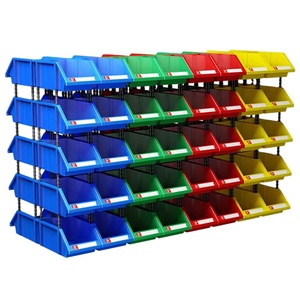
Louvered Panel Shelf Bins High-Impact Polypropylene Up to 45 kg / bin Hardware picking, fasteners, assembly stations Manual pick-to-light setups
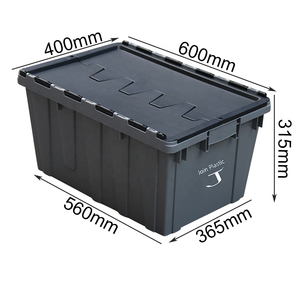
Attached-Lid Totes (ALC) Modified PP / HDPE Blends Up to 250 kg stacked Cross-docking, retail replenishment, 3PL High (Conveyors, sorters, miniload)
ESD Dissipative Crates Carbon-Compounded PP Up to 180 kg stacked PCBA assembly, microelectronics logistics Automated cleanrooms & AGVs
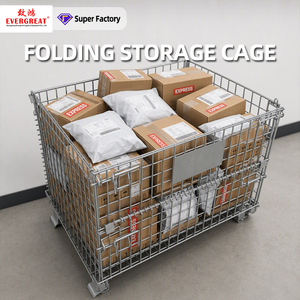
Steel Stillage Wire Cages Q235 Low-Carbon Steel 1,000 kg – 2,000 kg Castings, automotive forgings, heavy fabrication Heavy-payload AGVs & forklifts
Galvanized Sheet Steel Bins Hot-Dip DX51D+Z Steel 500 kg+ static Outdoor storage, hazardous chemicals, tooling Crane & counterbalanced handling
Future Horizon

Next-Generation Procurement Trends & Innovations

How the convergence of robotics, regulatory circularity, and smart sensing is reshaping the industrial storage bin manufacturing landscape.

Industrial procurement teams are navigating an unprecedented shift in warehouse logistics architecture. Driven by surging labor overhead and the demand for rapid order fulfillment, modern operations are phasing out manual shelf picking in favor of automated storage and retrieval systems (ASRS), autonomous mobile robots (AMRs), and cubic storage configurations (such as AutoStore grids). As a direct result, factory procurement specifications for industrial bins have grown exponentially more stringent.

In-Mold RFID & IoT Tracking

Chinese injection molders now embed passive UHF RFID transponders and Datamatrix QR codes directly into the polymer sidewalls during molding, protecting asset tags against abrasion and industrial washing cycles.

Closed-Loop PCR Blends

Stricter European and North American EPR legislation has accelerated the adoption of Post-Consumer Recycled (PCR) content. Leading Chinese factories achieve certified 30–50% PCR formulations without losing structural impact strength.

Flame-Retardant UL94-V0 Compounds

To reduce warehouse fire insurance premiums, buyers are specifying halogen-free flame-retardant (FR) additives that meet strict UL94-V0 and NFPA 13 standards, preventing vertical fire spread in automated multi-tier rack arrays.

Furthermore, standardizing bin sizes across cross-border distribution channels has made ISO modular footprints (600×400mm, 400×300mm, and 1200×1000mm) the undisputed global baseline. By procuring bins engineered strictly to these dimensions, international supply chain operators eliminate pallet overhang, optimize container cube-out rates, and prevent mechanical edge collisions along automated roller conveyor systems.

Enterprise Advantage

Why Global Supply Chains Trust Our Engineering Ecosystem

Delivering complete accountability, heavy-tonnage injection infrastructure, and verified structural integrity from initial mold prototyping through final site delivery.

Procuring industrial storage bins at scale requires more than searching through standard wholesale catalogs—it demands a manufacturer capable of delivering strict dimensional repeatability, robust custom tooling, and transparent quality assurance across production runs of hundreds of thousands of units. Building on more than 18 years of technical expertise in industrial warehouse racking, mezzanine systems, and logistics equipment, our manufacturing operations bridge the critical gap between raw production capacity and enterprise-grade structural performance.

Heavy Injection Machinery

Our network operates high-tonnage servo-hydraulic injection presses ranging from 800T to 3,500T, ensuring that deep-draw totes, collapsible containers, and heavy crates are molded with high density and free from sink-mark defects.

Proprietary Project Tracking

Clients gain real-time transparency through our proprietary production tracking platform, monitoring steel tool machining, batch mold cycle times, spectrophotometric color consistency, and shipment milestones directly.

Integrated System Synergy

Because we engineer warehouse racking, mezzanine floors, and material handling systems, our storage bins are specifically dimensioned to integrate seamlessly with standard beam lengths, wire decking, and picking clearances.

Every production batch undergoes comprehensive laboratory load auditing: static compression stress tests, charpy notched impact analysis under freezing conditions (-25°C), environmental stress crack resistance (ESCR) chemical exposure, and automated conveyor cycling. This rigorous testing regimen ensures that when containers are deployed across demanding environments—from cold chain meat processing to heavy automotive assembly plants—they deliver uncompromised structural reliability year after year.

Procurement Knowledgebase

Frequently Asked Questions on Sourcing Storage Bins from China

Clear, practical answers covering material grades, tooling investments, minimum order quantities, and international quality certifications.

What is the structural difference between Virgin PP and Recycled PP in industrial bin manufacturing?

Virgin Polypropylene (PP) is synthesized directly from petrochemical feedstocks without prior thermal degradation. This provides uniform polymer chain length, maximum tensile strength (approx. 31–35 MPa), predictable impact performance down to sub-zero temperatures, and long-term chemical resistance. Recycled PP (regrind), while environmentally valuable and cost-effective, undergoes multiple heat-shear cycles during processing. This process shortens the molecular chains, increasing structural brittleness and introducing micro-contaminants that can lead to unexpected cracking under heavy stacking loads. For high-rack storage or automated warehouse systems, virgin PP—or tightly controlled co-polymer blends containing no more than 15-20% certified clean industrial regrind—is strongly recommended.

How do Chinese manufacturers guarantee dimensional accuracy for ASRS-compatible automated totes?

Bins intended for automated storage and retrieval systems (ASRS) require strict dimensional tolerances—typically within ±0.5mm—along with bottom deflection limits under 1.5mm when fully loaded. Leading Chinese injection molders achieve this through precision CNC-machined P20 or 718H hardened steel molds, paired with closed-loop servo-controlled cooling systems that prevent asymmetric post-mold shrinkage and thermal warpage. In addition, quality engineers conduct coordinate measuring machine (CMM) inspections and laser scan profiles on sample batches before approving full-scale manufacturing runs.

What are typical Minimum Order Quantities (MOQs) and lead times for custom-color or branded storage bins?

For standard catalog molds in stock colors (typically industrial blue, red, grey, or yellow), MOQs generally range between 200 to 500 units. For custom pantone colors requiring tailored masterbatch compounding, MOQs typically start at 1,000 to 2,000 units. Lead times for standard stock production are generally 10 to 18 business days. When developing custom molds—such as bespoke picking dimensions, custom internal dividers, or unique nesting geometries—tooling development takes 35 to 45 days, followed by sample prototyping (T1 trial parts) and volume production within 15 to 20 days after final article sign-off.

How is anti-static performance verified in ESD conductive logistics crates?

ESD performance is achieved by blending conductive carbon black or permanent non-migratory anti-static agents directly into the polypropylene matrix prior to injection. The finished products are audited in accordance with ANSI/ESD S20.20 and IEC 61340 standards using calibrated surface resistivity meters and concentric ring probes. High-quality ESD storage bins maintain consistent surface resistivity between 10^4 and 10^6 ohms (conductive) or 10^6 to 10^9 ohms (static dissipative), ensuring dependable performance regardless of ambient temperature or relative humidity shifts.

Can industrial storage bins be seamlessly integrated with existing selective racking and mezzanine shelving?

Yes. Proper integration starts by evaluating the clear opening width between upright frames, the exact beam depth, and the safe working clearance between shelf levels. For example, standard 2700mm pallet rack bays can accommodate four 600mm-wide totes or six 400mm-wide bins per level while leaving appropriate handling margins. Furthermore, picking bins with integrated rear lip locks can be hung directly from matching louvered steel panels, creating an ergonomic, high-density small parts sorting wall along mezzanine walkways or picking stations.

What quality assurance documentation should accompany an ocean freight shipment of storage bins?

Standard QA documentation should include an official Certificate of Analysis (CoA) for the raw polymer resin, raw material REACH and RoHS compliance certificates, factory drop-test reports, and dynamic stacking load audit sheets. For food, pharmaceutical, or cleanroom applications, manufacturers should also supply FDA or EU 10/2011 food-contact migration compliance test results. Third-party pre-shipment inspection reports (covering visual defects, flash removal, color consistency, and dimensional tolerances via SGS, TÜV, or Bureau Veritas) can also be coordinated before containers are loaded.

Ready to Upgrade Your Industrial Storage & Picking Infrastructure?

Connect with our technical engineering team for custom bin design, automated ASRS tote integrations, wholesale factory pricing schedules, or a comprehensive warehouse layout consultation.

Send an Inquiry