Precision-manufactured structural racking systems, vertical access lifts, modular industrial mezzanines, and dock automation machinery built to international FEM, RMI, and EN safety criteria.
Modern industrial supply chains face unprecedented macroeconomic friction: soaring industrial real estate lease rates, accelerated SKU velocity catalyzed by omnichannel distribution, and the stringent workplace safety requirements governing commercial facilities. In this operating climate, warehouse storage infrastructure can no longer be categorized as passive steel framework. It represents precision-engineered structural architecture that directly influences fulfillment throughput, cubage utilization factors, and operational longevity.
As premier Chinese manufacturers and direct exporters of metal storage shelving and high-bay industrial racking systems, our engineering doctrine is anchored in scientific metallurgy, cold-roll mechanical precision, and complete system-level integration. Sourcing metal shelving from top-tier Chinese manufacturers provides global enterprise buyers with distinctive competitive leverage: direct mill-scale procurement of certified structural steel, automated continuous roll-forming lines, state-of-the-art thermosetting electrostatic powder coating, and full EPC (Engineering, Procurement, and Construction) turnkey management.
The foundational integrity of any racking or shelving installation is dictated by raw coil chemistry and the exact cold-forming methodology employed. Substandard racking fabricators frequently utilize re-rolled scrap steel with irregular carbon contents, resulting in micro-fissuring along the 90-degree bend radii of structural uprights. Our manufacturing operations mandate certified primary coils: Q235B (yield strength ≥ 235 MPa) for standard ambient longspan shelving and mezzanine secondary joists, and Q355B (yield strength ≥ 355 MPa / ASTM A572 Grade 50 equivalent) for ultra-heavy-duty teardrop pallet frames, seismic upright columns, and high-bay gravity flow systems.
Each upright profile undergoes multi-stage continuous roll forming through up to 24 progressive rolling stations. This cold-work hardening process strategically enhances tensile rigidity at the critical outer flange zones without inducing residual internal stress. High-precision CNC punching tooling produces omega-shaped uprights, teardrop slot perforations, and 50mm/75mm pitch diamond connections with positional tolerances within ±0.1mm across a 12-meter continuous vertical member.
Drawing on over 18 years of specialized engineering execution and more than 500 completed mega-scale logistics installations globally, our direct manufacturing and export capabilities resolve the chronic supply chain disruptions typically encountered in cross-border industrial procurement.
Clients access an exclusive, real-time digital dashboard detailing every milestone: from metallurgical raw-coil QA testing and CNC slot-punching to robotic seam welding, containerized export staging, and site erection progress.
Complete layout calculation dossiers calculated under FEM 10.2.02 (European Racking Federation), RMI MH16.1 (USA), and AS 4084-2012 (Australia), accounting for localized seismic acceleration coefficients and soil subgrade values.
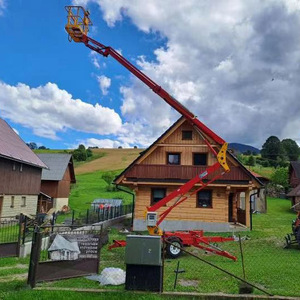
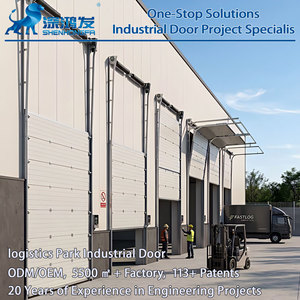
We do not merely supply structural frames; we fabricate and calibrate the complete material handling ecosystem—including cherry pickers, articulating boom lifts, high-speed industrial sectional doors, and floor impact guards.
Automated nesting bundles wrapped in vapor-corrosion-inhibiting (VCI) shrink films, reinforced with heavy-duty timber dunnage and corner protectors to ensure zero transit damage across maritime long-haul shipping routes.
Factory-trained supervisory engineers deployed on-site worldwide to oversee mechanical anchoring, optical upright verticality surveying, floor level shimming, and load-rating certification handovers.
Selecting the optimal storage layout requires evaluating SKU velocity, unit handling dimensions, access methodologies, and floor slab load-bearing capacities. The following comparison matrix synthesizes core operational metrics across primary industrial shelving and racking topologies.
| Storage System Classification | Structural Profile & Steel Grade | Rated Capacity Range | Selectivity vs. Density | Floor Footprint Optimization | Primary Industrial Use-Case |
|---|---|---|---|---|---|
| Teardrop Pallet Racking | Upright 76.2×76.2mm, Beam 80–160mm (Q355B) | 1,000 – 4,500 kg per beam level | 100% Selectivity | Standard Aisle (3.2m – 3.8m) | FMCG Distribution, 3PL Warehousing, General Cargo |
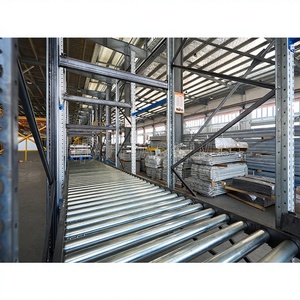
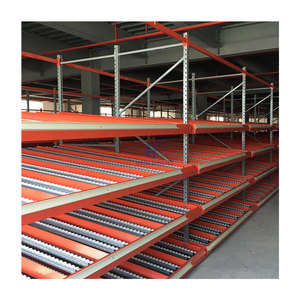
| Carton / Pallet Gravity Flow | Roller tracks with centrifugal speed controllers (Q235B) | 50 – 1,500 kg per gravity lane | Strict FIFO Rotation | High Density (-35% Aisle Area) | Cold Storage, Pharmaceutical Expiry Control, Assembly Kitting |
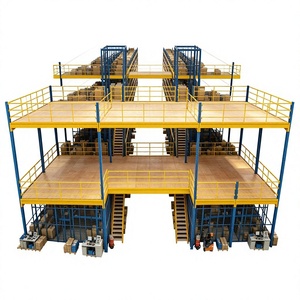
| Structural Multi-Tier Mezzanine | Heavy universal columns + cold-formed C/Z joists | 300 – 1,200 kg / m² uniform load | Multi-Floor Manual Pick | Multiplies Cubage (2× to 3× Space) | E-commerce Fulfillment Centers, Automotive Spare Parts |
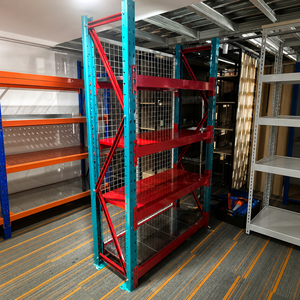
| Heavy Boltless Longspan Shelving | Step-beam with recessed steel decking (Q235B) | 200 – 800 kg per shelf tier | 100% Manual Hand-Loading | Narrow Manual Aisles (1.0m – 1.4m) | Hardware Distribution, Maintenance Workshops, Archive Vaults |
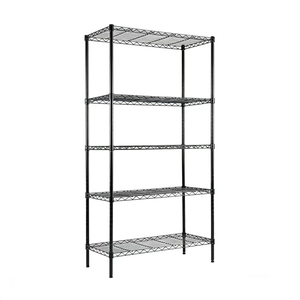
| Industrial Wire Deck Shelving | Cold-drawn steel wire (4.5–6.0mm) with channel supports | 150 – 450 kg per layer | Open Airflow / Sprinklers | Cleanroom / Retail Backroom | Foodservice, Electronics Storage, Healthcare Facilities |
*Note: Structural beam deflection limits are engineered strictly within L/200 under maximum static safe working load (SWL) in compliance with FEM 10.2.02 codes. Dynamic load factors must be cross-verified for seismic zones D, E, and F.
Procurement teams are shifting away from evaluating metal shelving merely on a "price-per-ton" basis. Forward-thinking supply chain directors evaluate total capital expenditure against twenty-year lifecycle costs, throughput compatibility, and compliance resilience. Four dominant procurement macro-trends are driving global purchasing decisions:
With the exponential deployment of Autonomous Mobile Robots (AMRs), Automated Guided Vehicles (AGVs), and stacker cranes, racking frameworks are now treated as dynamic kinematic guides rather than static steel frames. Traditional fabrication tolerances of ±3.0mm over 10 meters cause mechanical jamming of high-speed shuttle extractors. Global buyers are mandating automated continuous punch lines delivering cumulative tolerance bands within ±0.5mm, laser-welded beam end-connectors, and automated deflection-compensating rail systems.
Multinational corporations subjected to European Corporate Sustainability Due Diligence Directive (CSDDD) and US SEC Scope 3 emission reporting now require certified carbon-footprint disclosures for imported warehouse steel. Procurement contracts increasingly specify electric arc furnace (EAF) steel production routes powered by green hydrogen or renewables over legacy blast-furnace/basic-oxygen-furnace (BF-BOF) methods. Factory-applied powder coatings must be 100% volatile organic compound (VOC) free, heavy-metal-free, and applied with closed-loop overspray recovery systems exceeding 98% efficiency.
Maritime ocean freight volatility has transformed how shelving products are designed for packaging. Forward-thinking exporters leverage computational finite element nesting models, allowing beam profiles to nest inside structural upright channels. This increases container cubic mass density from 18 metric tons up to the maximum permissible 26 metric tons per 40ft High Cube container, dramatically lowering the landed per-bay logistics cost for international consignees.
The manufacturing vanguard in China’s storage equipment sector is pioneering material science and digital sensor integrations that transform ordinary metal racks into active operational assets:
Traditional zinc electroplating (5–8 μm) provides minimal protection in coastal high-humidity logistics hubs or cold-chain blast freezers where condensation cycles drive rapid corrosion. Leading exporters now deploy Zinc-Aluminum-Magnesium (ZAM) alloy coatings combined with dual-layer thermosetting polyester powders. ZAM self-healing chemistries automatically seal cut edges and punched slots through carbonate precipitation, withstanding upwards of 1,500 hours of continuous salt spray testing (ASTM B117) with zero red rust emergence.
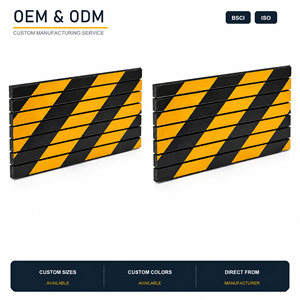
Forklift impact remains the primary cause of catastrophic racking collapse. Next-generation installations are utilizing dual-tier defense mechanisms: exterior impact guards engineered from high-density, co-extruded elastomeric polymers (NBR/XPE/PU) capable of absorbing kinetic collisions up to 1,200 Joules, alongside beam-embedded piezoresistive strain sensors. These IoT telemetry sensors register uncharacteristic torsional deflection or impact shocks, alerting safety managers via ERP webhooks before local buckling can trigger progressive bay collapse.
Technical guidance compiled by our senior structural engineering and export compliance division to support supply chain architects, warehouse operations managers, and international EPC procurement officers.
Tier-1 Chinese manufacturers engineer storage systems using hot-rolled and cold-formed structural steel complying with national standard GB/T 700 (Grades Q235B and Q355B). For export shipments, these materials are cross-certified to ASTM A1011 / A572 Grade 50 (North America) and EN 10025-2 S235JR / S355JR (Europe). Complete mill test certificates (MTC) detailing heat numbers, yield strength, ultimate tensile strength, elongation percentages, and chemical carbon equivalent values (CEV) accompany each bill of lading.
Load engineering employs advanced 3D finite element analysis (FEA) software modeling second-order P-Delta structural effects, local plate buckling, and beam-to-column connector semi-rigidity (rotational spring stiffness, K_phi). Calculations comply rigorously with FEM 10.2.02 or RMI MH16.1 specifications. Physical destructive cycle testing on beam end-connectors, column stubs, and baseplates is conducted on calibrated hydraulic test benches to establish safety factors strictly equal to or exceeding 1.65 to 2.0.
For standard ambient warehouses, an automated 7-stage chemical pre-treatment (iron/zinc phosphate plus deionized water rinse) followed by electrostatic polyester powder coating (60–90 μm thickness) cured at 200°C provides exceptional durability. For commercial cold-storage freezers (-25°C to -40°C) or open-air marine ports, we mandate continuous hot-dip galvanizing (HDG) to ASTM A123 / ISO 1461 with minimum 65–85 μm zinc thickness, or pre-galvanized Zinc-Aluminum-Magnesium coils to prevent embrittlement and delamination.
Teardrop systems (typically 2-inch pitch) represent the standard across North and South America, offering rapid slide-in assembly, gravity-seating wedge action, and universal compatibility with existing teardrop frame inventories. European systems utilize metric pitch intervals (50mm, 75mm, or 76.2mm) with multi-claw connector brackets and heavy-duty steel safety pins. Both achieve equivalent structural rigidity when engineered properly; the selection is primarily governed by regional standard operating procedures and existing MHE attachments.
To produce precision CAD floor layouts, beam load tables, and competitive FOB/CIF quotation tenders, buyers should supply: (1) Architectural DWG floor plans highlighting column grids, dock doors, expansion joints, and overhead clear heights to low-hanging sprinkler heads or HVAC ducting; (2) Detailed palletized load profiles (Width × Depth × Height, including pallet dunnage, plus gross weight); (3) Forklift / material handling equipment specifications (turning radius, maximum lift height, mast collapsed height, and outrigger width); (4) Local seismic acceleration parameters and concrete slab thickness/reinforcement data.
Through our proprietary online Project Tracking System, overseas clients receive photographic and telemetry updates across all production phases. We provide comprehensive export documentation including CE declarations of conformity, custom Form E/COO origin certificates, container loading plans (stowage schematics calculated via 3D software to eliminate cargo crushing), and English-language installation operation and maintenance manuals (IOMM).
Connect directly with our senior structural logistics engineering team. We provide complimentary CAD layout drafting, dynamic cubic capacity simulations, and turnkey EPC manufacturing tenders tailored to your exact operational parameters.