Explore factory-certified storage architectures, from high-capacity wire containment and impact shielding to automated gravity flow and high-density racking units engineered for continuous commercial duty cycles.
In modern industrial warehousing, material handling efficiency and cubic volume optimization dictate operational profitability. Collapsible wire mesh containers—commonly termed wire baskets, folding mesh stillages, or wire butterfly cages—serve as the vital load-bearing interface between automated guided vehicles (AGVs), traditional counterbalance forklifts, and high-bay selective pallet racking systems. As international supply chains shift toward circular handling loops, sourcing directly from verified Chinese manufacturing facilities equipped with automated resistance spot-welding machinery and precision hot-dip galvanizing lines has emerged as the definitive procurement standard for Tier-1 supply chain executives.
High-integrity collapsible wire containers manufactured by leading Chinese export hubs utilize premium cold-drawn mild steel wire conforming to Q235B / SAE 1008/1018 grades. Drawing the wire rod through multi-stage reduction dies refines grain alignment, achieving tensile thresholds between 600 N/mm² and 750 N/mm². This prevents structural yield under extreme dynamic loads when units are stacked up to four tiers high under full operational payloads of 1,000 kg to 2,000 kg.
| Standard Specification | Light-to-Medium Duty | Heavy-Duty Industrial | Extreme Dynamic Duty |
|---|---|---|---|
| Nominal Wire Diameter | 4.8 mm - 5.5 mm | 5.8 mm - 6.2 mm | 6.4 mm - 8.0 mm |
| Mesh Pattern Spacing | 50 mm × 50 mm (2" × 2") | 50 mm × 100 mm (2" × 4") | 25 mm × 50 mm / Reinforced |
| Safe Working Load (SWL) | 500 kg - 800 kg | 1,000 kg - 1,500 kg | 1,800 kg - 2,500 kg |
| Stacking Capacity (Static) | 3 High Fully Loaded | 4 High Fully Loaded | 4-5 High Heavy Stillage |
| Base Reinforcement Profile | Formed Channel Ribs (1.8 mm) | U-Channel Base Grid (2.5 mm) | Welded Box Section + Skid Runners |
| Surface Treatment Options | Electro-Galvanized (10-15 μm) | Epoxy Powder Coat (60-90 μm) | Hot-Dip Galvanized (≥65 μm ISO 1461) |
The structural undercarriage relies on roll-formed U-shaped steel channels welded directly to the base perimeter wire mesh. These channels transfer stacked vertical loads directly through precision-stamped heavy-gauge cup feet (stacking legs). By anchoring the tare weight and payload across four perimeter stress points, the cup feet engage the upper rim of the bottom container securely, mitigating rotational shift and dynamic tipping hazards under seismic or seismic-adjacent vibration within automated warehousing facilities.
Tailored wire container variations designed to solve distinct operational challenges across automotive manufacturing, cold storage distribution, and high-frequency retail fulfillment.
The quintessential workhorse of high-density bulk storage. Featuring an ergonomic front half-drop folding gate equipped with dual self-locking spiral latches, allowing picking operators direct inventory access even while containers remain stacked four high.
Engineered expressly for internal stamping, powertrain casting, and assembly line conveyance. Reinforced with bottom perimeter structural skid runners and optional polyurethane brake castors for seamless manual tugger-train towing operations.
Built for continuous operation in minus 30°C blast freezers, pharmaceutical cold storage, and outdoor seaside yard marshalling. Thick metallurgically bonded zinc layer exceeds 65 microns, completely eliminating oxidation and structural embrittlement.
Strategic shifts in raw material indexing, environmental compliance, and international freight containerization impacting B2B procurement decisions through 2026–2030.
Enterprise procurement departments are transitioning from spot-market buying to quarterly indexed iron ore and steel rod formula pricing, locking in Chinese factory capacity while insulating supply chains from volatility.
Multi-national sustainability mandates have catalyzed an aggressive phase-out of single-use wooden pallets in favor of 100% recyclable, zero-waste collapsible steel containers that dramatically lower total carbon lifecycle accounting.
Leading Chinese exporters are engineering reduced profile fold-flat ratios (exceeding 4.2:1), enabling logistics directors to load over 380 collapsed units into a 40ft High Cube container, slashing ocean freight landed cost per unit.
Procurement directors are actively partnering with Chinese manufacturing factories featuring mature overseas engineering branches and regional fulfillment hubs, guaranteeing both low ex-factory unit pricing and rapid local emergency stocking.
The manufacturing ecosystem for steel mesh containers in China has undergone an unprecedented technical modernization over the past decade. Manual metal inert gas (MIG) welding and hand-sheared wire cutting have been systematically superseded by fully automated multi-head CNC resistance welding gantries. These computer-controlled welding platforms execute up to 64 spot welds simultaneously with uniform current density and pneumatic compression, eradicating micro-fractures, weld spatter, and incomplete metallurgical fusion.
As modern distribution facilities shift toward automated shuttles, high-speed rail-guided stacker cranes, and automated pallet conveyors, dimensional tolerances for wire containers have compressed from ±5 mm down to strict ISO-standard ±1.5 mm. Custom containers now feature precision robot-guide locating pins, optical sensor reflective target plates, and laser-machined barcode ID nameplates to facilitate autonomous optical scanning at conveyor junction gates.
Furthermore, the emergence of IoT-enabled supply chains has accelerated the adoption of embedded passive RFID microchips and Bluetooth Low Energy (BLE) tracking tags housed within ultra-durable polyamide protective enclosures on the wire frame. This technology empowers logistics operators to track container fleet utilization, dwell times, and rotation cycles in real time across domestic distribution networks and transoceanic shipping routes.
Crucial technical, quality verification, and commercial logistics questions answered by our chief structural engineers and export directors.
Electro-galvanizing (cold zinc plating) deposits a uniform zinc layer between 10 to 15 microns thick via electrolytic displacement. This provides a clean, aesthetic finish ideal for dry indoor warehouses, retail back-of-house storage, and electronics picking. In contrast, hot-dip galvanization (HDG) submerges fabricated steel into molten zinc at 450°C, producing an iron-zinc alloy layer exceeding 65 microns (compliant with EN ISO 1461). HDG is compulsory for outdoor moisture, coastal air, chemical environments, and sub-zero cold storage operations.
Stacking stability relies on the geometric precision of the cold-stamped heavy-gauge cup feet (locking feet) and the upper rim reinforcement wire. During factory acceptance testing (FAT), static load tests are performed at 1.5 times the rated load capacity stacked four tiers high for 24 hours to monitor baseline deflection. Dynamic stability is verified through simulated forklift impact and tilt-table angle testing (up to a 5-degree operational pitch) to ensure interlocking feet do not slip or shear from the base channel under fully loaded conditions.
Yes. Our engineering division routinely tailors dimensions to match Euro standard (1200 mm × 800 mm), GCC/UK standard (1200 mm × 1000 mm), and North American GMA footprint standards (48" × 40"). Furthermore, bottom skid runners or fork stirrups can be engineered to integrate with step beams, box beams, or structural open-channel pallet racks, ensuring containers do not push beam spans out of alignment or slide across wire mesh decking panels.
Discerning international buyers require proof of ISO 9001:2015 quality management compliance, CE marking for machinery-adjacent handling equipment, and documented spot-weld shear tests. In our automated factories, sample mesh grids are extracted from every 200 units and subjected to hydraulic tensile testing. Spot shear resistance must exceed 3.5 kN per weld node to ensure that internal part impact or forklift tine contact will not cause catastrophic progressive mesh unzipping.
Standard collapsible wire containers feature a folded height profile between 200 mm and 280 mm, achieving a space-saving collapse ratio of roughly 4:1. Depending on whether external heavy-duty castors or high-clearance crane lifting lugs are installed, our export packing team optimizes nesting so that between 300 and 420 collapsed units can be systematically loaded into a single 40ft HC ocean container. This efficient packing density minimizes transoceanic logistics costs per unit.
To produce an authoritative structural proposal and competitive price quote within 24 hours, our technical team requires: external and internal length, width, and height requirements; nominal mesh spacing (e.g., 50×50 mm or 50×100 mm); wire gauge diameter; safe working load per container (e.g., 1000 kg SWL); required stacking tier height (e.g., 4 high); operating environment (indoor dry, cold storage, outdoor); and handling method (forklift, pallet jack, automated tow tugger, or crane).
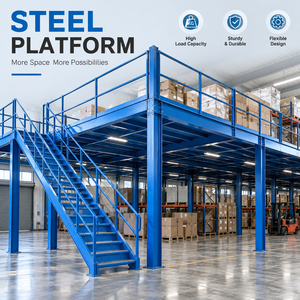
Whether you require standard high-cube collapsible wire containers for automotive parts staging or a fully integrated warehouse storage architecture featuring heavy-duty selective racking and mezzanine floors, our engineering team is ready to assist.