Design · Supply · Installation · Inspection
0%

In 2026, Material Handling Equipment helps businesses move, store, and protect goods across warehouses, factories, and distribution centers. The leading equipment types range from familiar forklifts and pallet jacks to conveyors, cranes, automated mobile robots, and automated storage and retrieval systems. Each solves a different challenge. The right choice depends on the load, travel distance, floor space, and pace of work—not simply the latest technology.

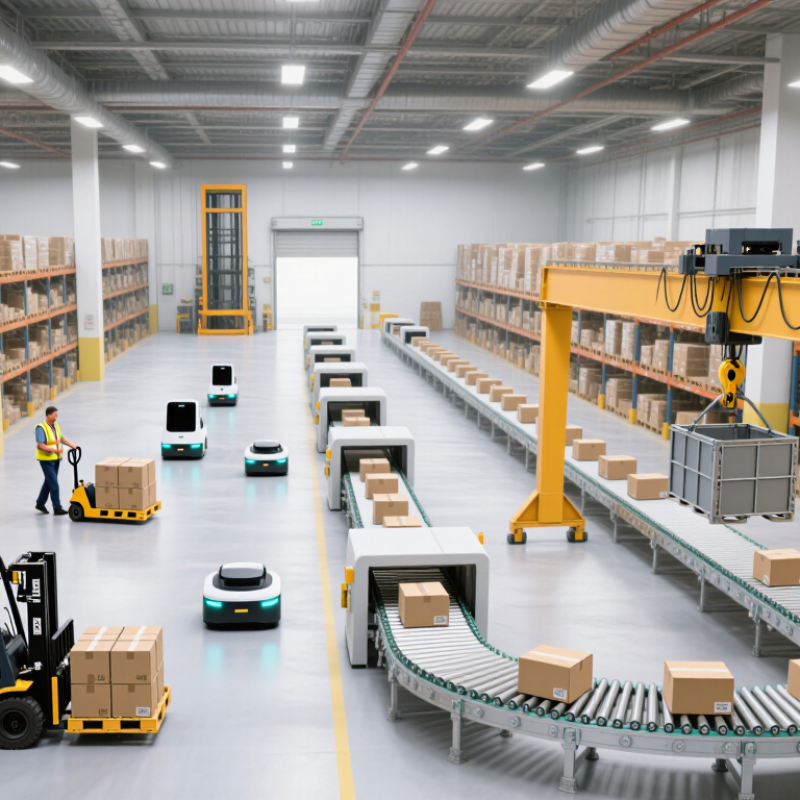
A forklift may suit a loading dock where pallets change direction often. Conveyors can keep cartons moving along a predictable route, while cranes and hoists lift heavy loads that should not be carried by hand. Automated guided vehicles and autonomous mobile robots can move items between work areas, but they need suitable routes and reliable traffic controls. Every operation differs. A compact warehouse with narrow aisles has different needs from a high-volume fulfillment center.

This guide compares the main equipment categories and explains where each can be useful. It also considers practical trade-offs, including purchase and maintenance costs, operator training, integration, and available space. These details matter. Automation can improve consistency, but it is not automatically the best investment; even a well-chosen system can underperform when workflows are poorly planned. Equipment specifications and workplace conditions change, so buyers should verify current manufacturer guidance and assess their own site before making decisions. The goal is not to name one universal winner, but to help readers identify options that fit real handling needs.
What Are the Top Material Handling Equipment Types in 2026?

What Material Handling Equipment Does and Where It Is Used

Material handling equipment moves, stores, protects, and controls goods inside a facility. Its role starts at receiving, where pallet jacks and forklifts unload pallets and move them to storage. Conveyors carry cartons between packing stations, while racks keep inventory accessible above floor level. Small details matter: aisle width, floor condition, and load weight can change which equipment is safe and practical.

In distribution centers, picking carts and order-picking trucks help workers collect items across long aisles. Automated storage and retrieval systems store and retrieve loads in compact spaces, often where throughput is high. Manufacturing plants use hoists and lift tables to position heavy components near assembly lines. Cold-storage sites may need equipment suited to low temperatures and condensation.

Space matters. No single layout fits every operation.

Investment patterns reflect this changing mix. MHI’s 2024 Annual Industry Report found that 55% of surveyed supply-chain professionals planned to increase investment in supply-chain innovation. That figure signals interest, not a guarantee that automation suits every warehouse. A manual pallet jack may serve a small stockroom better than a complex system. I would treat equipment selection as an operational decision, then review travel distances, load profiles, and worker feedback before committing. The data helps frame the choice, but local conditions still decide.

How Material Handling Equipment Is Classified

Material handling equipment is best classified by the job it performs, not just by its appearance. Transport equipment moves goods between points: forklifts, pallet trucks, conveyors, and automated guided vehicles fit this group. Some move one pallet at a time; others carry cartons continuously along a line. Small distinction, big impact. Positioning equipment adjusts an item’s location or orientation at a workstation. Hoists and lift tables are examples, though they do not remove every ergonomic risk.

A second useful category is unit-load formation and storage. Palletizers build loads, while racks and shelving hold inventory until retrieval. Bulk-material equipment handles loose goods such as grain, sand, or powders through hoppers, feeders, and conveyors. Categories can overlap. A conveyor may transport goods and feed a storage system. That is normal. Planners can also classify equipment as mobile or fixed, manual or powered, and intended for unit loads or bulk materials. A reach truck, for example, moves palletized goods, but aisle width and lift height affect where it can operate. Labels help, yet real facility layouts are rarely as tidy as diagrams.

What Are the Top Material Handling Equipment Types in 2026? — How Material Handling Equipment Is Classified

Equipment Type Primary Classification Typical Movement Main Function Common Applications Key Selection Consideration
Conveyor Systems Fixed-path; powered or gravity-operated; continuous-flow equipment Moves items along a defined route, horizontally, vertically, or on an incline Transports goods between work areas with limited manual handling Packaging lines, distribution centers, production facilities, and sortation areas Item size and weight, throughput, route layout, and required accumulation or sorting
Forklifts and Lift Trucks Mobile; powered industrial trucks; operator-driven or pedestrian-operated models Lifts and carries palletized or unitized loads over variable routes Loads, unloads, stacks, and replenishes materials Warehouses, loading docks, manufacturing plants, and outdoor yards Load capacity, lift height, aisle width, surface conditions, and power source
Pallet Jacks Mobile; manual or powered; low-lift truck Moves pallets over short distances, typically at floor level Positions and transports pallet loads without high-level stacking Retail stockrooms, delivery vehicles, docks, and warehouse aisles Load weight, travel distance, pallet type, and floor condition
Automated Storage and Retrieval Systems (AS/RS) Fixed installation; automated storage and retrieval equipment Stores and retrieves loads in designated storage locations Uses vertical and floor space efficiently while supporting controlled inventory access High-density warehouses, distribution centers, and production storage areas Load dimensions, storage density, retrieval rate, building height, and system integration
Automated Guided Vehicles and Autonomous Mobile Robots Mobile; automated transport equipment Moves materials along programmed routes or dynamically selected paths Transports totes, carts, pallets, or other loads with reduced manual driving Factories, fulfillment operations, and warehouses with repeatable material flows Payload, navigation environment, traffic patterns, charging needs, and safety controls
Industrial Cranes and Hoists Fixed or semi-fixed lifting equipment; intermittent-load handling Lifts and moves suspended loads across a work area Handles heavy or bulky materials that are difficult to move at floor level Manufacturing plants, maintenance shops, construction sites, and loading areas Rated capacity, span, lift height, duty cycle, and load-control requirements
Dock Levelers and Loading Equipment Stationary dock equipment; loading and unloading interface Bridges the height gap between a dock and a vehicle Supports safer transfer of goods between buildings and transport vehicles Distribution centers, warehouses, and manufacturing shipping areas Vehicle range, rated load, dock geometry, and site safety procedures
Racks, Shelving, and Mezzanines Fixed storage equipment; static load support Organizes inventory in floor-level or elevated storage locations Stores materials and improves access to inventory within available space Warehouses, stockrooms, workshops, and parts-storage areas Stored load, item dimensions, access method, building constraints, and applicable safety requirements

Classification note: Material handling equipment is commonly grouped by function—transport, positioning, storage, and unit-load formation—and by operating method, such as fixed or mobile, powered or manual, and continuous or intermittent.

Which Equipment Types Lead Material Handling in 2026

In 2026, material handling leaders are chosen by task, not trend. Forklifts move palletized loads across docks, yards, and changing storage routes. Electric pallet trucks handle shorter trips and tight staging areas with less operator effort. Conveyors suit steady flows between receiving, packing, and shipping. Simple, but useful.

Automated guided vehicles and autonomous mobile robots move totes or pallets along recurring routes. They can reduce repetitive travel, but need clear paths, reliable charging, and careful traffic planning. Automated storage and retrieval systems make dense storage practical when floor space is limited and inventory data is dependable. Cranes and hoists remain important for heavy or suspended loads that forklifts cannot safely position. Different problems, different tools.

The leading mix depends on load weight, aisle width, travel distance, and daily operating hours. A practical site assessment should also check maintenance capacity, floor conditions, and how equipment will interact with workers. Automation is not automatically an upgrade; that claim is too neat. A poorly matched system can create bottlenecks instead of removing them. Small details count, like turning space at a packing station or queueing near a dock. Compare throughput and safety needs before choosing equipment, and leave room for seasonal changes in demand.

How to Match Equipment to a Facility’s Handling Needs

Choosing material handling equipment in 2026 starts with the work, not a catalog. Measure each load’s weight, dimensions, and travel path. A pallet truck may suit short, level moves, while a forklift can handle heavier loads and changing routes. Space matters. Check aisle width, turning clearance, floor condition, door height, and busy crossing points. A tidy layout drawing can still miss an awkward handoff at a doorway.

For repeated movement between fixed stations, conveyors can reduce carrying and keep flow predictable. But they need floor space and can limit future layout changes. Automated guided vehicles or autonomous mobile robots may suit repeat routes, provided pedestrian traffic and exceptions are planned for. They are not plug-and-play. Charging, route changes, and recovery from blocked paths need attention. For vertical transfers, lifts or hoists fit specific loads, while overhead cranes can move bulky items. Verify capacity and lift height using actual load data, not averages.

Compare equipment against peak-hour volume, not just the daily average. A loading dock may face brief surges. Consider operator training, maintenance access, power needs, and compatibility with existing systems. A small pilot on one route can expose bottlenecks before a wider rollout. The first layout will probably be imperfect. After installation, review waiting time, near misses, and damaged goods, then adjust routes or equipment.

How Automation and Sustainability Are Shaping Equipment in 2026

In 2026, material handling equipment is being shaped by two practical pressures: faster workflows and lower operating impact. MHI’s 2024 Annual Industry Report found that 55% of surveyed supply-chain leaders planned to increase technology investment. The report also found that 60% expected AI to become mainstream within five years. On warehouse floors, that shift can mean autonomous mobile robots moving totes, sensor-equipped conveyors routing cartons, and automated storage systems bringing goods to picking stations. Small gains matter.

The scale of automation is growing. The International Federation of Robotics reported 541,302 industrial robots installed worldwide in 2023. That figure covers more than warehouses, but it signals a wider move toward robotic handling and palletizing. Forklifts remain essential; electric models can reduce local exhaust, while fleet software can cut empty trips. Yet automation is not automatically greener. Charging losses, battery replacement, and poorly used equipment can weaken the gains.

Sustainability is a real operational concern, not just a purchasing label. MHI’s 2024 report found 47% of respondents identified it as a supply-chain challenge. Equipment choices increasingly include efficient electric lift trucks, conveyors with variable-speed drives, and right-sized automated storage. The best option depends on the load, travel distance, shift pattern, and building layout. A robot crossing a quiet aisle may save labor, but it may also add energy use and maintenance. Measure both.

FAQS

How is material handling equipment classified?

Equipment is grouped by its job: transporting, positioning, forming unit loads, storing goods, or handling bulk materials. Categories may overlap. A conveyor can move goods and feed storage.

Which equipment moves palletized loads?

Forklifts handle heavier loads and changing routes. Pallet trucks suit shorter moves, especially across level floors and tight staging areas.

When are conveyors a practical choice?

Conveyors work well for steady movement between fixed points, such as receiving and packing. They need floor space and can make future layout changes harder.

What should a facility check before using mobile robots?

Check route clarity, pedestrian traffic, charging access, and plans for blocked paths. They are not plug-and-play. A small pilot can reveal problems early.

How can equipment help with dense storage?

Automated storage and retrieval systems can make better use of limited floor space. They depend on reliable inventory data and suitable facility conditions.

What equipment handles vertical or suspended loads?

Lift tables and hoists can position specific loads. Overhead cranes suit bulky items. Verify capacity and lift height using actual load measurements.

Which facility details affect equipment selection?

Measure load weight, dimensions, aisle width, turning clearance, door height, and floor condition. Space matters. Also check busy crossings and awkward handoffs.

How should a facility assess equipment performance?

Compare capacity with peak-hour demand, not only daily averages. After installation, review waiting times, near misses, and damaged goods, then adjust routes or equipment. The first layout may be imperfect.

Conclusion

Material Handling Equipment includes the tools and systems used to move, store, protect, and control goods throughout a facility. Common settings include warehouses, factories, distribution centers, and shipping areas. Equipment can be classified by its role, such as transport, lifting, storage, positioning, or automated movement. In 2026, leading types include forklifts and other industrial trucks, conveyors, cranes and hoists, pallet-handling equipment, shelving and racking, and automated guided systems.

Choosing the right equipment depends on the goods being handled, load size, travel distance, available space, workflow, and safety requirements. A careful match can improve productivity while reducing unnecessary movement and strain on workers. Automation is increasingly helping facilities coordinate tasks and manage materials more consistently, while sustainability is encouraging efficient energy use, durable equipment, and smarter space planning. Together, these trends are shaping material handling strategies that aim to balance performance, safety, and environmental responsibility.

Ethan

Ethan

Ethan is a professional marketing specialist with a strong understanding of product strategy, customer needs, and digital communication. As a valued member of the company, he regularly contributes expert articles to the corporate blog, sharing practical insights, product knowledge, industry......