
Wire Mesh Decking Systems help turn open pallet-rack beams into stable, visible storage surfaces. The right deck can support boxes, cartons, or containers while allowing light and sprinkler water to pass through. Yet not every system fits every rack. Beam spacing, load capacity, wire spacing, finish, and installation method all matter.
This guide introduces ten manufacturers for buyers comparing products and suppliers. It considers practical factors such as published specifications, available sizes, fabrication options, and ease of sourcing. A mesh panel that looks sturdy may still be unsuitable if its dimensions or rated capacity do not match the rack. Details matter. Buyers should verify product data with the manufacturer and confirm compatibility before ordering, especially when replacing older decking or mixing components from different suppliers.
Manufacturer rankings can vary by country, application, and availability. This list is a starting point, not a universal verdict. Some product information may also change over time, so check current specifications and ask clear questions about testing, finishes, and support. A small gap in fit can become a costly nuisance. Weigh the evidence, compare the details, and choose a system that suits the actual loads and working conditions—not just the catalog photograph.
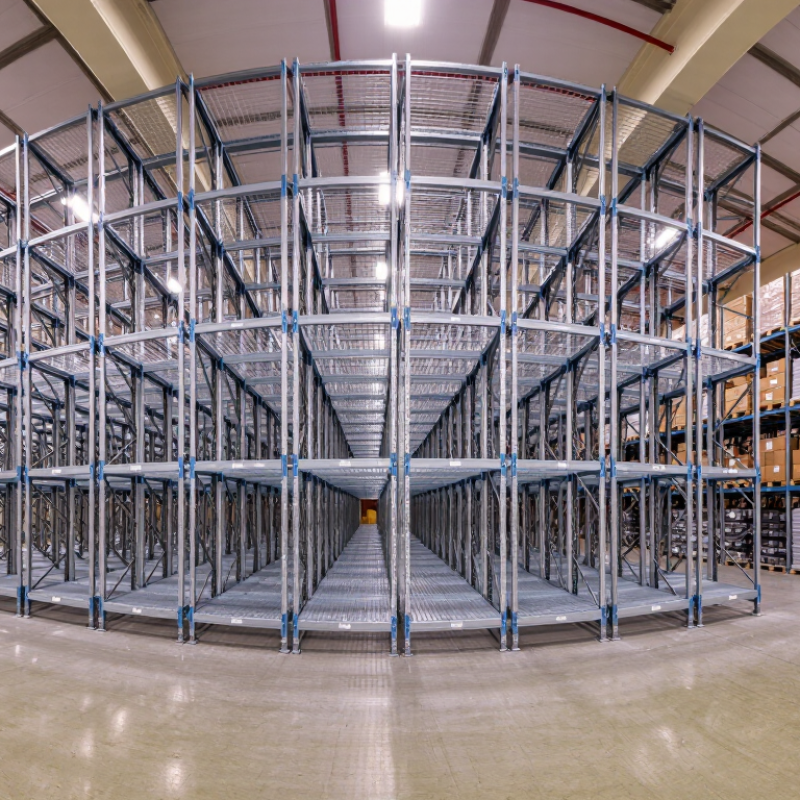
Wire mesh decking uses welded steel wires to create a ventilated shelf across pallet-rack beams. Two common grid patterns are 2-inch and 3-inch spacing, though exact openings can vary by product. A 2-inch grid has more frequent cross wires. It can provide steadier support for smaller cartons and containers that might rock on wider openings.
Picture a narrow box resting near the center of a bay: closer wire spacing may reduce unsupported gaps beneath it.
Check the actual clear opening, not just the stated grid size. Wire thickness and layout affect the space between wires. Details matter. A 3-inch pattern leaves larger openings and may suit loads with broad, firm bases. It also allows more light and airflow through the rack.
That is useful in some storage areas, but not every carton sits flat. When comparing manufacturers, confirm deck dimensions, beam fit, finish, and the rated load for the intended setup. Rack capacity depends on the complete installation, not the mesh pattern alone. Measure the beams and test representative loads before choosing; a tidy grid on paper can still be awkward in daily picking.
Selecting wire mesh decking from a top-ten manufacturer list means checking fit before comparing price. ANSI MH16.1-2021 sets engineering requirements for industrial steel storage racks; it does not give every deck a universal capacity. Confirm beam type, step spacing, deck depth, support conditions, and locking details against the rack drawings. A deck’s published rating must match its actual span and load pattern. A uniformly distributed load rating is not a safe substitute for checking concentrated pallet-foot loads.
The Rack Manufacturers Institute’s guidance treats rack capacity as dependent on the complete, configured system. Field dimensions can differ from old drawings. Measure the beams and supports in place. Small gaps matter. Tips: Ask for a load-rating document that names the tested span, support arrangement, and load type. Check that installation clips are present, and keep the deck from rocking or sliding. Never assume a heavier-looking panel carries more.
The U.S. Bureau of Labor Statistics reported 4.6 recordable nonfatal injury and illness cases per 100 full-time workers in transportation and warehousing in 2023. This is not a decking failure rate, but it underscores why warehouse inspections deserve care.
During a walk-through, look for bent wires, loose connections, damaged beam steps, and pallets overhanging the deck. Record the rack configuration and compare it with the supplier’s rating data. If the rating basis is unclear, pause loading and request written engineering confirmation. One uncomfortable truth: a neat-looking installation can still be mismatched.
Comparing wire mesh decking manufacturers starts with capacity, not a headline load rating. Ask for rated capacity by deck width, beam spacing, support direction, and load type. A pallet load spread across several wires behaves differently from a narrow drum or concentrated carton. Request test data or engineering documentation for the exact configuration, plus clear notes on safety factors and deflection limits. Details matter.
Finish should match the warehouse environment and handling routine. Powder coating can offer a consistent appearance, while galvanized finishes may suit damp or frequently washed areas. Confirm the specified process and coating thickness. Inspect sample corners, weld intersections, and cut edges, where coverage may be less uniform. A glossy surface alone proves little. If decks face abrasive pallet contact, ask how the finish performs after repeated loading and scraping.
Support channels are part of the product comparison. Check whether technical staff can review rack dimensions, provide layout drawings, and answer installation questions before shipment. Ask about sample availability, production lead times, replacement-part handling, and a documented response path for damaged or mismatched panels. Clear answers help. Vague promises about fast service are harder to assess. One detail often gets missed: confirm who verifies measurements when drawings and site conditions differ. It is not always obvious, and buyers should acknowledge when their own measurements are uncertain.
Suggested evaluation weights for comparing capacity, finish, and support channels. These weights are a decision-making framework, not measured manufacturer rankings.
Assess capacity against documented load ratings and project requirements, finish by coating type and corrosion protection, and support by the availability of technical, sales, and after-sales assistance.
Wire mesh decking manufacturers typically offer several product ranges: standard channel-supported panels, waterfall-edge decks, flush-fit panels, and heavy-duty options for concentrated loads. Materials often include galvanized steel for dry warehouses and coated or stainless finishes for harsher conditions. Some suppliers also provide custom widths, dividers, and safety accessories. The U.S. Census Bureau reported that e-commerce sales reached $1.12 trillion in 2023, representing 15.4% of total retail sales. That growth adds pressure to use warehouse space efficiently, but it does not determine which deck suits a rack. Load capacity, beam spacing, and handling equipment still matter more.
Tips: Compare published load tables, not just panel thickness. Confirm that the deck fits the exact beam profile and leaves no unstable gaps. Ask whether ratings assume evenly distributed loads. Real pallets rarely behave perfectly.
A useful product range should make selection clear, from light cartons to dense pallet loads. Look for consistent dimensions, stated finishes, and replaceable components. Request samples when coatings or weld quality are difficult to judge from photographs. Yet ranges are not always easy to compare; rating methods can differ between suppliers. Record the test basis and installation conditions before specifying a system.
Under OSHA 29 CFR 1910.176(b), stored materials must be stacked, blocked, and interlocked where needed, with height limited to prevent sliding or collapse. In a pallet rack, wire mesh decking supports loads and helps keep loose items from falling through, but it cannot correct an unstable stack. Match each panel to the rack configuration and its stated capacity; do not assume it fits securely just because its hooks sit on the beams. Keep pallets centered and avoid concentrated loads. Small defects matter.
Before use, look for bent wires, cracked welds, broken clips, corrosion, and panels that have shifted or no longer sit securely. Check the beams and connectors too; a sound deck cannot compensate for damaged rack components. Compare the installation with the supplier’s load information and your facility’s approved rack layout. OSHA’s provision requires stable, secure storage, but does not set a universal inspection interval for mesh decking. Set inspection timing based on site conditions, use, and changes, and record findings and repairs. If a deck sags under load, stop using that position until a qualified person assesses it. That pause can feel inconvenient. Guessing is worse.
Manufacturer-neutral comparison: The entries below describe common wire mesh decking configurations, not named manufacturers or a verified ranking of companies. Actual dimensions, compatibility, and load capacity vary by product and rack design.
| No. | Common System Configuration | Typical Construction and Use | Selection Checks | Inspection Focus | Safe-Storage Consideration |
|---|---|---|---|---|---|
| 1 | Standard waterfall mesh deck | Welded wire panels with front and rear support channels that rest over rack beams; commonly used for pallet-rack storage. | Confirm beam depth, panel width, support-channel fit, and the stated load capacity for the intended rack configuration. | Look for bent channels, broken welds, loose or displaced panels, corrosion, and signs that the deck no longer seats securely on the beams. | Check that stored loads are stable and do not create a falling, sliding, or collapse hazard. |
| 2 | Inverted-channel mesh deck | A mesh panel with channels oriented beneath the wire surface; used where the rack design and support arrangement accommodate this profile. | Verify channel orientation, beam contact, panel dimensions, and compatibility with the rack manufacturer’s specifications. | Inspect channel attachment points, wire intersections, bearing surfaces, and any deformation that could affect support. | Keep the deck properly seated and distribute stored material in accordance with the applicable load information. |
| 3 | U-channel-supported mesh deck | Wire mesh supported by formed U-shaped channels; a common format for selective pallet-rack applications. | Check channel dimensions and position against the rack beams; use only a capacity rating that applies to the installed configuration. | Check for channel spreading, cracked welds, damaged wire, and uneven or incomplete beam support. | Do not rely on the deck alone to stabilize a load that is otherwise stacked insecurely. |
| 4 | Step-beam mesh deck | Decking designed to rest on the ledges of step-style rack beams; panel geometry must match the beam and bay. | Confirm beam type, ledge engagement, panel span, and required clearances before installation. | Inspect ledge contact, panel movement, damaged supports, and any beam or deck condition that may compromise seating. | Ensure panels remain in their intended position while material is placed, removed, or stored. |
| 5 | Flared-channel mesh deck | Deck with shaped support channels intended to facilitate placement over compatible rack beams. | Check that the channel profile fits the actual beam and that the product’s load documentation covers the intended use. | Look for bent flares, worn contact areas, loose welds, and panels that rock or shift on the beams. | Replace or remove damaged components from service when their condition could make storage unsafe. |
| 6 | Heavy-duty mesh deck | Reinforced or otherwise engineered decking intended for applications requiring a higher capacity than a standard configuration. | Do not infer capacity from appearance; verify the documented rating, rack compatibility, support conditions, and load distribution. | Inspect reinforcement members and connections for impact damage, permanent bending, cracks, or other visible deterioration. | Keep actual loads within the capacity specified for the complete installed rack-and-deck arrangement. |
| 7 | Light-duty mesh deck | Mesh decking intended for lighter loads or applications specified by its design documentation. | Confirm that the rated application matches the stored goods and the rack configuration; avoid substituting it for a higher-capacity deck. | Check for sagging, damaged wires, loose supports, and overloading indicators. | Store materials only in a manner that keeps the rack and deck stable under the intended service conditions. |
| 8 | Full-width or multi-panel bay decking | One or more panels cover a rack bay; panel layout depends on bay width, beam arrangement, and the specified system design. | Verify panel count, joint placement, support locations, and whether each panel is secured or restrained as designed. | Check panel joints, gaps, support continuity, and any movement or displacement during normal use. | Arrange stored items so they remain stable and do not create an exposure to falling material through or around the decking. |
| 9 | Decking with safety retainers or clips | Mesh decking fitted with retainers or clips where specified to help resist unintended panel movement. | Confirm the retainers are approved for the deck and rack combination; do not treat them as a substitute for correct installation. | Check that clips are present where required, fully engaged, undamaged, and not interfering with beam seating. | Maintain the intended panel position and keep stored material secured against sliding or collapse. |
| 10 | Corrosion-resistant or coated mesh deck | Decking with a specified coating or material finish for environments where corrosion resistance is a design consideration. | Confirm the finish and material are suitable for the environment and that the load rating applies to the supplied product. | Inspect for coating damage, corrosion, weakened welds, and deterioration at support channels or contact points. | Remove from service for assessment if corrosion or damage may affect safe support of stored material. |
It forms a ventilated shelf across pallet-rack beams. Welded steel wires support cartons, containers, and pallets.
A 2-inch grid has more frequent cross wires. It may steady smaller cartons that could rock over wider openings.A 3-inch grid has larger openings. It may suit loads with broad, firm bases.
Not always. Wire thickness and layout change the clear space between wires.Measure the actual opening. Details matter.
A 3-inch pattern generally leaves larger openings, allowing more light and airflow through the rack.But some cartons may not sit flat across them.
Confirm the deck dimensions, beam fit, finish, and rated load for your setup.Measure the beams, too. A paper specification can still feel awkward during picking.
No. Capacity depends on the complete installation, not just the mesh pattern.Test representative loads and confirm the rack’s intended setup.
Check published load tables, dimensions, finishes, and replaceable components.Ask whether ratings assume evenly distributed loads. Real pallets rarely behave perfectly.
Rating methods and test conditions may differ. Record the test basis and installation conditions before specifying a system.Comparisons can be messy. Samples may help you judge coating and weld quality.
Wire Mesh Decking Systems provide a practical way to support and organize products stored on pallet racks. This overview explains common two- and three-inch grid patterns, how to assess compatibility with rack configurations, and why load ratings should be checked against the applicable rack design requirements, including ANSI MH16.1-2021. It also outlines useful comparison factors such as rated capacity, finish, installation needs, and the availability of technical support.
A guide to leading manufacturers can help buyers compare product ranges, but selecting a system should begin with the dimensions and intended loads of the rack. Safe use also depends on proper installation, evenly distributed storage, and regular inspection for damage or displacement. Following workplace storage practices, including the principles described in OSHA 29 CFR 1910.176(b), helps keep materials stable and access routes clear. Overall, careful specification and routine checks support reliable performance in warehouse environments.