Industrial Storage Crates keep parts, tools, and products organized through busy warehouses and production areas. Yet “crate” covers several designs, and choosing by appearance alone can lead to awkward handling or wasted space. A vented plastic crate lets air move around produce or damp components. A solid-sided model helps contain small parts. Stackable crates support vertical storage; nesting designs save floor space when empty. Collapsible versions fold down, though their hinges and locks deserve a close inspection.
Other options suit different loads. Wire-mesh crates make contents visible and can work well for bulky items. Steel crates offer strength for heavy-duty use, while wooden crates often support large or irregular loads. Pallet crates pair a large container with a pallet base, helping forklifts move goods. “The right crate is the one that fits the load, the route, and the people handling it.” This is an original editorial observation, not a verified quotation, attributed here to fictional industrial packaging specialist Alex Morgan.
This guide compares common crate types by material, structure, access, and storage needs. It also considers details that are easy to overlook: whether handles feel comfortable with gloves, whether stacked units stay stable, and whether labels remain visible. Small details matter. A crate that looks ideal on a supplier’s page may feel cumbersome beside a narrow aisle or a crowded workbench. No single design suits every operation. Check dimensions, load requirements, cleaning needs, and how often crates move before deciding.
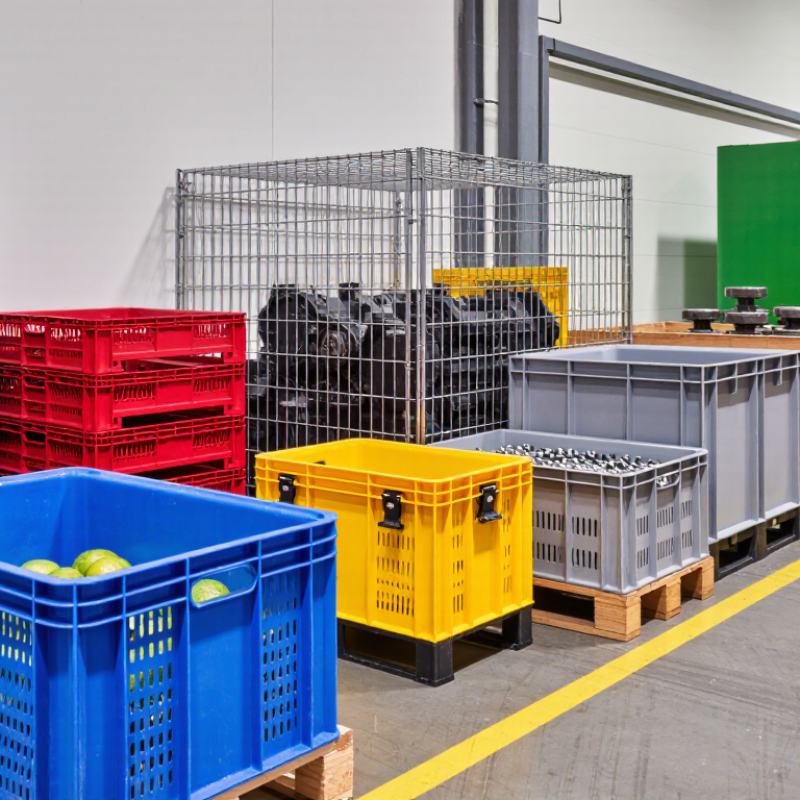
Reusable plastic crates suit general industrial storage because they handle repeated movement between receiving, work cells, and dispatch. Solid-wall models protect small parts from dust; ventilated sides help air circulate around produce or damp components. Nestable crates save return-transport space, while stackable designs keep bins stable on shelves or pallets. Check load ratings, dimensions, and chemical compatibility before selection. A crate that fits the product but not the rack is a costly mismatch.
The U.S. Environmental Protection Agency’s 2018 Advancing Sustainable Materials Management report estimated that containers and packaging made up 82.2 million tons, or 28.1% of U.S. municipal solid waste. This broad figure covers many materials, not crates alone, but it highlights the value of designing for repeated use. Reuse only helps when crates survive enough trips and return efficiently. Cracked corners happen. Repair or replacement rules should be clear.
Tips: Keep crate sizes consistent across a storage area, label contents on two sides, and inspect handles and bases during routine counts. Avoid overloading; a bulging stack can shift when moved. Track losses, too. One weak spot is forgetting reverse logistics: empty crates need a defined return route, or they become clutter instead of reusable equipment.
Heavy-duty metal crates suit loads that are too dense, bulky, or awkward for lighter storage options. Their rigid frames help limit shifting during forklift movement, while open-sided designs let workers see contents quickly. Solid panels offer more protection from dust and impact. Choose based on the load, not appearance.
Check the crate’s rated capacity, internal dimensions, and base design before use. A steel plate base can support compact, heavy parts, while a mesh base may work better when drainage or visibility matters. Forklift pockets should match the equipment used on site. Small mismatches create real handling problems. Stackable models also need secure, aligned corners; uneven floors can make a tall stack less stable than expected.
Finish and construction deserve a close look. Welds should be consistent, and edges should not snag straps or gloves. Coated steel can help resist corrosion, but damaged coating may expose bare metal, especially in damp storage areas. Stainless steel may suit harsher conditions, though its extra cost is not always justified. One detail is easy to miss: confirm that the crate can be moved when fully loaded, not just when empty. A practical trial with the actual load often reveals awkward access or poor weight distribution.
Collapsible crates help warehouses reclaim space between shipments. Their sides fold inward after unloading, leaving a shorter stack for return trips or temporary storage. This can free floor space beside packing benches and reduce the volume of empty containers moving through a facility. Eurostat’s 2022 packaging-waste data reports 186.5 kilograms per EU resident. That figure covers all packaging, not just crates, but it shows why reusable transport packaging deserves careful handling.
Choose crates around the load, not just the folded footprint. Check internal dimensions, payload rating, stacking stability, hinge strength, and whether workers can fold them with gloved hands. A crate carrying irregular parts may need dividers; wet or dusty goods may need smooth, washable interiors. Measure both deployed and folded height, then compare the number of loaded crates with the number returned empty. Small detail. A poor return ratio can erase much of the space advantage.
Collapsible designs suit regular delivery loops, where empty crates reliably come back. For one-way routes, scattered collection points, or very heavy products, rigid containers may be more practical. Inspect hinges and latches during routine checks; a cracked corner can make a tall stack unstable. One limitation is easy to overlook: folding mechanisms add parts that can wear. Track repair frequency and usable rotations, not just initial purchase price. A simple trial with one route often reveals handling problems that a spreadsheet misses.
| Crate Type | Typical Construction | Common Format or Feature | Empty-Crate Storage | Common Applications |
|---|---|---|---|---|
| Collapsible plastic crate | Reusable plastic crate with hinged or folding side walls and a rigid base. | Available in a range of footprints and heights; walls fold down when empty. | Folds flat or to a reduced height, helping save space on return trips and in storage. | Reusable distribution, parts handling, retail replenishment, and returnable packaging. |
| Rigid stackable plastic crate | One-piece or fixed-wall design, commonly made from molded plastic. | May have solid or ventilated walls; many designs are made to stack when loaded. | Does not fold; empty crates may nest or stack depending on their design. | Warehousing, production lines, food handling, and general-purpose parts storage. |
| Ventilated plastic crate | Plastic walls and base with openings that allow air to circulate. | Open-grid sides or base; crate dimensions vary by application. | Usually remains rigid; some models are nestable or collapsible. | Produce, laundry, and other applications where airflow or drainage is useful. |
| Solid-wall plastic crate | Plastic walls with fewer or no openings, often with a solid base. | Enclosed sides help contain small items and separate contents from surrounding goods. | Typically rigid; empty units may stack or nest if designed for it. | Small components, picking operations, and storage of items needing more enclosure. |
| Nestable crate | Tapered or specially shaped rigid crate designed to fit inside another empty crate. | Nested storage depends on the crate geometry and orientation. | Reduces the footprint occupied by empty crates when nested. | Collection and delivery routes, food distribution, and operations with frequent empty returns. |
| Wire-mesh or metal stillage | Welded or formed metal sides, often with a pallet-style base; some versions have folding sides. | May include access gates, forklift entry, and stackable frames. | Folding versions can reduce empty-return volume; fixed versions remain bulky. | Heavy or irregular industrial parts, bulk handling, and manufacturing storage. |
| Large bulk crate | Heavy-duty plastic or metal container designed to hold larger quantities of material. | Often uses a broad base and may be compatible with pallet-handling equipment. | Varies by model: fixed, nestable, or collapsible designs are available. | Bulk components, raw materials, distribution centers, and production areas. |
Note: Crate dimensions, load ratings, stacking limits, and empty-storage savings vary by design and manufacturer. Check the product specifications and handling requirements before selecting a crate.
Bulk containers are designed for loose materials and high-volume goods that would be awkward to store in small crates. Their wide openings make loading easier, whether workers are handling plastic pellets, metal offcuts, or packaged components. Many models have reinforced corners and forklift pockets, so loaded units can be moved without lifting each item by hand. Some use solid walls to contain small pieces; others have ventilated sides for airflow and visibility. Choose carefully. Fine materials can escape through openings, while damp goods may need a container that drains or resists moisture.
Capacity matters, but so does the container’s own weight. Check its rated load, internal dimensions, and stacking limits against the material and handling equipment used on site. A container that fits a pallet space may still be difficult to empty if its corners trap material. Removable panels or a discharge opening can help, though they add parts to inspect. Wear appears at the base first. Look for cracks, distorted fork pockets, and damaged edges during routine checks. It is easy to focus on volume and overlook handling, especially when storage space is tight. That trade-off deserves another look.
Industrial parts crates work best when their interiors match the items they carry. Small molded compartments keep fasteners from mixing, while dividers cushion machined components against knocks. For electronic parts, static-dissipative materials may help reduce electrostatic damage. Check that dividers stay in place during handling. Fit matters.
Liquid-storage crates need compatible materials, secure closures, and stable bases. A container that resists one liquid may not suit another, so confirm compatibility with the liquid’s safety information. Use secondary containment where spills are a concern, and inspect seams and handles for wear. Even a small leak can make a crate slippery and difficult to move.
Hazardous-material crates require extra care. Choose containers designed and rated for the specific material and transport conditions; requirements can vary by substance and location. Keep labels readable, separate incompatible materials, and follow applicable safety rules. Staff should know how to inspect and handle each crate. A sturdy exterior is not proof of suitability. Sometimes the right choice is less convenient, but forcing a poor fit creates risk. Recheck that judgment as contents or handling conditions change.
They hold loose materials and high-volume goods. Wide openings make loading plastic pellets or metal offcuts easier.
Reinforced corners and forklift pockets support handling with suitable equipment. Check the pockets for bends or cracks.
Compare its rated load and internal dimensions with the goods and equipment. A large container can still be awkward to empty.
Solid walls help contain small pieces. Ventilated sides allow airflow and visibility, but fine materials may escape.
Look at the base, fork pockets, and edges for cracks or distortion. Wear often starts underneath.
Molded compartments and dividers separate small fasteners and cushion machined components. Fit matters.
Confirm material compatibility, secure closures, and a stable base. Inspect seams and handles for wear.
Not necessarily. Contents, moisture, load limits, and handling conditions all matter; I might still overlook a detail, so check again.
Industrial Storage Crates come in several types, each suited to different storage and handling needs. Reusable plastic crates are lightweight, easy to clean, and practical for everyday industrial goods. Heavy-duty metal crates offer extra strength for large or dense loads, while collapsible crates can be folded when empty to save space during storage and transport. Bulk containers provide greater capacity for loose materials or high-volume goods, helping keep larger quantities organized and easier to move.
Specialty crates are designed for particular handling requirements, such as organizing small parts, containing liquids, or storing materials that need additional safeguards. Choosing the right crate depends on the weight, size, and type of goods, as well as available space and how often the items need to be moved. Matching crate design to the task can support orderly storage, efficient handling, and better use of warehouse space.