Choosing the best Heavy-Duty Pallet Racking from China requires more than comparing prices, steel thickness, or catalog photographs. Warehouse operators must examine load capacity, beam deflection, upright strength, seismic design, surface treatment, and traceable quality control. A rack may look impressive on a screen. Its real test comes when loaded pallets sit three levels high, forklifts turn tightly, and daily impacts begin to matter.
Industry data supports this careful approach. Grand View Research identifies continued growth in the global pallet racking market, driven by e-commerce, warehouse expansion, and higher storage density. The MHI Annual Industry Report also shows that companies are increasing investment in warehouse technology and operational efficiency. These trends make structural reliability more important, not less. However, market forecasts do not identify one universal “best” supplier. That part requires practical judgment.
Patrick Davison, a former technical director associated with the Rack Manufacturers Institute, summarizes the principle clearly: “A rack is a structural system, not a storage accessory.” This sentence deserves attention. Chinese manufacturers can offer competitive engineering, customization, automated production, and export experience. Yet buyers still need verified drawings, material certificates, welding records, coating specifications, and independent load testing. Certification alone is not enough.
The honest answer may be less convenient. The best system is not always the cheapest, thickest, or fastest to quote. It is the one that matches the warehouse, pallet, forklift, environment, and safety requirements. This guide compares those details, including several areas where buyers may need to reconsider their assumptions.
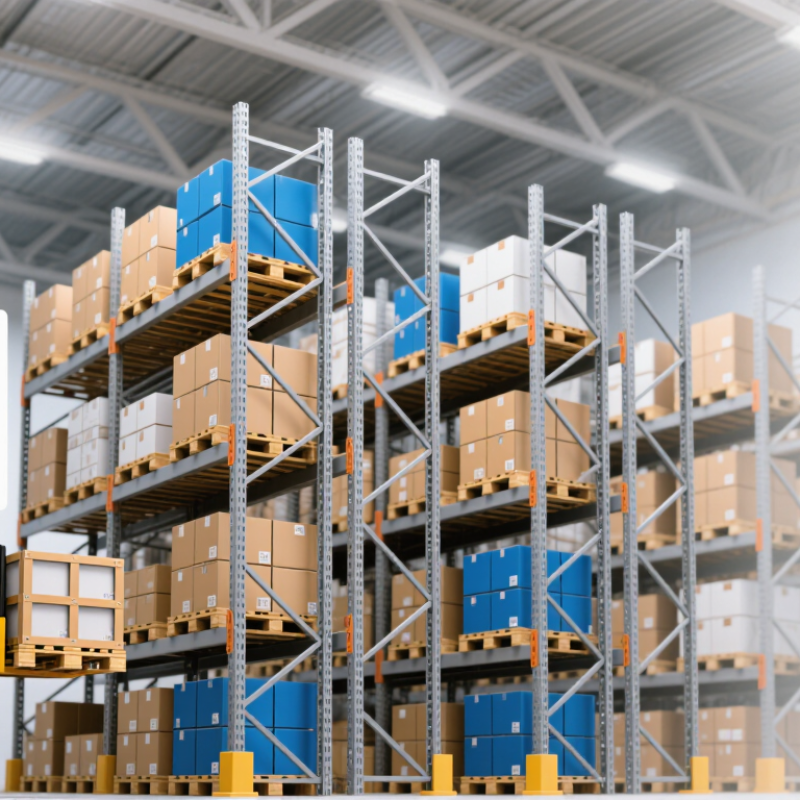
Heavy-duty pallet racking is defined by real operating conditions, not impressive-looking steel. Start with the load. Record pallet weight, dimensions, load distribution, and the number of levels. A system carrying 1,000 kilograms per pallet needs different beams from one carrying 2,000 kilograms. Uneven loads can reduce capacity. That detail is often missed.
Height matters just as much. Measure the clear ceiling height, sprinkler space, lighting, and forklift mast reach. Leave practical clearance above every stored pallet. A taller rack may increase storage density, but it can also complicate installation and inspection. Check the floor slab, anchor points, and vertical tolerances. Small measurement errors become costly at height.
Warehouse geometry completes the decision. A narrow aisle layout requires suitable handling equipment and accurate rack alignment. Corner columns, doors, fire exits, and pedestrian routes can limit the usable footprint. In practice, a warehouse drawing is never enough. Walk the site and mark obstructions physically. I once underestimated a door swing; the layout looked efficient but failed during daily movement. That was a useful correction.
A reliable Chinese supplier should provide load tables, fabrication drawings, material records, welding details, and coating specifications. Independent inspection can verify dimensions and workmanship before shipment. Do not select the lowest quotation automatically. Compare capacity, steel thickness, connection design, installation support, and replacement availability. The best system fits the load, height, and geometry together.
Heavy-duty pallet racking from China should match warehouse movement, not only maximum load claims. In site assessments, selective racking often performs best for many SKUs and direct pallet access. It needs wider aisles, but operators make fewer handling errors. Drive-in racking stores pallets deeply and delivers excellent density for uniform goods. It suits cold rooms or batch storage, though older pallets may create loading problems.
Double-deep racking increases capacity without fully sacrificing access. However, it requires reach trucks and careful pallet positioning.
VNA racking uses very narrow aisles and can produce impressive storage gains. It also demands guided trucks, accurate floor levels, and disciplined traffic control. A small floor defect can slow operations.
The “best” system is rarely universal.
Tips:
Confirm pallet dimensions, beam capacity, aisle width, and forklift reach before ordering. Request load calculations, material certificates, welding details, and installation drawings. Check local engineering requirements as well. Leave practical clearance around sprinklers and building columns. I have seen projects focus on density and overlook replenishment speed. That mistake can make a high-capacity warehouse feel slow. Compare five-year operating costs, not only the factory quotation. Recheck the design after a trial layout. Reality changes.
Beam capacity should be verified before comparing prices, finishes, or delivery times. ANSI MH16.1 provides design and testing principles for industrial steel storage racks. EN 15635 focuses on safe use, inspection, and maintenance in daily operations. They serve different purposes. A responsible supplier should provide beam load tables, steel grades, connection details, and engineering calculations for the proposed configuration.
Check the actual pallet weight, beam span, rack height, frame spacing, and number of storage levels. These details change the allowable load. Ask whether the capacity includes uniform loading across the beam pair. Confirm the rated deflection and the effect of forklift impact. At the warehouse, inspect beam connectors, locking pins, upright damage, anchors, and floor conditions. Keep visible load plaques at each rack row.
Small details matter. A 2,000-kilogram pallet is not simply “about two tons” when repeated across several levels. One overlooked pallet overhang can alter loading behavior. Capacity must match the complete system, not one attractive beam sample. I have seen neat drawings hide unclear assumptions. That deserves a second review. Independent engineering checks can expose gaps in calculations, especially when metric and imperial measurements are mixed. Purchase decisions should rely on traceable documents, practical installation guidance, and a documented inspection process.
Choosing the best heavy-duty pallet racking from China starts with the steel, not the catalog photo. In field inspections, I look for mill certificates showing grade, yield strength, chemical composition, and batch numbers. Q235 and Q355 steel may serve different load requirements. Never assume the higher number guarantees a safer rack.
Ask suppliers for independent test reports covering beam deflection, upright compression, weld quality, and coating thickness. Load testing should reflect the proposed bay configuration, pallet weight, beam levels, and floor conditions. A laboratory report is useful only when its sample matches the production design. Paperwork can look convincing.
Certifications also require careful checking. Confirm the certificate holder, issuing body, test date, standard edition, and covered product range. Relevant references may include EN 15512, FEM guidance, ANSI/RMI requirements, or applicable local standards. Verify that the certificate applies to the actual factory and model, not merely a trading company. Request traceability from raw steel to finished components.
Inspect details on site when possible. Uprights should show consistent punching, straight profiles, clean welds, and stable base plates. Measure several parts, not just one. I have seen small coating flaws dismissed as cosmetic, although rust often begins there. A reliable supplier welcomes witness testing and accepts reasonable design revisions. That attitude matters.
Higher minimum yield strength can support efficient rack-member design, but steel grade alone does not determine the best supplier. Buyers should also verify material certificates, chemical and mechanical test reports, weld and dimensional inspections, load testing, and certification to applicable standards. The reference values shown are minimum nominal yield strengths commonly specified under GB/T 700, GB/T 1591, and EN 10346; actual requirements may vary by thickness, coating, and design code.
When comparing heavy duty pallet racking from China, evaluate the complete operating cost, not only the quotation. A low initial price may hide shipping, installation, inspections, and replacement parts. Ask for steel specifications, load-test records, welding standards, and clear warranty terms. Suppliers should provide drawings showing beam capacity, upright spacing, and acceptable deflection. Local safety requirements must also guide the final design.
Tips: Measure your actual pallets first. Record height, weight, and daily movement. Check forklift turning space. Leave room for sprinklers and maintenance access. Dense storage saves floor space, but poor access can increase labor costs. In warehouse reviews, I have seen operators lose productivity because aisles were narrowed too aggressively. More capacity is not always better.
Calculate ROI using usable pallet positions, labor hours, handling equipment, and expected service life. Selective racking usually offers faster access, while drive-in or double-deep layouts can improve density. The right choice depends on inventory turnover. My first layout estimate was wrong by nearly 12% because seasonal stock was ignored. That mistake changed the payback period. Request a simulated layout with peak inventory data, not average monthly figures. Inspect sample components when possible, and verify coating quality, hole alignment, and base-plate thickness before ordering. Repair access matters too. A system that is difficult to maintain may become expensive long before its steel wears out.
No single system fits every warehouse. Choose based on pallet size, inventory turnover, access needs, and available floor space.
Selective racking suits warehouses with many stock-keeping units and frequent pallet access. Wider aisles can reduce handling mistakes.
Drive-in racking suits uniform goods stored in batches. It provides high density but may complicate access to older pallets.
Double-deep racking adds capacity while preserving some pallet access. It requires reach trucks and accurate pallet positioning.
Very narrow aisles save floor space and increase pallet positions. They require guided trucks, level floors, and disciplined traffic control.
Request steel certificates, load calculations, test reports, welding details, coating information, and installation drawings.
Inspect upright punching, welds, base plates, beam alignment, and coating thickness. Measure several components, not only one sample.
Include shipping, installation, inspections, labor, equipment, repairs, and replacement parts. Compare five-year costs, not just the quotation.
Narrow aisles and poor access may increase labor time. More pallets do not always mean faster operations.
Do not design around average inventory alone. Seasonal stock can change the layout and payback period. My early estimate was wrong.
Choosing the best Heavy-Duty Pallet Racking from China requires more than comparing prices. The right system should be defined by its load requirements, pallet dimensions, lifting equipment, building height, floor conditions, and warehouse geometry. Selective racking offers the fastest access, while drive-in systems maximize storage density. Double-deep layouts balance capacity and accessibility, and very narrow aisle systems make better use of vertical space when specialized equipment is available.
A reliable purchasing decision should include beam-capacity verification, structural calculations, and safety evaluation based on ANSI MH16.1 and EN 15635 criteria. Chinese suppliers should be assessed through steel grades, welding quality, surface treatment, factory testing, inspection records, and relevant certifications. Finally, compare each design using total cost, usable load density, accessibility, installation and maintenance needs, expansion flexibility, and expected return on investment. The best solution is not necessarily the cheapest option, but the one that delivers dependable performance, safe operation, and measurable long-term warehouse value.