
Choosing the best Electric Pallet Trucks in 2026 means looking beyond lift capacity. A truck may handle a stated load yet feel awkward in a narrow aisle, on a sloped dock, or during repeated turns. Handle reach, braking, battery access, and service support matter on a real shift. Small details count.
MHI’s 2024 Annual Industry Report examines labor, technology, and operational pressures across supply chains. Those pressures make practical equipment comparisons valuable, but they do not prove that one truck suits every warehouse. The U.S. Bureau of Labor Statistics also tracks injuries across transportation and material-moving occupations; its data reinforces why handling conditions and operator fit deserve attention. For a useful decision-making principle, quality expert W. Edwards Deming is widely associated with the line, “In God we trust; all others must bring data.” Buyers should test claims against comparable specifications and, where possible, a hands-on trial.
There is no universal winner. Not even close. A compact model may work well beside dense pallet racking, while a higher-capacity truck may better suit longer moves across a loading area. Battery chemistry, rated load, fork dimensions, turning radius, warranty terms, and local technician availability can change the result. Some comparisons also overlook operator comfort during a full shift. That is worth questioning.
This guide compares leading options by application, core specifications, and ownership considerations. It also flags where published figures may not tell the whole story. Use it to build a shortlist, then confirm the details with a dealer and your own floor conditions.
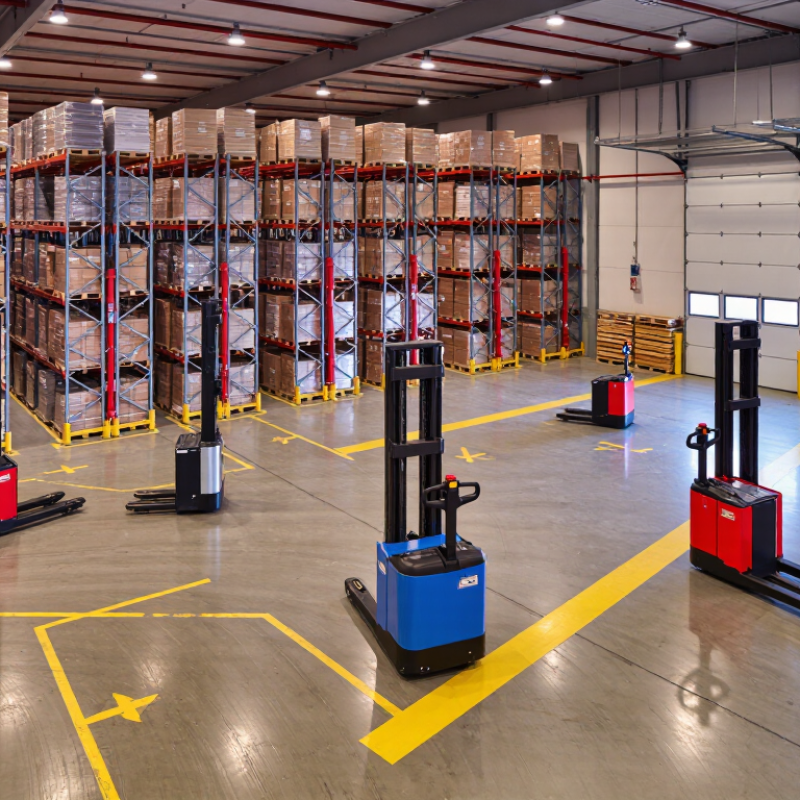
An electric pallet truck moves loads with a powered drive wheel and lifts its forks using an electric hydraulic pump. The operator steers with a tiller, controlling travel and lift from the handle. On a typical warehouse floor, it can move a pallet through narrow aisles without the effort of manual pumping. The forks rise only enough to clear the floor. That detail matters.
Many pedestrian-operated electric pallet trucks fall under OSHA Class III: electric motor hand trucks or hand/rider trucks. The class describes the truck’s design and operating type; it does not mean every model handles the same load or suits every workplace. Employers must provide training and evaluate operators for the equipment and conditions they use. A truck that feels simple to steer still needs room to stop, especially with a heavy load on a smooth floor.
When comparing trucks for 2026, check rated capacity, fork dimensions, turning radius, battery runtime, and charging arrangements. Match capacity to the actual pallet weight, not an estimate made in a hurry. Measure aisle clearances, too. Real floors are rarely perfect; small thresholds and uneven joints can affect stability and control. A feature list alone can be misleading. Test the truck in the space where it will work, and pay attention to how the tiller responds during slow turns.
| Truck Type | Best-Fit Application | How It Works | Typical Features | Key Trade-Off | OSHA Classification |
|---|---|---|---|---|---|
| Compact walk-behind electric pallet truck | Small warehouses, retail backrooms, and short-distance pallet movement | An electric motor drives the load wheels. The operator walks behind the truck and uses a control handle to steer and operate travel and lift functions. | Compact turning footprint; powered travel and lifting; commonly configured with a rechargeable battery. Capacity and dimensions vary by model. | Easy to maneuver in tight spaces, but less suited to sustained long-distance travel or very high throughput. | Generally Class III when it is an electric motor hand truck or hand/rider truck. Confirm the equipment type and manufacturer documentation. |
| Standard walk-behind electric pallet truck | General warehouse work, loading areas, and regular pallet transfers | Battery power operates the drive system and hydraulic or electro-hydraulic lift mechanism; the operator walks while controlling the truck. | Powered travel and fork lifting; commonly available in different fork lengths, load capacities, and battery configurations. | A versatile everyday choice, but operators need adequate turning and stopping space, especially with a load. | Typically Class III for the walk-behind electric hand-truck configuration. |
| Rider electric pallet truck | Frequent pallet movement over longer routes in larger facilities | The powered truck carries the operator on a platform or designated rider area while its motor moves and lifts the load. | Designed to reduce walking during repeated travel; may have a standing platform, protective features, or other configurations depending on the model. | Can improve travel efficiency on suitable routes, but requires more room and specific operator training and operating controls. | Some electric motor hand/rider trucks fall under Class III. Classification depends on the truck’s design and applicable OSHA definitions. |
| High-capacity electric pallet truck | Operations handling heavier palletized loads within the truck’s rated limits | A higher-rated drive and lifting system moves the pallet; capacity depends on the truck configuration and may decrease as load center or operating conditions change. | Available with different rated capacities, fork dimensions, and battery options. The capacity plate specifies the approved rating and conditions. | Higher capacity does not mean every pallet is safe to move; check the load, load center, floor, route, and nameplate rating. | Often Class III if it meets the definition of an electric motor hand truck or hand/rider truck. |
| Cold-storage electric pallet truck | Chilled or freezer environments when the truck is specifically rated for those conditions | Operates like other electric pallet trucks, but components and battery specifications must be suitable for the temperature and moisture conditions. | May include cold-environment battery and component options; confirm the manufacturer’s stated operating temperature and charging requirements. | Standard equipment may not perform reliably in low temperatures; condensation and temperature changes can also affect operation and charging. | Class is determined by truck design, not by the environment where it is used. |
| How electric pallet trucks work | Moving palletized loads across a facility | The operator inserts the forks into the pallet, raises them enough to clear the floor, and controls powered travel and steering. Lowering returns the load to the floor. | Core systems include a battery, electric drive motor, controls, steering assembly, forks, and a lifting mechanism. | They are intended for low-level pallet handling, not for lifting loads to warehouse-rack heights. | OSHA’s powered industrial truck classifications include Class III: electric motor hand trucks or hand/rider trucks. |
| Selection checks for 2026 | Choosing equipment for a specific workplace | Match truck design to the load, travel distance, aisle width, floor conditions, operating environment, and frequency of use. | Check rated capacity, load center, fork dimensions, turning requirements, battery and charger compatibility, braking, controls, and service support. | There is no single best configuration for every facility; compare specifications and verify the truck’s rating before use. | Employers must ensure applicable OSHA training and safe-operation requirements are met. Consult current OSHA rules and the truck’s documentation. |
Important: Specifications vary by truck and configuration. Use the capacity plate and manufacturer’s operating instructions for the actual equipment. OSHA Class III is a powered industrial truck classification; it does not, by itself, indicate a truck’s capacity, quality, or suitability for a particular job.
Walk-behind models suit short trips, frequent stops, and compact work areas. Ride-on or stand-on models can reduce fatigue on longer warehouse routes. Match the truck to the actual job.
Not necessarily. Check rated capacity at the stated load center. Long or uneven pallets can shift the balance, especially on slopes or tight turns. A headline rating is not the whole story.
No. At equal amp-hour ratings, 48 V stores about twice the energy: 4.8 kWh versus 2.4 kWh at 100 Ah. Actual runtime still depends on loads, travel, floors, and lifting.
Compare usable battery energy with measured shift consumption. Confirm the charger is compatible and charging access fits the work schedule. Leave a reserve. One quiet shift may mislead.
A compact walk-behind truck can be easier to position beside trailers and staging lanes. Check responsive controls, chassis stability, and clearance over dock plates. Tight spaces matter.
Measure the narrowest point, including parked pallets and rack protection. Test the turning path with the actual pallet size. A few centimetres can change the result.
They can reduce walking fatigue and move loads steadily over longer distances. Check capacity at the required lift height, full-shift runtime, ramps, and uneven floor joints.
Try a representative load on the real route, including turns, ramps, and pedestrian crossings. I would not trust a brochure alone. Busy sites reveal awkward details.
Choosing the best Electric Pallet Trucks in 2026 starts with understanding the work they are built to do. These powered industrial trucks generally fall under OSHA Class III, covering electric motor hand trucks and hand/rider trucks. For common loads of 1.5 to 3.0 tonnes, buyers should match rated capacity and duty cycle to the goods, floor conditions, and distance traveled. A 24 V battery may suit shorter, lighter shifts, while a 48 V system can support more demanding operation; actual runtime and charging needs depend on workload, battery capacity, and charging practices.
Truck design matters just as much as power. Compact, maneuverable models can help with dock work and narrow aisles, while designs intended for longer routes may prioritize operator comfort and sustained performance. The strongest choice balances these needs with practical safety features, suitable training and maintenance, and the full cost of ownership. Comparing purchase price alone can overlook battery replacement, charging downtime, servicing, and the productivity impact of choosing a truck that does not fit the operation.